
An American company proposes an idea that seems straight out of science fiction: selling solar light at night. The initiative has already sparked controversy and concern among environmentalists and astronomers, who warn of long-term effects.
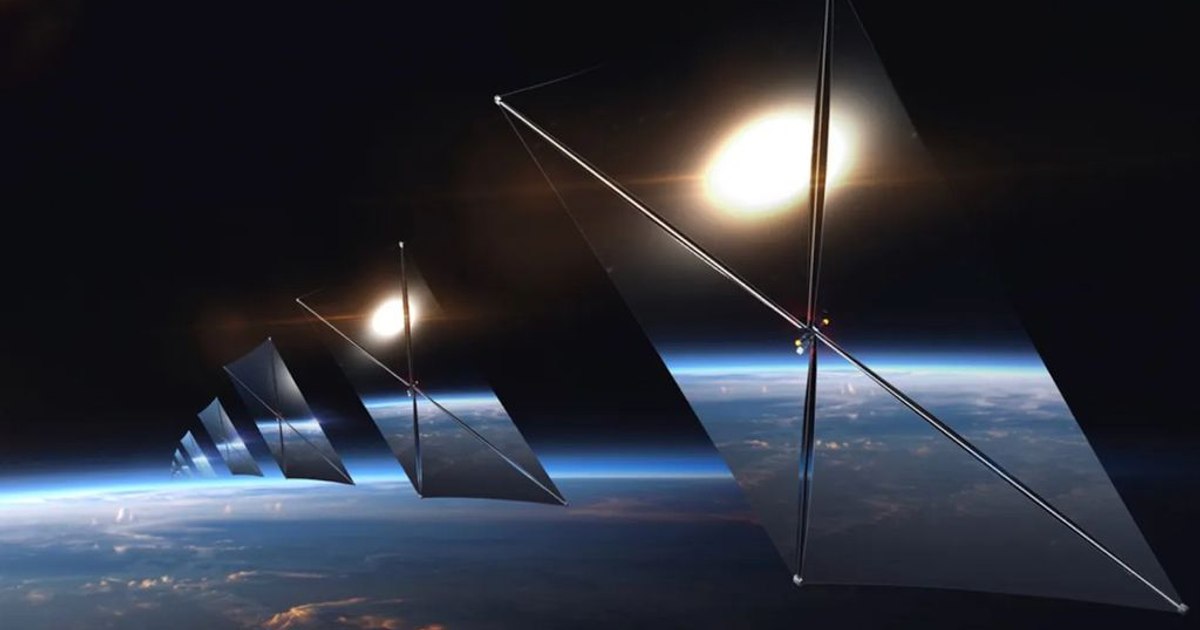
Startup Reflect Orbital plans to launch about 50,000 giant mirrors into orbit, capable of reflecting sunlight to certain areas of Earth after dark.
The first satellite could be launched as early as the summer of 2026, if the US authorities give their consent. The mirrors, between 20 and 50 meters in diameter, would form a ring around the planet, redirecting sunlight to precise locations.
Company founder Ben Nowack claims the technology would allow users to control lighting: “you will be able to order solar light at your location with a simple push of a button”.
According to him, a “beam” of light with similar intensity to the light of the full moon would cost about 4,300 euros per hour. Nowack says there is already interest in such services, including night-time rescue operations or supporting solar parks and agriculture. “There is also great interest from the military“, he added, according to the publication NOS.
The company has so far attracted investments of approximately 25 million euros for the development of the project.
Concerns from astronomers and environmentalists
However, the project is not without critics. Astronomers sent a letter warning that such a system could worsen light pollution, making it even more difficult to observe stars and planets.
For their part, environmentalists draw attention to the impact on the environment. “This can cause enormous disruption to the animals’ circadian rhythm” explained Kamiel Spoelstra of the Netherlands Institute of Ecology. He pointed out that many species depend on darkness for orientation and protection, and additional artificial light could disorient birds and other nocturnal animals.
An older idea, revived with new promises
The concept is not entirely new. In the 1990s, Russia tested a satellite with a reflective screen, intended to reduce the darkness of Siberian nights. In February 1993, a beam of light five kilometers wide crossed the sky from France to Russia. However, the experiment did not have the desired results and was abandoned after a few years.
Now the Americans are bringing the idea back to the fore, promising “solar light at night on demand”.
Question marks over project costs and approval
In addition to the impact on the environment and astronomical research, there are also questions of economic viability. Reflect Orbital plans to charge approximately €4,300 per hour for the use of reflected light, with an annual minimum of 1,000 hours.
In the coming period, the authorities in the United States will decide whether to approve the launch of this ambitious project, which could radically change the way light is used at night.
