
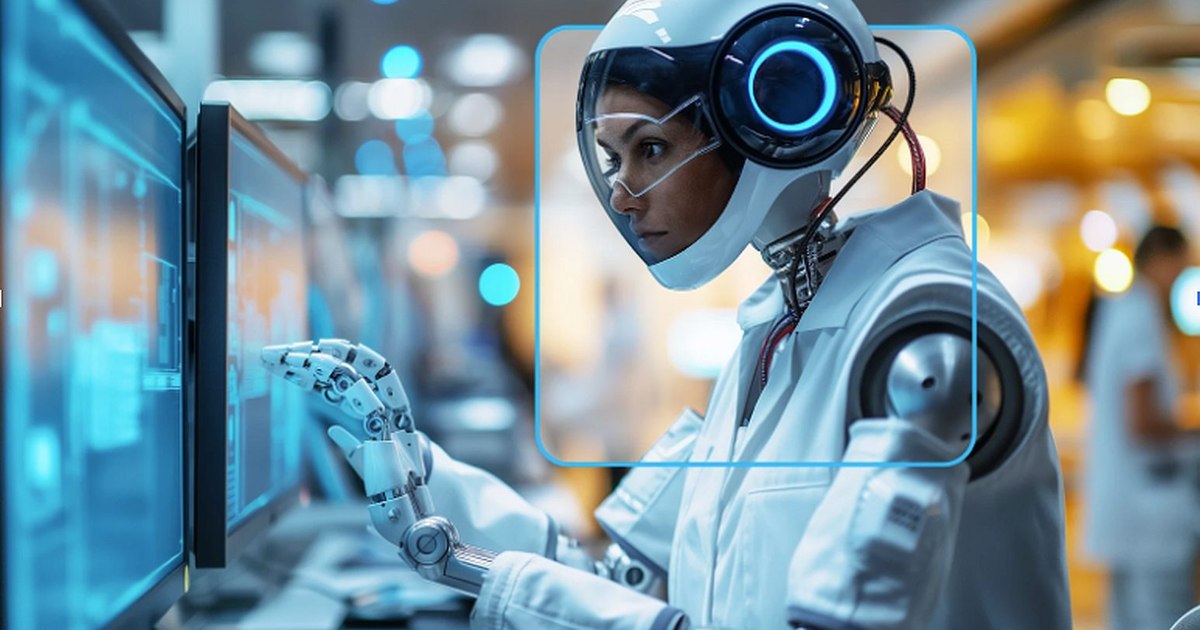
The world of work is changing rapidly. Robots assemble cars, algorithms approve bank loans, and chatbots answer customers 24 hours a day. According to a 2023 McKinsey report, by 2030 between 75 and 375 million workers worldwide may have to change their occupational category due to automation. It’s not an abstract number — it’s about real people, real families.
Common Economic Risks: Who Loses First?
Repetitive jobs are the most vulnerable. Production line operators, bookkeepers with routine tasks, cashiers, call center operators — all face increasing pressure. The World Economic Forum estimates that 85 million jobs will be replaced by machines by 2025, but it also predicts the creation of 97 million new roles. Problem? The new roles require completely different skills than the old ones.
Inequality is another common economic risk that is often underestimated. Employees with higher education and digital skills adapt more easily. Those from disadvantaged backgrounds, with limited access to education or technology, risk being permanently left behind. Without clear public policies, automation may deepen the social divide instead of narrowing it.
Sectors Under Direct Pressure
Transport is a classic example. Autonomous vehicles threaten millions of professional drivers globally. In Romania, the transport and logistics sector employs approximately 300,000 people — a sizeable segment vulnerable to rapid technological change.
Agriculture is not safe either. Agricultural drones, smart sensors and automated irrigation systems reduce the need for seasonal labor. In the short term, small farmers may feel competitive pressure from larger holdings that adopt technology more quickly.
Digital Security and Access to Information: An Underestimated Factor
Adapting to the new digital economy requires access to online training resources – courses, tutorials, international education platforms. Here comes a problem: not all resources are freely available in all countries, and cyber threats are increasing with accelerated digitization.
Using trusted VPN applications like VeePN can protect the connection of employees and students accessing the training platform from public or restricted networks. Furthermore, VeePN hides your online activities from third parties (advertising bots, ISPs, etc.). A freelancer working from home, a student taking an online course, an entrepreneur accessing external resources – they are all potential. Personal and professional data protection is becoming a core competency in the automated economy.
The Impact of Artificial Intelligence on the Economy: The Bright Side
It’s not all bleak. The impact of artificial intelligence on the economy also has a positive, concrete face. Productivity increases significantly in sectors that adopt AI: PwC estimates that artificial intelligence will add $15.7 trillion to the global economy by 2030. That means more capital, more investment, more jobs — if the distribution is managed correctly.
Creative industries and those based on human relationships hold up better. Teachers, psychologists, designers, social entrepreneurs — they won’t be replaced by algorithms anytime soon. AI becomes a tool in their hands, not a competitor.
Artificial Intelligence Tips For Employers and Entrepreneurs
First tip: don’t ignore change. The people who will do best are the ones who understand what AI can and can’t do. Read, follow trends, experiment with free tools like ChatGPT or Copilot. Curiosity is a real competitive advantage.
The answer is: invest in competitive learning. I need to be a programmer and I need to automate my own learning process. I’m looking for pre-training platforms like Coursera, edX and LinkedIn Learning. There are many more such platforms than you can find in the search results. With a VPN extension, you can use foreign services. In some areas, they can provide much more in-depth knowledge in an accessible format.
What Can Governments Do?
Public policies matter enormously. Education system reforms, professional retraining programs and research funding are essential tools. Germany, for example, has invested heavily in “Kurzarbeit” programs — schemes where employers reduce working hours instead of firing, and the state compensates for the wage gap. Romania needs similar strategies, adapted to the local context.
The robot tax is an idea being discussed more and more seriously. Some economists propose taxing companies that replace human labor with automated systems, and redirecting the collected money to social and educational programs. There is no consensus, but the debate is necessary.
Real Opportunities, Not Just Promises
AI startups are creating new, often well-paying jobs. Data engineers, AI ethicists, automated system architects, model trainers — professions that didn’t exist 10 years ago are now among the most sought after. LinkedIn reports that the demand for AI skills has increased by 74% over the past four years.
The health sector is a concrete example of opportunity. Diagnostic algorithms help doctors detect cancer earlier, interpret medical imaging with remarkable accuracy. They don’t replace the doctor — they augment his capabilities. That’s the right direction: man plus machine, not man versus machine.
Conclusion: The Choice Is Not Between AI and Humans
Automation is not a tsunami coming to destroy everything. It’s a wave—and you can learn to surf it, or you can stay on the beach. The common economic risks are real and should not be minimized, but so are the opportunities. The key lies in adaptation, continuous education and smart public policies. The future of the economy will not be written by algorithms alone — it will be written by the people who know how to work with them.
