
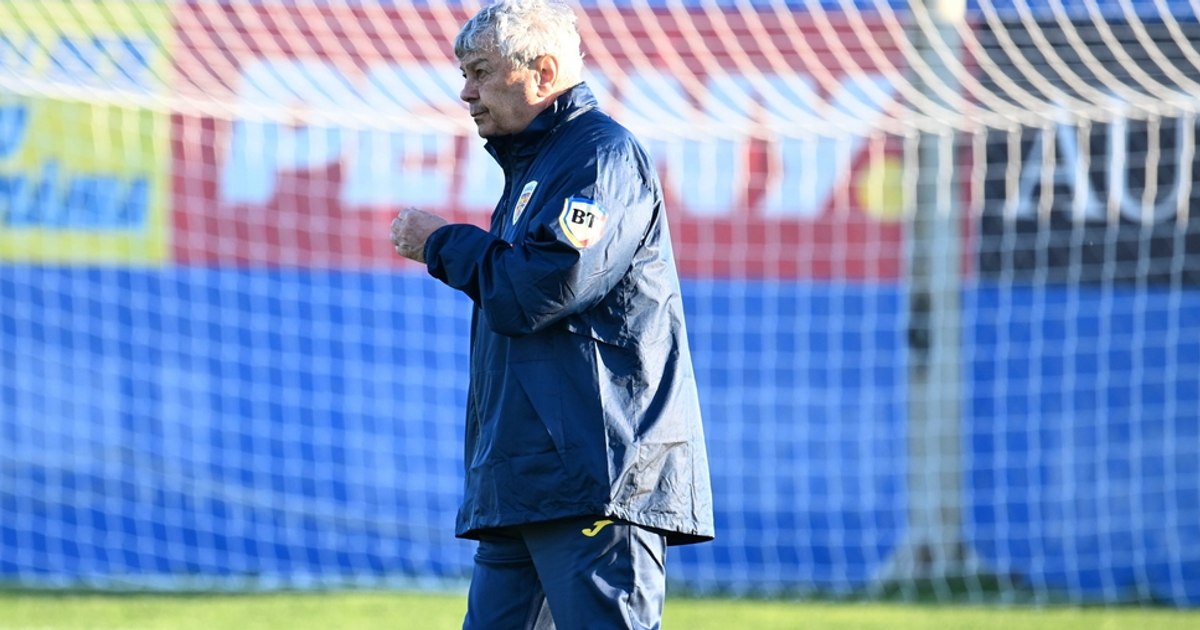
The selector Mircea Lucescu (80 years old) told his relatives, from the hospital bed, that his mandate with the national team is “over”. His way at the helm of the tricolors stopped anyway after today’s match, with Slovakia, from Bratislava (9:45 p.m.), for failing to achieve the goal.
“Il Luce” announces from the hospital bed, where he arrived after fainting during a training session, that he is retiring from the helm of the Romanian national football team.
The legendary coach thus ends a career of almost 50 years, during which he managed to become the third most titled coach in the history of the king’s sport, with 35 trophies won.
On Tuesday, Il Luce will undergo an operation to have a pacemaker installed. The doctors at the Bucharest Emergency University Hospital said that Il Luce will not need a new heart stent, which is very good news. However, during this day he will be fitted with a defibrillator that will help regulate his heartbeat.
Career and Life of “Il Luce”
Born on July 29, 1945 in Bucharest, Mircea Lucescu is one of the most respected personalities in Romanian and international football. His career began in 1961, when he enrolled at the Sports School no. 2 from Bucharest, marking the start of a journey that has exceeded six decades.
His debut in Division A took place on June 21, 1964, when he played for Dinamo Bucharest in a match against Rapid, which ended with a score of 5-2. During his playing career, he wore the shirt of several important teams, including Știința Bucharest and Corvinul Hunedoara, accumulating experience that shaped his future tactical vision.
Internationally, he represented Romania in 64 official matches, wearing the captain’s armband at the 1970 World Cup in Mexico. This experience at the highest competitive level gave him an insight into performance football, which he later capitalized on in his coaching career. His extensive experience as a player and leader laid the foundation for a successful coaching career, making him one of the most influential technicians in football history.
He graduated from the ASE
Mircea Lucescu graduated from the Academy of Economic Studies in Bucharest, training that proved essential in his managerial career. This economic education gave him the necessary tools to understand the financial and administrative aspects of the clubs he managed.
Throughout his career, Lucescu has demonstrated a remarkable capacity for adaptation and continuous learning, constantly assimilating new training methodologies and tactical strategies. This dedication to professional development has kept him relevant in elite football for decades.
Family Life: He is a great grandfather
Mircea Lucescu is married to Neli, his life partner for over five decades. Together they have a son, Răzvan Lucescu, who chose to follow in his father’s footsteps, becoming in turn a successful coach. Răzvan’s son, Matei, also became a father, and “Il Luce” is a great-grandfather since 2017. Răzvan became a grandfather at only 48 years old, and Mircea Lucescu was then 72 years old.
It started in Hunedoara
Mircea Lucescu’s coaching career began in 1979 at Corvinul Hunedoara, where he succeeded in promoting the team to the first division and placing it in third place in the first season. This success opened the doors to the Romanian national team, which he led between 1981 and 1986, qualifying it for the 1984 European Championship.
Mircea Lucescu, fabulous: The ranking in which he just became the leader, even though he stays at home
The period spent at Dinamo Bucharest, between 1985 and 1990, was marked by important successes: a championship title in the 1989-1990 season, two Romanian Cups and a memorable presence in the semi-finals of the Cup Winners’ Cup. These achievements attracted the attention of clubs abroad, and in 1990 he made the move to Italian football, coaching Pisa in Serie A.
The Italian experience continued at Brescia, where he spent five seasons, achieving promotion to Serie A and winning the Anglo-Italian Cup in 1994. After short spells at Reggiana and a first spell at Inter Milan in 1998-1999, he returned to Rapid Bucharest, where he won the championship and the Romanian Cup.
The Turkish adventure began in 2000 at Galatasaray, where he won the European Super Cup and the national championship, followed by a title with Beşiktaş in 2003. The most prolific period of his career was at Shakhtar Donetsk, where he became the longest-serving coach in the history of Ukrainian football, between 2004 and 2016, where he won eight league titles, six Ukrainian Cups and, most importantly, the UEFA Cup in 2009.
After a brief stint in Russia at Zenit St. Petersburg and a spell as Turkey coach, he coached Dynamo Kyiv from 2020 to 2023, again winning major trophies. In August 2024, Lucescu returned to the position of Romanian coach, becoming one of the oldest coaches in the history of football, closing the circle of an extraordinary career. The diversity of the teams he coached and the success achieved in each of them demonstrates his adaptability and tactical expertise.
Trophies and major career achievements
Mircea Lucescu’s record includes over 30 major trophies, which places him among the most titled coaches in the history of European football. Eight consecutive championships won with Shakhtar Donetsk is a rare feat in modern football, demonstrating his ability to build and maintain a sporting dynasty.
Winning the UEFA Cup in 2009 with Shakhtar Donetsk remains the highlight of his career, being the last team from the former Soviet Union to win a major European competition. The victory in the final against Werder Bremen, score 2-1, established Lucescu as one of the great strategists of European football.
Mircea Lucescu publicly confessed how he would like to die. The wish-will was instilled in him by a huge name in the coaching
The European Super Cup won with Galatasaray in 2000, after the victory against Real Madrid, is another landmark. This performance demonstrated his ability to prepare teams for decisive matches against the strongest opponents in Europe.
On an individual level, Lucescu was named Coach of the Year in Romania and Ukraine multiple times, receiving recognition for his contribution to the development of football in these countries. His legacy includes not only the trophies won, but also the formation of an entire generation of players and coaches who benefited from his innovative methods. These achievements underline his lasting impact on European and Romanian football.
He has 64 national team caps
With over 1,000 matches as head coach at club and national team level, Mircea Lucescu has one of the most impressive records in European football. His winning percentage exceeds 55%, a remarkable statistic considering the diversity of leagues and competitions in which he has been active.
As a player, the 64 selections for the national team place him among the most valuable Romanian footballers of his generation. Participation in the World Championship in 1970 as a starter and captain represents a landmark moment in the history of Romanian football, Romania managing to qualify for the first time after a break of 32 years.
