
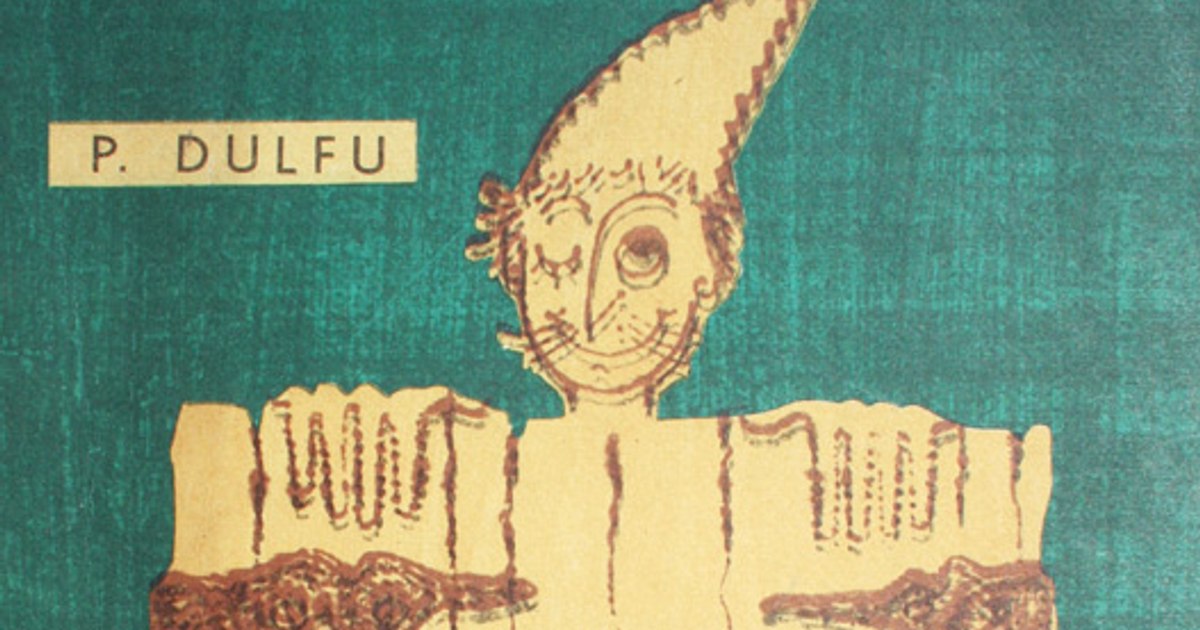
“Weekend Adevărul” spoke with Laura Temian, philologist and one of the people who worked directly on the recovery of Petre Dulfu’s name, being the author of the volume “Petre Dulfu: biobibliographic contributions and documents” to find out what makes the book “The Exploits of Păcală” different from other popular stories and how it came to be read by whole generations.
Former director of the Baia Mare County Library, she is also the one who proposed that the institution be named after him. The choice came for a simple reason: “he was the most read writer in Romanian literature, even more so in Maramureș. Not because of his literary value, but because of the message he conveyed”.
“Weekend Adevărul”: In your book you present Petre Dulfu from this position of “pedagogue of the nation”. To what extent does the didactic role influence the way Petre Dulfu writes?
Laura Temian: Petre Dulfu distinguished himself as a writer and pedagogue. He was an exceptional pedagogue, because his works were thought out in such a way as to reach all readers, regardless of the place in the country or specialty, professions. He wanted these writings to come to the aid of the peasants, because, he said, he tried to make the Romanian peasant see clearly, on the one hand, many shortcomings that oppress him, due to his ignorance.
And therefore to force him, somehow, to see how necessary education is for him. And I would like to continue – more than 2,000 teachers and students who became teachers and were visited throughout the Romanian territory, at his celebration, remembered with great joy his qualities as a pedagogue. He was very clear in what he expressed, so that everyone could understand everything he said, and his creed was that man, at the beginning of his life, is neither good nor bad. But it can be both good and bad, and usually becomes good or bad as it has been directed by education.
Collector and organizer: how Dulfu works with folklore
In the book you also talk about his connection with folklore and the storytelling tradition. How does Dulfu come to work with this popular material and what, in fact, draws him to it?
He knew popular creation very well, drawing from the people. So, he knew the ideas, he knew the expression, he knew everything, in such a way that, through his writings, he managed to create a real poetic school, a Romanian folklore school. He did not take over the ideas, he processed the folkloric ideas about Pacala especially, the main character, and wrote them in his own way, so that everything could be understood from what he expressed.
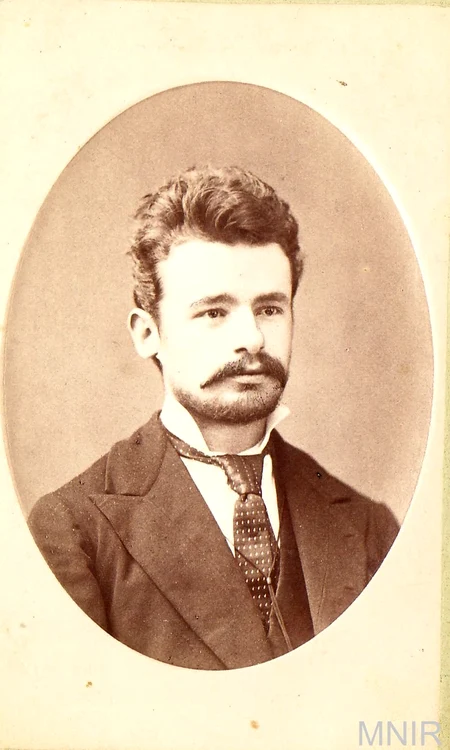
Here I am thinking of a passage from your book, where you noted that Petre Dulfu is not necessarily “a collector of folklore, but rather an organizer of it”.
Exactly, Dulfu did not simply tell. He had an idea of what he wanted to be presented from Pacala’s features, because in fairy tales, so to speak, it was about the three sons of the emperor; here it is about the three sons of the village elder. The little one turns out to be a Poznan and is not afraid to say everything he thinks about those he comes into contact with.
You laugh, but you learn: what Păcala actually says
If we look at “The exploits of Păcală”, we see that it is not just a story, but an extensive construction, in 24 episodes. What makes Dulfu different from other authors who have written about Păcală?
He particularly focused on the message Pacală gives through his actions. He emphasized in the 24 chapters of the epic and tried to bring out the antithesis between good and evil. Knowing the life of the village, he wanted to bring out those who were not loved – the fool, the lazy, the curmudgeon priest, the treacherous boyar, the cuckolded husband, the dishonest woman and so on.
Geo Saizescu, the director who brought us Păcală: “Papaiani filmed with a beard borrowed from a goat” VIDEO
About the snow, a short and funny story, we know that it has a moralizing role, but also a comic one, in the traditional way. How does this balance work in “The Exploits of the Fool”? We basically laugh, but what are we actually being told – what would the lessons broadly be?
In the story of Păcală, the feats on earth are presented, which have no match, but which people perform every time. But what he emphasizes from the outset is that reading in general has a therapeutic role. Which makes the time easier to pass, the obstacles to be understood and taken as such, because, he says, “what would human life be without stories in this world?”. So, everything is written and seen through the prism of the teacher, who refers, including in “The Exploits of Păcală”, to the common people – what is good to do and what is not good to do.
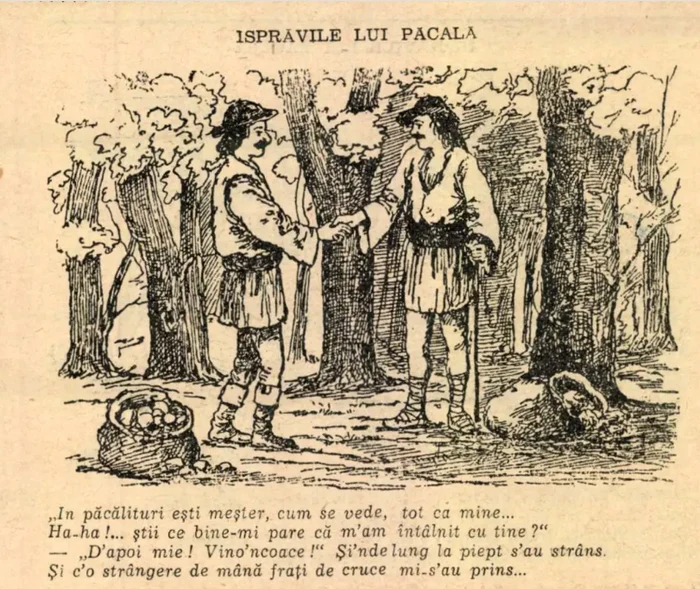
This therapeutic role you speak of, of stories; for example, where did you feel it felt the strongest?
Do you know what it looks like? Because he is among the few writers who were known, first of all, by “The Exploits of Păcală”, and then by name. “Isprăvile lui Păcală” was read and only then did one find out who the author was. His books were distributed with the help of ASTRA, through the public library, and reached the table of the peasant quite quickly, who in the evening, when he came tired from work, enjoyed one of the “Feats of Păcală”.
Fool is about jokes, but also tell the truth, even if it hurts
The character we keep talking about appears in several poses – sometimes clever and vigilante, sometimes almost absurd or maybe even cruel. How do you explain this duality of the character?
Just starting from other writings, other stories that had him as the main character. In Dulfu’s work, this is what he wanted to say, that there are such geniuses – who have the courage to speak and show the truth – with a moralizing character; so not only as a storyteller, as a joker of trouble, but with the undisturbed desire to transmit. “You have such negative characters among you, be careful” – I think this is the message through which Păcală managed to penetrate so strongly among the characters of Romanian literature.
You also mentioned other characters along the way, the priests, the boyars. We have this whole palette of characters from Păcală’s imagination. What does this say about the world of the village and the values that the text conveys?
The end of the work, even if he described the bad characters with the negative characters you mentioned, it is clear that it is dominated by good and positive characters, compared to those described by Păcală in his songs. So, this is the idea with the Romanian people: they have special, moral, soulful, ethical qualities.
The story of Petre Dulfu, the man behind Păcală: how he became famous and why he was forgotten
How Păcala got everywhere and what remains today
I noticed that “The Exploits of Păcală” had many editions and a wide circulation – a popular book, we can say. How do you explain this long-term popularity, because we’re talking hundreds of years here?
And even now, the text from the teaching aids or even fragments of “Păcală’s Exploits” are still read with pleasure and used for various skits at school. So, Dulfu’s beauty of expression, clarity of message made him the most read writer of his time.
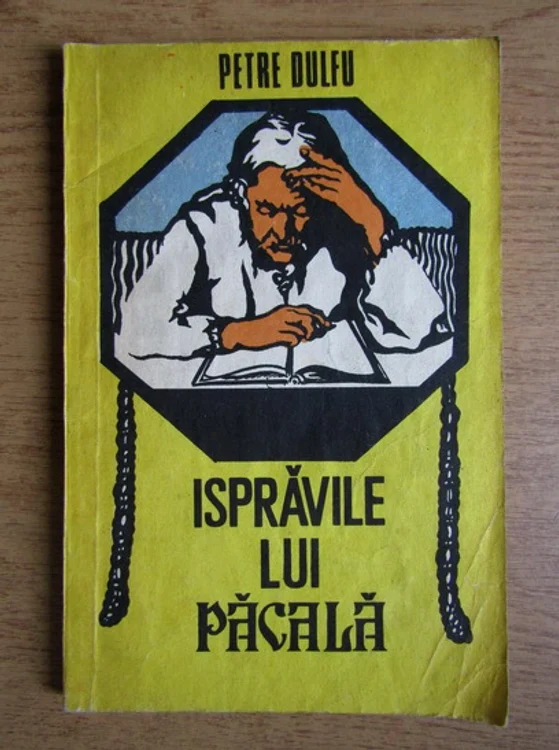
If we were to bring Păcală to the present, in today’s society, does this type of humor and popular justice still work?
I wouldn’t want to be a negative person, but according to what is read today, Păcală is less common in the homes of Romanians. There remains only the hope that times will come again when the book “The Exploits of Păcală” will be read as it was written. Not only Dulfu’s works, literature in general is less read, less taken as a model of life, through writings, through characters, through messages.
