
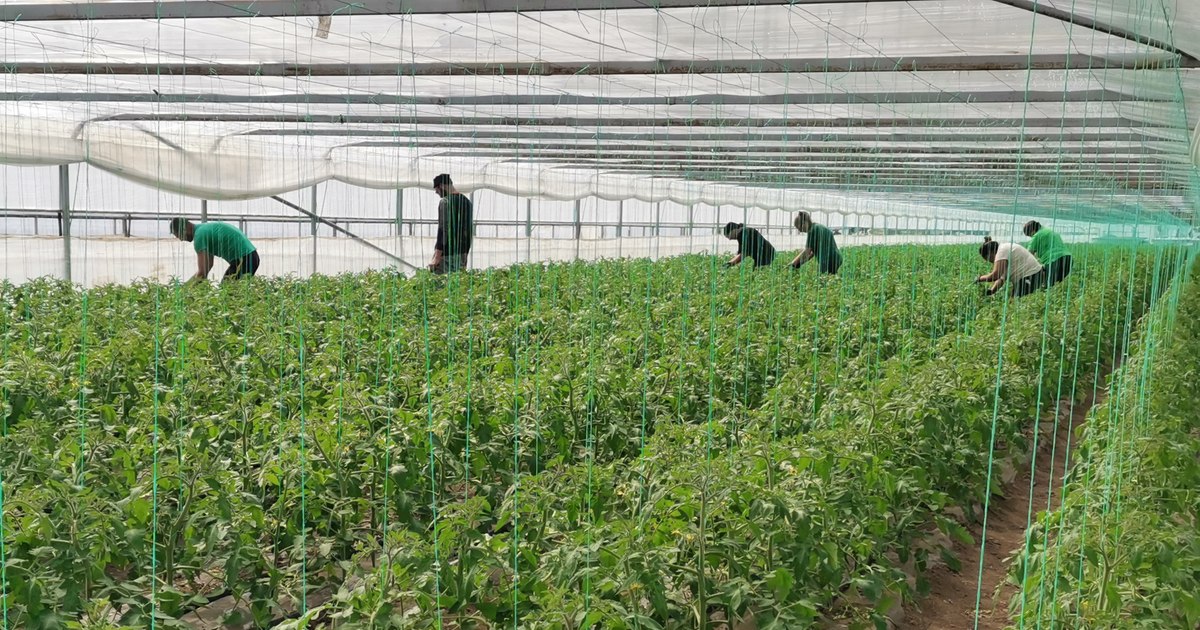
The tensions in the Middle East are also beginning to be felt in agriculture in Romania, where farmers are facing massive increases in fertilizer prices and increasing difficulties in supply. Experts warn that the effects could eventually reach food prices.
Blockages in the Strait of Hormuz affect not only the transport of oil, but also the exports of fertilizers from countries such as Iran, Qatar or Saudi Arabia, leading to a decrease in stocks and an increase in prices in Europe.
Eugen Truetsch, a farmer from Râșnov, who works over 300 hectares, says that the purchase of fertilizers has become more and more difficult.
“In our area, there were two TIRs with fertilizers, but with cash. I mean, the TIR came, you unloaded, you paid!”he declared for stirileprotv.ro.
Although he managed to find fertilizers with payment at harvest, he warns that he has no resources for the next season.
And other farmers confirm the direct impact on production.
“Production where it will not be fertilized will be small”says farmer Marius Someșan.
The rise in prices has several causes. On the one hand, the introduction of the European mechanism for charging carbon emissions for imports (CBAM), and on the other, the crisis in the Middle East.
Florentin Bercu, representative of the Union of Agricultural Cooperatives in the Vegetable Sector, explains the evolution of prices: “The price of fertilizers has increased a lot recently, in 2020 it was around 250 euros, in 2025 around 500-550 euros. Currently it reaches 800 euros.”
The problems are not only about prices, but also about availability. In some warehouses, stocks have been drastically reduced, and certain products are completely missing.
Grigore Vlad, representative of a fertilizer warehouse, describes the situation: “We cannot supply ourselves, it has become very expensive, farmers have no money to buy.”
Asked about urea, he replied: “No, I don’t, it’s already a luxury, it’s gold!”
The Minister of Economy, Irineu Darău, stated that the situation is influenced by external factors over which Romania has no control.
“I think there are certain factors external to Romania that we cannot stop and there is a certain volatility that affects the whole market”explained the minister.
In this context, the European farmers’ organizations, Copa and Cogeca, requested support from the European Commission, warning of the major impact that the increase in the price of fertilizers can have on agricultural production and food security.
Romanian farmers say that, without quick measures, the effects of the crisis could be seen in the fall and in the following years, including in the prices of food on the market.
