
Craiova hosts the biggest Shakespeare festival in the world, bookstores have the novel of the moment, on a streaming platform you can find an adaptation of a novel by William Goulding, and 43 European films are playing all over the country. A cultural month, whether you choose to stay at home or enjoy (and) spring.
THEATER. Craiova, the world capital of Shakespeare
The International Shakespeare Festival in Craiova remains a phenomenon difficult to explain through the usual logic of Romanian culture: an event of global scope, built in the province, which came to be recognized as the largest thematic festival dedicated to the Bard in the world. The record is approved: more than 380 events in more than 70 spaces at the 2025 edition earned it the official title from the World Record Academy.
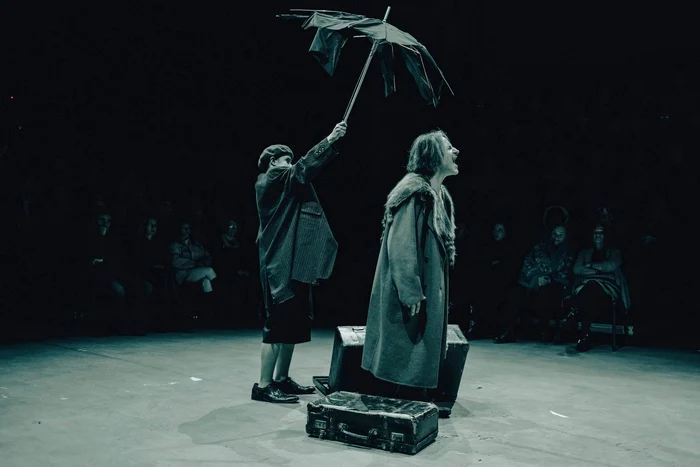
This year’s edition, scheduled between May 21 and 31, held in six spaces and seven halls in Craiova, comes with the theme “WILL matters / Voința naște materie” and a program that confirms the appetite of the organizers for artistic risk. Silviu Purcărete signs his latest “King Lear”, Declan Donnellan returns with “Two young men from Verona” in co-production with companies from Great Britain and Spain, and the Japanese company KARAS brings “Romeo and Juliet” directed by Saburo Teshigawara. Dance also enters the equation: “Hamlet” by the Italian company imPerfect Dancers or “Ophelia-s” by the Belgian company Mossoux-Bonté expand the Shakespearean universe beyond the text.
Shakespeare’s village
Shakespeare Village aims to transport visitors to the era of the great playwright, while also functioning as an unconventional performance and concert space, with over 70 events over 11 days. The concept is more ambitious than a simple thematic decoration: built from scratch on the Craiova racecourse, the village is a replica of a traditional English settlement from around the year 1600, made with the support of the British company Griffin Historical, specialized in historical reconstructions. Craftsmen from Great Britain, blacksmiths, tailors, shoemakers, work alongside Romanian artisans.
During the day, the atmosphere of the Elizabethan era is patiently recreated: workshops, street performances, activities for children. In the evening, the concerts bring the spectators back to the present – Șuie Paparude, Zdob și Zdub, Coma, Luna Amară, but also the Japanese band Gezan are among this year’s guests. At the previous edition, Shakespeare Village exceeded 50,000 spectators, a figure that says more than any argument about what the festival means beyond the theatres.
But Craiova is more than the displayed program. For 11 days, the festival extends beyond the theaters and becomes a living presence throughout the city, through sections with free access – Shakespeare Squares, Shakespeare Metropolitan – dedicated to the general public, children, students. The streets take on a different rhythm, the cafes are filled with people talking in different languages about the show from the night before, the whole city becomes, for a few days, something else. It’s no small thing to go to Craiova in May – it’s a complete cultural act, from the first show in the morning to the party after midnight.
FESTIVAL. 30 years of boundless cinema
For almost six weeks, from April 16 to June 1, the European Film Festival travels through 13 cities in Romania with 43 films in its bag. No competition, no jury, no trophies – only screenings with free entry in cinemas, museums, gardens and palaces of culture, from Botoșani to Timișoara. In Bucharest, the screenings take place between May 6 and 17 at the National Art Museum of Romania for the Opening Gala, Elvire Popesco Cinema, Apollo111, Union Cinema and Film Garden.
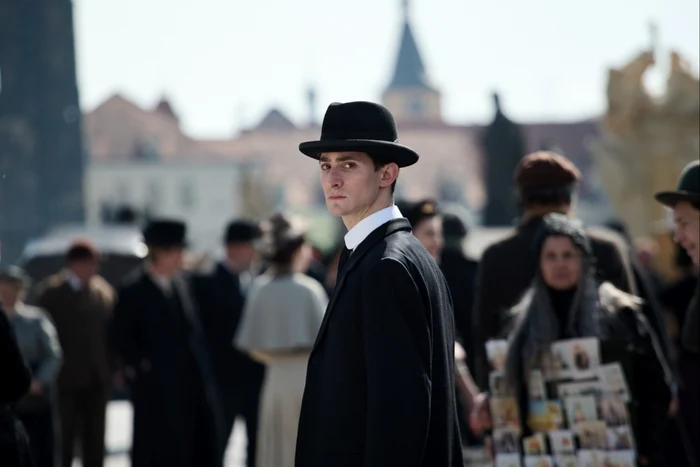
From the selection curated by film critic Cătălin Olaru, a few titles deserve special attention. “In bed with the tiger” by the Austrian Anja Salomonowitz is probably the most unconventional biopic in the program: the portrait of the painter Maria Lassnig, in which the same actress plays her at 6, 14, 64 and 94, without age makeup, because Lassnig was, they say, timeless – wise as a child and young as a man in old age. It won five prizes at the Austrian Film Awards in 2025. Also, award-winning director Agnieszka Holland embarks on her most ambitious project yet: a biopic about the iconic 20th-century Czech writer Franz Kafka. Conceived as a kaleidoscopic mosaic, the film traces Kafka’s imprint on the world, from his birth in 19th-century Prague to his death in post-World War I Vienna.
Another film worth putting on the list is “The Most Precious of Goods”, animated by Michel Hazanavicius, based on a short story by Jean-Claude Grumberg. A postmodern fairy tale about the Holocaust, dreamlike and different from the realistic rigor of other films on the same theme, with music by Alexandre Desplat.
For those who prefer something less classical in form, “Bird Conference”, the debut of the German director of Iranian origin Amin Motallebzadeh, is a pure surprise: football as a pretext for an existential meditation, in a film in which Muslim prayers intertwine with discussions behind the scenes of a professional club. It won Best Film at the Muestra de Cine de Lanzarote and has been touring independent festivals for a year.
European Film Festival
Bucharest: May 6-17
Curtea de Argeș: May 8-9
Timisoara: May 8-10
Brașov: May 8-10
Arad: May 15-17
Târgu Mureș: May 15-17
Bistrița: May 22-24
Chitila: May 29-31
Friday Market: May 29-31
Tulcea: May 30 – June 1
BOOK. Letters to no one and to all
Sybil Van Antwerp is over 70, lives alone, doesn’t travel, doesn’t use email if she can help it. The most important moment of her day is around 10.30, when she sits down to write a letter. Sometimes a single letter takes him an hour. He’s not in a hurry.
On paper, she doesn’t sound like a novel heroine. This is exactly what surprised Virginia Evans when she finished the book: that she chose to tell the story of a woman whom the world would have classified as uninteresting. “I wanted to take someone in the world that you would say would be a boring story and show that it’s not, because no one has a boring story,” the author said in an interview. The result was “The Correspondent,” her debut published in April 2025, which hit #1 on the New York Times bestseller list and hasn’t come down since.
The novel is built entirely of letters – sent, received, or written and never sent. Sybil writes to her best friend’s brother, the dean who refuses her admission to a college course, Joan Didion, and Larry McMurtry to tell them what she thinks of their latest books. From these layers of correspondence, a whole life is gradually reconstructed: a successful lawyer, a mother with regrets, a woman who knows that she will lose her sight and that everything she loves – reading, writing – will be taken away from her.
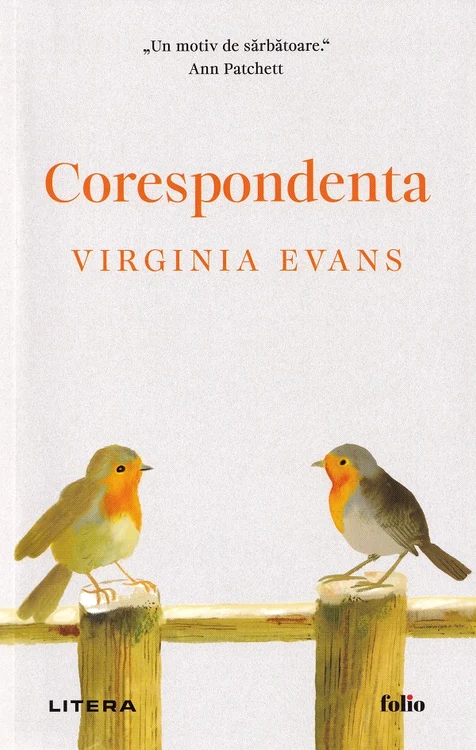
“The Times” calls it “melancholic without being sentimental, warm without being cozy”, and Ann Patchett writes that it is the portrait of a small life in expansion. It’s just that: a novel about how a woman changes when change seemed impossible. The novel will be screened with Jane Fonda in the lead role. The translation of the book “Correspondence”, written by Virginia Evans, was published by Litera Publishing House.
FILM. When the rule disappears
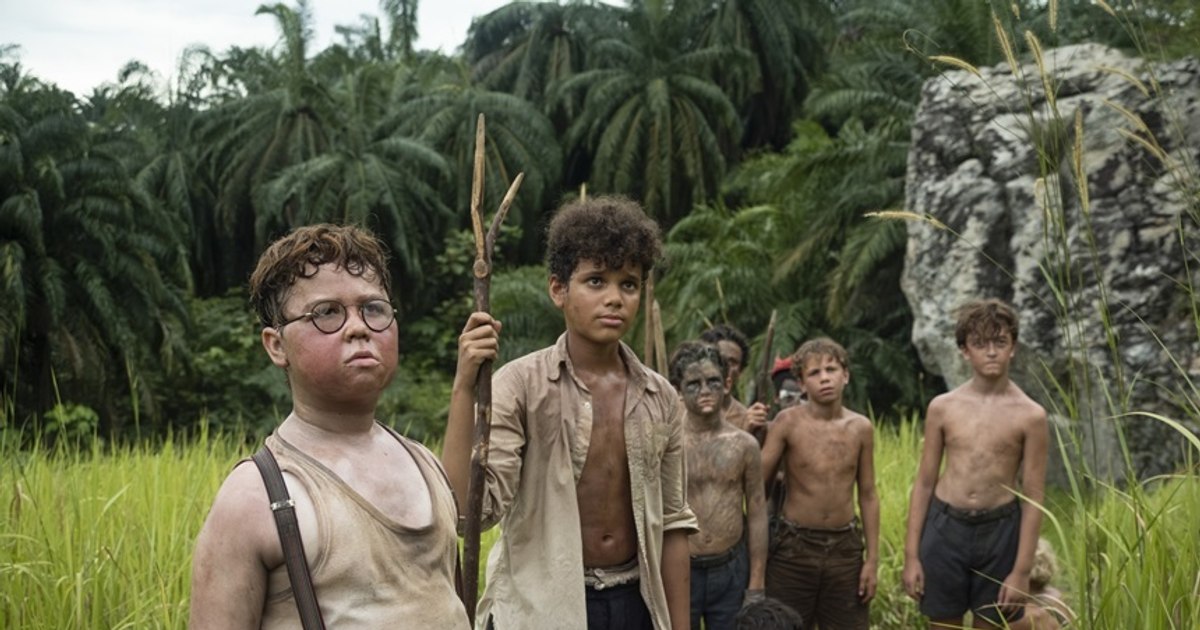
It’s not the first time William Golding’s Lord of the Flies novel has hit the screen, but the new four-episode miniseries available on HBO Max seems less interested in fidelity and more interested in topicality. The story remains the same: a group of children arrive on a deserted island and try to organize their lives. Only, this time, the emphasis is on the mechanisms by which order breaks down, not on the classic symbols of the novel.
The first episodes closely follow the formation of a hierarchy. Leaders are chosen, rules are set, and the idea of cooperation seems to be working. Director Marc Munden builds these moments patiently, insisting on behavioral details: who speaks louder, who hesitates, who needs validation. The screenplay signed by Jack Thorne brings an extra psychological explanation, sometimes even explicit, which makes the conflict easier to follow, but less ambiguous than in the book.
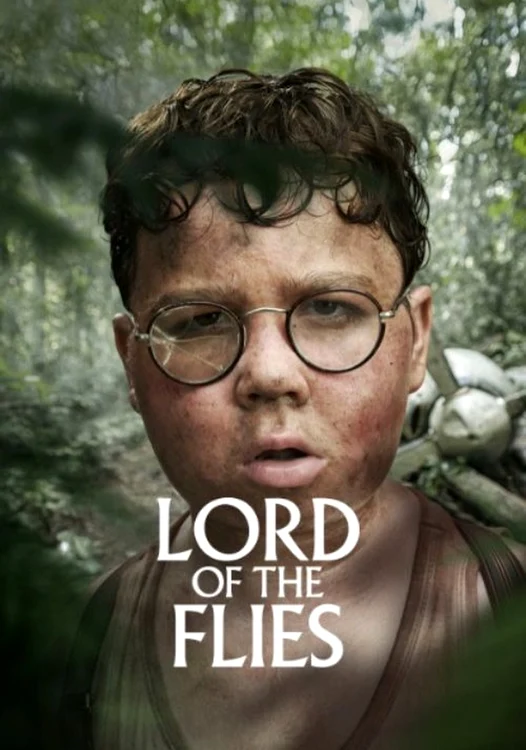
As tensions rise, the series makes clear how fear becomes a tool of control. The idea of the “beast” is no longer just a metaphor, but a pretext for consolidating power. On this point, the adaptation aligns with many international reviews, which have noted that the series works better as a group study than as an allegory. The characters are not just typologies, but recognizable children with believable reactions, even if sometimes the script explains too much. Visually, too, the production is solid: the picture contrasts the natural beauty of the island with the decay of the relationships between the characters. It’s not an ostentatious aesthetic, but it’s efficient and consistent.
Compared to William Golding’s novel, this version loses in symbolic force but gains in clarity. It’s an adaptation that no longer relies on ambiguity, but on explanation and context. But for a warmer comparison, first read Golding’s novel, published in 1954, the translation of which can be found at the Humanitas Publishing House.
