
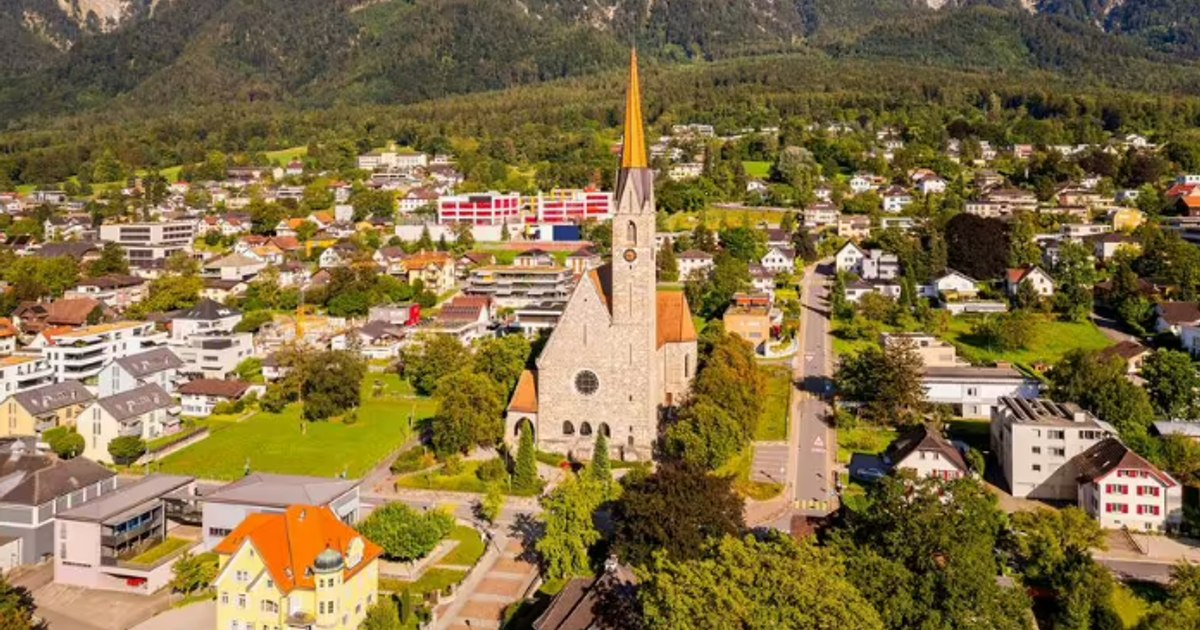
While big European cities face over-tourism, a small country is a peaceful haven with spectacular mountain scenery and an atmosphere that seems straight out of a fairy tale.
It is about Liechtenstein, the small principality located between Switzerland and Austria, one of the most discreet tourist destinations in Europe, but which impresses with its spectacular alpine landscapes and the special charm relative to its small size.
With an area of only about 160 square kilometers, Liechtenstein looks more like a postcard painting than an actual state. Imposing mountains, quiet alpine valleys, neat villages and medieval castles create the image of a destination straight out of a European fairy tale.
At a time when cities like Paris, Rome or Barcelona are facing overtourism, Liechtenstein remains an exception. Recent statistics show that the small principality attracts just over 100,000 visitors annually, a tiny figure compared to other European destinations, scre express.
For many tourists, the country is more of a crossing point between Switzerland and Austria than a destination in its own right, although the tourist offer is surprisingly rich.
The capital Vaduz is the administrative and cultural center of the country, but also the residence of the princely family. Above the town stands the iconic Vaduz Castle, a roughly 700-year-old fortification that dominates the entire valley and remains one of the national symbols.
Although the castle is not open to the public, its view, visible from almost any point in the capital, attracts numerous visitors and photographers every year.
Beyond its historical heritage, Liechtenstein is particularly valued for its nature. The network of mountain trails offers excellent conditions for hiking, cycling and outdoor activities, especially in the alpine area.
In winter, the country turns into a low-key winter sports destination, with slopes less crowded than those of the famous Alpine resorts.
Although it doesn’t often feature on classic holiday lists, Liechtenstein is starting to be rediscovered by tourists looking for authentic experiences away from the crowds. Travel influencers and casual visitors describe it as “a Europe in miniature”where nature and history coexist in an almost intact way.
