
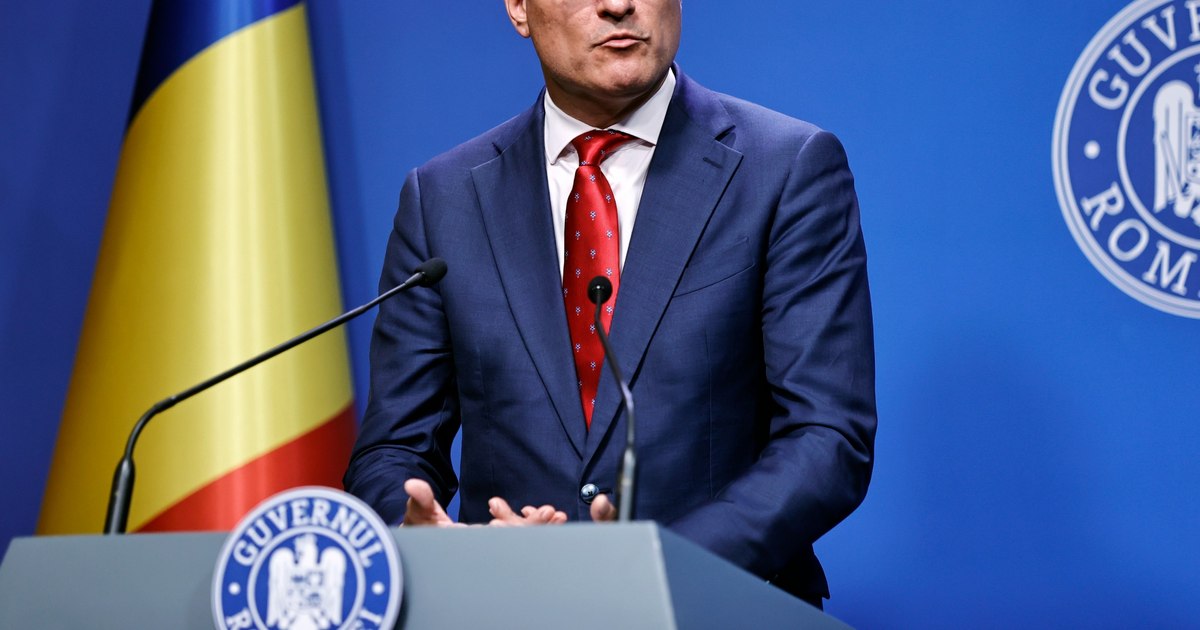
Dragoș Pîslaru states that the idea according to which dignitaries should maintain their low salaries as a “sacrifice” represents, in his opinion, a form of hypocrisy and claims that the future law on unitary wages will “reset” the entire public system, including the grid of dignitaries.
The interim Minister of Labor, Dragoș Pîslaru, spoke on Friday, May 22, in an intervention on Antena 3 CNN, about the project of the law on unitary wages in the public sector, which is in the works, but also about the principles that will be the basis of the new wage scale.
“The grid of dignitaries in Romania remained the one from 2017. Why? It is a great hypocrisy in Romania that the dignitaries said we sacrifice ourselves for the country and let our salaries be lower. What is happening is a matter of populism. In order to have a well-governed country, you must have people who are well paid.” declared Dragoş Pîslaru.
According to him, the project is based on an additional budget envelope of approximately 8 billion lei, established together with the Ministry of Finance and validated at the level of the European Commission, money that would be integrated into a unitary salary system, intended to correct the imbalances accumulated over time in the public sector.
He pointed out that the law should have been finalized as early as 2023, but it was repeatedly postponed, resulting in a delay of almost four years. In this context, Dragoș Pîslaru claimed that the current political agreement between the parties is an essential condition for avoiding electoral competitions based on unrealistic salary promises.
“It is a project that was supposed to be finished from 2023. The delay is almost four years. It was postponed through a renegotiation. It is an important moment for Romania. The political parties have shown responsibility through this political agreement”, said the interim Minister of Labor.
The total wage envelope in the public sector is currently approximately 166 billion lei, and the additional amount of 8 billion will be used to correct inequities in the system, not for uniform increases, he explained.
“It will be an increase for sure, but it is somewhat modest, intended to solve inequities, to set the grid again, to order a salary that has not been unitary for a long time because we have parts of the administration that have become special, with special laws, with differential treatment,” he explained, stressing that the objective of the reform is not the generalized increase of salaries, but their resettlement.
“We have to get out of the populism zone”
He insisted that the debate on the salaries of dignitaries is often fueled by populist perceptions and that an effective administration needs a coherent pay scale that covers all levels, from the top to the executive functions of the public apparatus.
“We need to get out of the populist zone and if we want to attract people to lead the country, you should also have a grid from which they will be paid well. It is not that the salaries of dignitaries will increase, but simply the salaries from the president’s salary, up to the salary of the person who does not have much education but who is important in the lower area of the budget salary, are placed on a unitary salary. You cannot have a head of service in a local town hall like to have more than one parliamentarian”, the minister also specified.
According to him, the draft law would be finalized following the consultations and submitted to the Parliament by mid-June, in an emergency procedure.
