
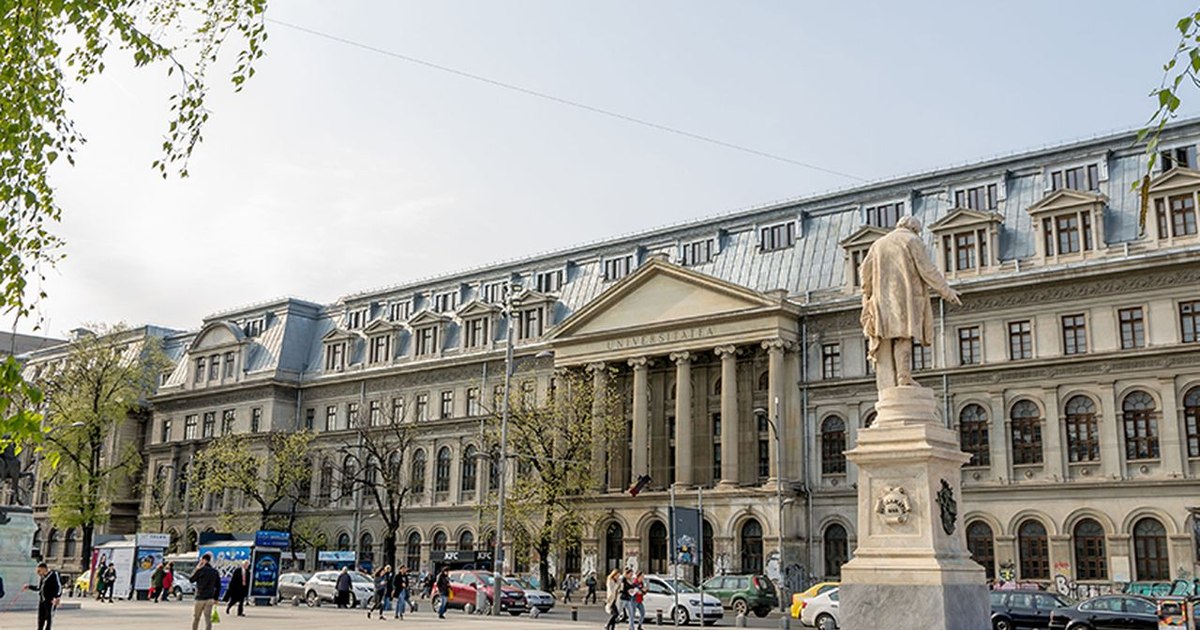
The Faculty of History of the University of Bucharest expressed its “deep concern” regarding the proposals regarding the structure of the Baccalaureate exam from 2030, according to which the History discipline would no longer have the status of a compulsory exam subject for students from the humanities profile, philology specialization, and for those from the vocational profile.
In a memorandum addressed to the Ministry of Education and the Romanian Parliament, the faculty claims that the elimination of the discipline from the mandatory written tests represents “a major pedagogical and strategic error”, with implications for the civic, intellectual and identity formation of future generations.
The devaluation of the humanist profile
The first argument invoked by the Faculty of History concerns the role of the discipline within the humanistic profile. The representatives of the institution state that it is difficult to justify that the graduates of the Philology specialization complete their high school studies without taking a written test in History.
According to the document, historical thinking and knowledge are essential elements of humanistic education, and removing the discipline from the Baccalaureate exam would affect the curricular identity of these specializations.
The history and development of critical thinking
The Faculty argues that History does not only mean memorizing dates and events, but contributes to the development of the capacity for analysis, discernment and critical spirit.
The document says that, in a context marked by misinformation, propaganda and the spread of false information, diminishing the importance of the subject in national assessment can make students more vulnerable to manipulation and reduce their ability to understand contemporary social and political processes.
The risk of extremism and democratic education
Another argument presented in the memorandum is related to the role of historical education in strengthening democratic values.
Faculty representatives claim that the current period is marked by the re-emergence of extremist discourses and the growth of social polarization, and historical education has an important role in understanding these phenomena. The document emphasizes that high school seniors are becoming voting citizens and need tools to help them understand the risks of democratic slippage.
The teachers demand the introduction of History as a compulsory subject at the Baccalaureate for all profiles. How did this subject “Cinderella” reach the Romanian school
Arguments related to European practices
The Faculty of History maintains that the discipline maintains a strategic role in most European educational systems and that eliminating its obligation at the Baccalaureate for socio-human profiles would contravene existing trends at the European level.
At the same time, the document mentions that the proposal is difficult to reconcile with the measures adopted in recent years to strengthen the presence of History in school, including the introduction of subjects such as “History of the Jews. The Holocaust” and “History of Communism in Romania”.
Request addressed to the Ministry of Education
At the end of the memorandum, the Faculty of History of the University of Bucharest requests the Ministry of Education and the Parliament to re-evaluate the proposal regarding the Baccalaureate in 2030 and to keep the mandatory written test in History both for the Philology specialization and for the vocational profile.
“Historical education is a guarantee of the democratic and cultural security of Romanian society,” the document states.
History, at the center of debates about high school reform
The History Faculty’s memo comes in a wider context of debates regarding the place of the discipline in the education system. It is not the first time in recent years that historians, teachers and organizations in the field draw attention to the reduction of the presence of History in school and to the impact that such measures could have on the civic education of students.
The discussions began to be more and more frequent after the publication of the framework plans for high school education, put up for debate by the Ministry of Education in February 2025. The proposals provided for a significant reduction in the weight of subjects from the common core in the 11th and 12th grades, in favor of the specialized curriculum and the subjects chosen by the students.
In the version presented then, History was among the subjects affected by the changes. In the real profile, the discipline no longer appeared in the common core in the final years of high school, and in the human profile the number of hours was reduced depending on the specialization. The proposals generated reactions from teachers, students, universities and professional organizations, who asked to maintain an important role for the History subject in the training of high school students.
