
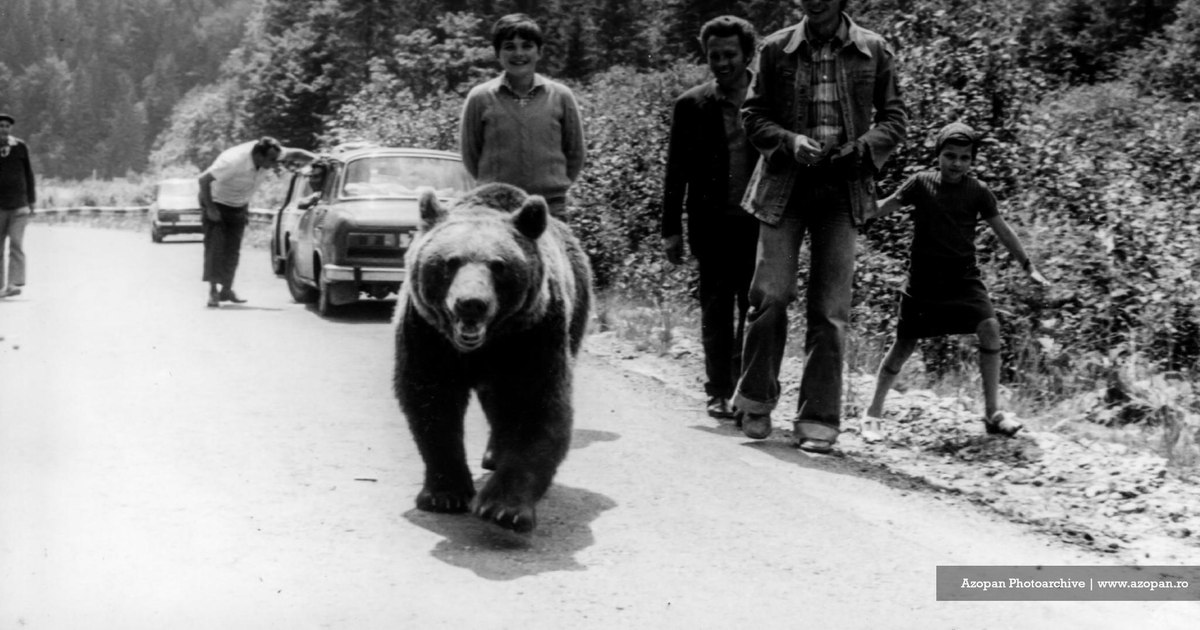
Several images taken on Transfăgărășan in the summer of 1974, digitized and published for the first time after five decades, stirred emotion in many Romanians. The color photos illustrate the trip of some Hungarian tourists on the most spectacular road in Romania, before its opening.
Transfăgărășanul (DN7C), the mountain road that connects Argeș and Sibiu counties, crossing the ridges of Făgărăș, was built with the help of thousands of workers, miners and soldiers and was inaugurated in September 1974 by the former communist president Nicolae Ceaușescu.
The works on the most difficult segment of the road that crosses the Făgăraș Mountains, the approximately 90 kilometers between the Vidraru dam, from Argeș, and the Sibiu town of Cârțișoara, were carried out in the period 1970–1974. The asphalting of the road was completed in 1977, and the works on the Bâlea-Capra Tunnel, 884 meters long, continued in the following years.
Rare images from Transfăgărășan
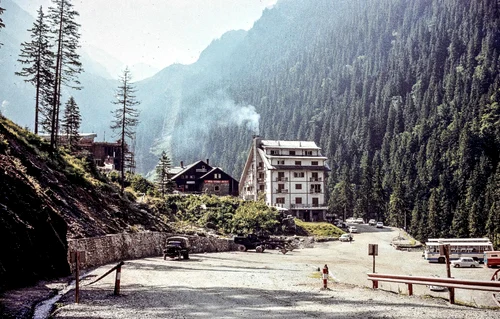
A series of images published by Fototeca Azopan, an online archive dedicated to saving and publishing the analogue photographic heritage of Romania, reveals the landscape of the mountain road in the summer of 1974, before the official opening of Transfăgărășan.
“On Transfăgărășan, 1974. Pictures saved from being thrown in Budapest by Mr. Attila Bekecs. The pictures come from Budapest. In the pictures are some tourists from there. The slides were thrown as part of an annual program for the collection of municipal waste by sectors. The route and year are clearly written on the slide box: July 1974”informed Azopan.ro, explaining the origin of the illustrations.
The images caused strong impressions among Romanians
“These photos, like the entire collection, are priceless! A true archive of what we have been and done. The present and the future are ours now”one netizen wrote.
https://www.facebook.com/azopan/posts/pe-transf%C4%83g%C4%83r%C4%83%C8%99an-1974-poze-salvate-de-la-aruncare-la-budapesta-de-c%C4%83tre-dl-atti/1086002063567022/
Someone else claims that he climbed the Făgăraș Mountains for the first time in 1975, on the Bâlea Lac–Podragu–Sâmbăta route, and that he got to know the mountain very well. He adds that the locals have noticed unusual phenomena in the area, both in terms of the climate and the presence of bears.
“The wife’s grandmother, who died in 1997, at the age of 100, said that since the tunnel was put into operation, the climate has changed, winds blow below, it’s something else… She would have known something, as she lived for 100 years in Corbeni. Since the 80s, I have also seen climate change and the uncontrollable multiplication of bears. I used to go fishing on Capra, on Buda, in the lake, and not I was dealing with bears. Now I’m afraid to get out of the car.”he added.
Some Romanians noted the fact that tourists then oriented themselves according to the classic paper maps. Another netizen noticed people’s habit of taking off their glasses before being photographed. Others appreciated the outstanding quality of the photographs taken on ORWO slides.
“Is it just me, or has the forest line been raised? It seems to me that there are more and more fir trees at the waterfall level, and deciduous trees have appeared at the cabin below, whereas in these pictures there were only fir trees”, someone else notices.
Grossglockner, the spectacular “Transalpine” of Austria. How the Austrians turned an Alpine road into a tourist attraction
Other Romanians asked where the bears were.
“Probably the bears were still getting used to the noise of the dynamite back then. Only later did they start ‘begging’ on the side of the road”. one netizen added.
Another netizen claims the images show a more civilized place than today’s crowded weekends.
“Although the pictures are from 52 years ago, you say they were taken yesterday”he says.
A Romanian proposes the introduction of a toll for the use of the mountain road, modeled on the famous Grossglockner alpine road, a well-maintained and spectacular toll road that has become a landmark of Austria. The highest road in this country, with a route that climbs to more than 2,500 meters in the Alps, brings important revenues to the Austrian state and the communities in the regions it crosses.
“Transfăgărășan must be completely closed, re-asphalted well, then put a barrier and a fee of at least 150 lei. It’s not a public utility road, it’s purely touristic”he says.
Transfăgărășan, built with huge efforts
Built in the 70s, Transfăgărășanul (DN7C) is inaccessible in winter. Paradoxically, during the years of its creation, hundreds of workers and soldiers were sent to work here even in the cold season, in extreme conditions, in an area constantly threatened by avalanches, frost and blizzards.
The builders claimed that there were no victims on the Transfăgărășan site. But the workers had to face dangers that could have been avoided if the work had been suspended, naturally, during the winter.
The mountain road has a total length of over 150 kilometers and crosses the Carpathians through the Bâlea caldera in the Făgăraș Mountains, climbing up to 2,042 meters, near Bâlea Lake.
It was inaugurated in September 1974 by Nicolae Ceaușescu and is considered one of the most complex road infrastructure works carried out in Romania before 1990, due to the difficult relief.
In the years that followed its official opening, the Transfăgărășan remained passable along its entire length for only a few months a year, usually between June and October. These days, the snow removal work is continuing prior to the reopening of the alpine sector of the DN7C.
Transfăgărășanul, Romania’s extreme construction site. “People dismantled the bulldozer and carried it on their arms. Avalanches took us up”
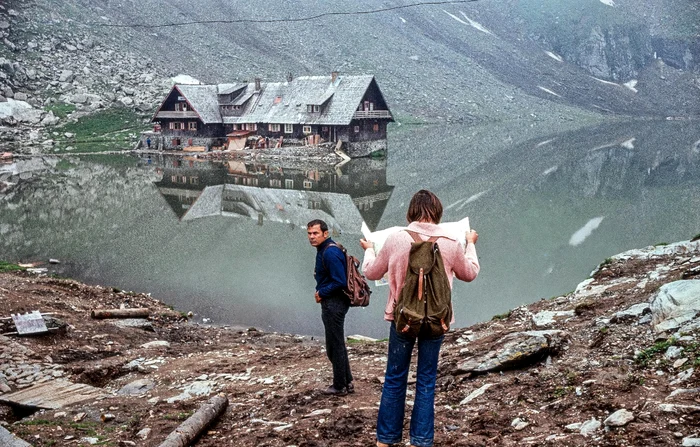
The mountain road starts from the town of Cârtisoara, the last settlement before the route enters the alpine area of the Făgăraș Mountains. From Cârtisoara, travelers climb to the Bâlea Waterfall and the Bâlea caldera, reaching over 2,000 meters, in the Bâlea lake area. After crossing the Bâlea-Capra mountain tunnel, the route descends towards Argeșului Valley, past Vidraru Lake and Poenari Citadel, to the famous Curtea de Argeș monastery.
Built between 1972 and 1974, the Bâlea-Capra Tunnel, in the vicinity of the Bâlea glacial lake, was the touchstone for the workers on the Transfăgărășan construction site. It was designed with the help of mountaineers specialized in topometric measurements and was excavated in extreme conditions, at an altitude of over 2,000 meters.
Half a century after its construction, the Bâlea-Capra Tunnel remained the longest road tunnel in Romania, but it will be overtaken by the tunnels under construction on the highway segments. The tunnel in the Făgăraș Mountains has not been modernized and does not have an efficient ventilation system, so that, during busy periods, the smell of exhaust gases is strongly felt.
