
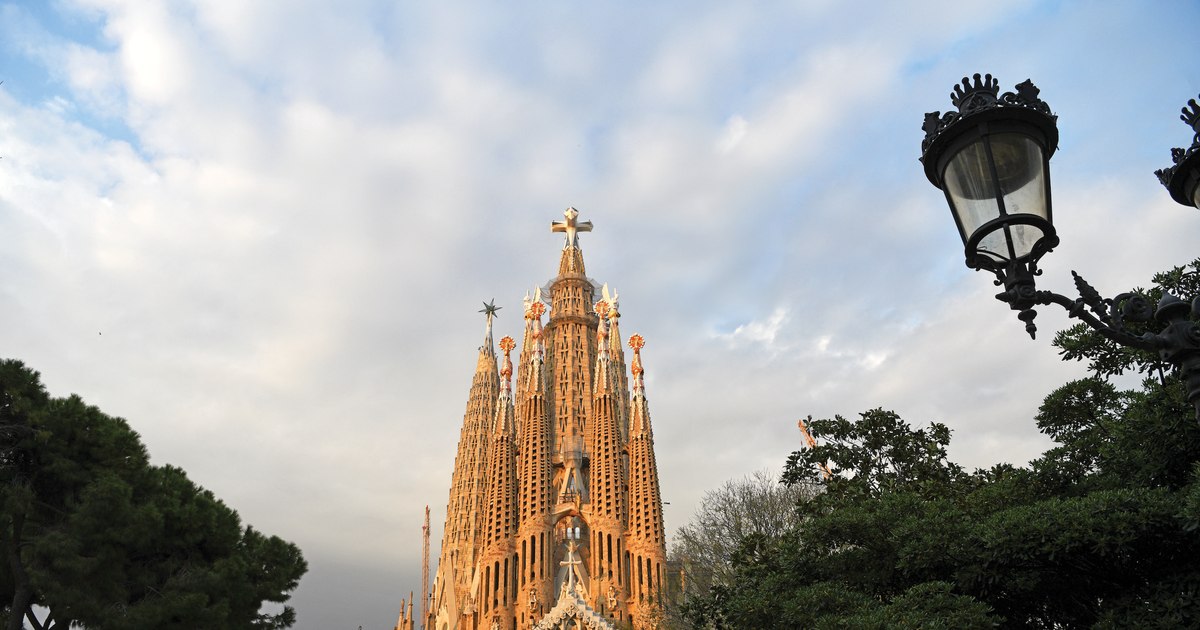
Antoni Gaudí took over the construction of the Sagrada Familia at the age of 31 and never really left it. In the following decades, the cathedral became his work, refuge and destiny. 100 years after his death, the story of the basilica speaks of genius, faith and the patience to build for future generations.
Francisco de Paula del Villar, the original architect of the Sagrada Família, left after several conflicts with the committee – something related to money, materials, who decides what. Gaudí took over the construction site in November 1883. He was 31 years old and people probably expected him to refuse. There was no lack of anything else – the houses on Passeig de Gràcia, the rich clients, the orders from Güell. A cathedral built from donations, with a committee overseeing every peseta, was quite another. He accepted.
If you had known then what was to come, you would have understood that that moment was, in fact, the moment when the dandy began to disappear. Not suddenly – that would have been too plain, too theatrical for a man who had nothing ostentatious about him. It slowly disappeared. At 30, Gaudí was still choosing restaurants carefully. He wore deerskin gloves, jotted down ideas on paper corners by the light of gas lamps. At 40, he refused more and more invitations. At 50, he was fasting with a strictness that worried those around him. At 60, he had moved to the construction site.
His faith was not acquired late, a consolation of old age. She had grown up with it, but in silence, covered by everything else around. As other things dwindled, she remained. The Sagrada Família was not created by Gaudí. But he found it and gave it a place where method and devotion could finally be the same thing.
The three faces
The first thing he did with Villar’s plan was to turn it around. Not to adjust it – to turn it. Traditional Gothic keeps a cathedral standing with external buttresses, massive buttresses stuck on the outside, that solve a problem that the structure cannot solve on its own. Gaudí found an eccentric solution: he brought the weights inside, mounted them on branched columns towards the vault, with different sections in height, exactly where the effort occurs. Someone who enters and looks up sees something that looks like a forest. Forms were not invented, they were found. Gaudí hung chains with weights, let them fall freely and photographed the upside down result. The spring that the chain formed was, inverted, the perfectly stable spring of the vault. Every curve was a calculation, every point was exactly where it needed to be. It did not impose form on matter; a negotiation with the real forces.
The project provided for three facades: Nastarea to the east, Passion to the west, Gloria to the south, this being the main entrance, the one from the city. Gaudí knew that he would not see them all built and he said it without pathos – this church belongs to several generations, not just one, and the client has no reason to rush. He started with the Nativity Facade not for mystical reasons, but for a very concrete reason: it was the facade that could convince. He could turn a curious passerby into a donor, and without donations there is no construction site.
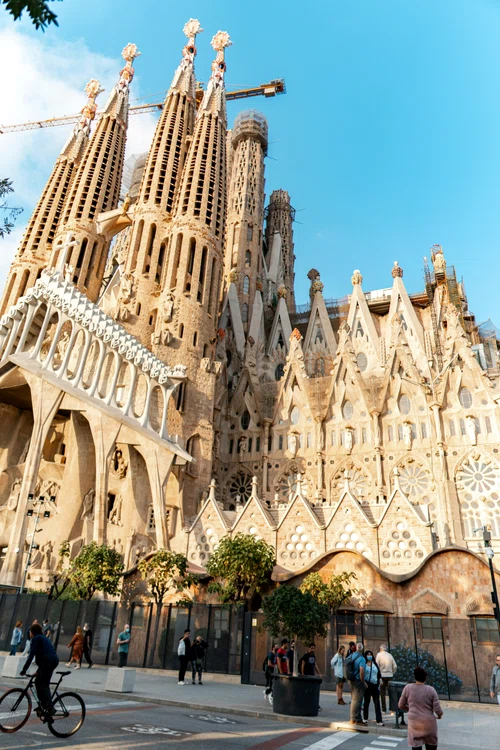
She did not invent anything for her sculptures. He brought people from the neighborhood, cast molds after real bodies, studied plants and animals and reproduced in ornaments the structure of a leaf, the articulation of a wing. He wanted the touching hand to recognize, not discover something fabricated. The four towers of the facade have those trencadisuri at the top, with inscriptions that can only be read from a distance. There are three portals: Charity, Faith, Hope, each with its own scenes, from the Annunciation to the Flight into Egypt.
He sketches the Façade of the Passions, but does not get to see it built. He thinks it the opposite of Birth – not density, but emptiness. Leaning columns, surfaces without ornament, light that cuts instead of caresses. If the Birth is a story told with warmth, the Passions demand something completely different. The Gloria façade remains at the project stage – seven portals, superimposed registers in which Hell, Purgatory and Glory each occupy its own level. It remained on paper, as a legacy for future generations.
INSIDE
The main hall of the Sagrada Família is unlike anything ever built before. Not a remodeled Gothic ship, not a Baroque reinterpretation. The starting point was a question that sounds disarmingly simple: how does the light enter without blinding and how does the person sit inside without feeling crushed by the space.
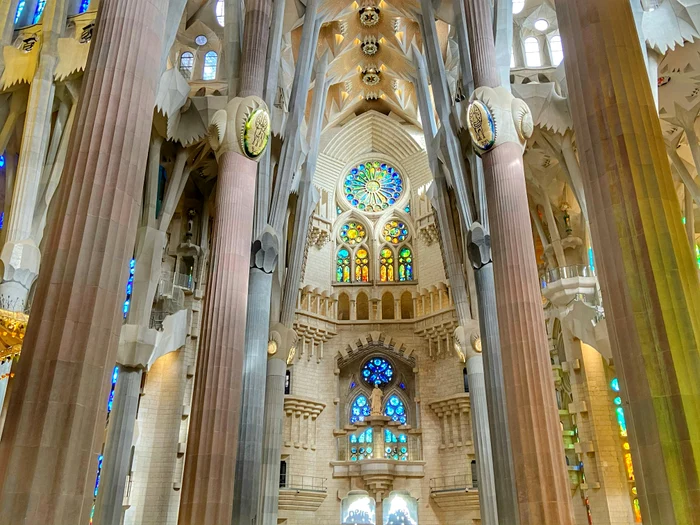
The stained glass windows are probably the most unusual elements of the ensemble. Gaudí didn’t want homogeneous light – he wanted light with time, light that knows what time of day it is. The windows from the east are green and yellow, of the morning and the beginning. Those from the west, red and orange, of dusk and heaviness. To the north and to the south, the blue and violet of meditation. The man who enters at eight in the morning and the man who enters at six in the evening do not live the same interior – and this is not a happy side effect, it is the calculation from which everything started. He checked on small-scale models, moving light sources according to the position of the sun, before approving anything.
The symbolism is present everywhere, but not displayed. The project includes 18 towers. The one dedicated to Christ stops at 172 meters – one below the height of Montjuïc hill. A human work has nothing to seek higher than nature, that’s what the architect thought. The turtles at the base of the columns, the pelicans above the central portal – each species has its place chosen according to an iconographic tradition that the 19th century still knew inside out, even if today’s viewer passes by without suspecting it.
June 7, 1926
The tram hit him on the Gran Via in the evening of June 7, 1926. He was going to the evening prayer, like every day. In the pockets: some dried fruits and a rosary. People gather, but they don’t recognize him: the shabby clothes, the shoes tied with string, the lack of documents put him in the wrong category. The taxis refuse to take him to the hospital. He finally arrives at Santa Creu, a charity hospital. Alarmed by his unusual absence from the evening service, the priest of the church where Gaudí went daily began to look for him. After hours of frantic searching, he finally found him at the poor hospital, where he had been brought, as an anonymous person, hit by a tram. When friends find him the next day, the body is too tired for moves and interventions. Someone proposes a private clinic; Gaudí’s answer is short and clear: his place is there, among unpretentious people.
Antoni Gaudí, the architect of the famous Sagrada Familia, on the road to sanctification
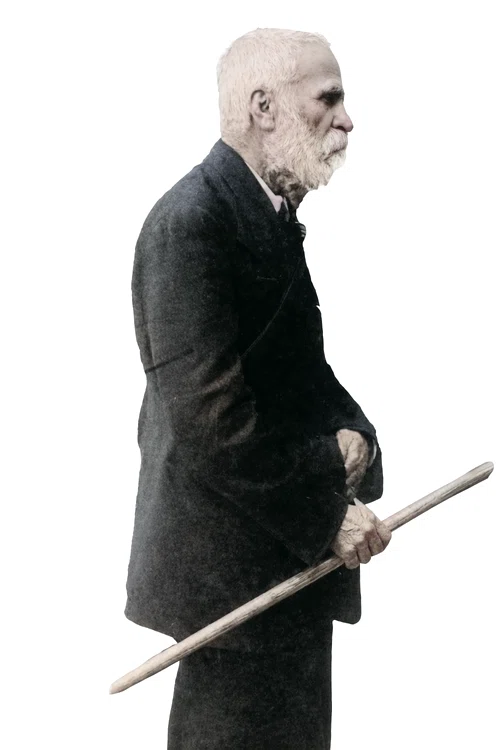
He dies on June 10. The city – which had laughed, contested, fined – goes out into the streets dressed in mourning clothes, takes him down to the crypt of the cathedral and, for one day, adjusts its pace to the man it had mistaken for a beggar.
At his death, the Nativity Facade was advanced but unfinished. The interior was full of scaffolding, moldings, lead strings. He had left behind plans and people who understood enough to carry on. He hadn’t left complete instructions – he didn’t believe in them. He said that a structure shows its needs by itself, if you know how to look carefully.
The fawn-gloved dandy had ended up sleeping among sandbags and dying unrecognized on a street in the city he had transformed. The route from the workshop to the construction site, from the salon to the crypt, had not been a fall. It had been a choice, made slowly, day after day, with the same patience with which he let the weight take its own shape.
Gaudí’s code
It does not follow a legend with a happy ending. The civil war of 1936 destroyed the workshop. Drawings were burned, plaster models were broken, calculations were lost that no one had transcribed. The apprentices took what they could from the ruins – fragments of shapes, photographs, oral memories – and reconstructed the method from these. It was not a glorious recovery. It was a puzzle with half the pieces missing. However, the method survived because Gaudí had not kept only on paper. He had kept it in people and matter.
The construction site went ahead. Domènech Sugrañes continued until 1938, when the war closed everything. Then others, decade after decade – Quintana, Puig Boada, Jordi Bonet – each more an administrator of someone else’s intention than an architect with his own vision. That was the role. In 1987, the sculptor Josep Maria Subirachs takes over the Façade of the Passion and introduces a geometric, hard language, with no visible connection to the exuberance of the Nativity. Controversies arose; part of the public considered it treason. Others said that this was exactly what the facade of the Passion demanded – another grammar, for another subject. The controversy has not been resolved. It exists even now.
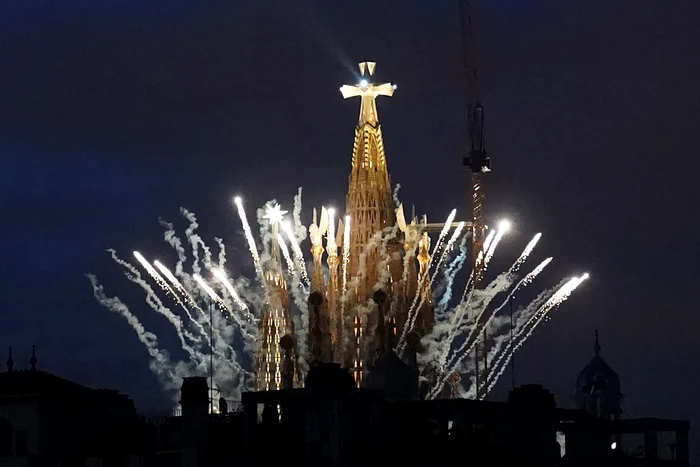
The Sagrada Familia became the tallest church in the world on Friday. How tall is the monument started 140 years ago by Gaudi
Dalí didn’t get his hands on the Sagrada, but he changed the way the world looked at it. By the 1950s, when straight lines were synonymous with progress and ornamentation had become suspect, he simply said that where others see whimsy, he sees biology. That those columns are bones. That Gaudí had not decorated, but calculated. It was not a disinterested statement: Dalí had every interest in legitimizing the excess, the strange, the surface that hides a logic. But that didn’t make it any less true. His intervention was not architectural – he did not design anything, he did not influence any construction site. It was more subtle: it moved the Sagrada from the category of “eccentric curiosity” to “an object worthy of serious thought”. At that time, it was not a small thing. Functionalist modernism controlled taste and reputations. That it was Dalí – and not an art critic, not an architect, not an engineer – who defended the Sagrada says something about her, and about him.
centenary
On February 20, 2026, the cross on the Tower of Jesus Christ was put into place, marking the completion of the last exterior tower of the basilica. The centenary of Gaudí’s death on June 10 turned Barcelona into the epicenter of the Catholic world. Pope Leo XIV officiated the solemn inauguration Mass, an event that gathered thousands of believers inside and around the basilica. Beyond this historic celebration, the construction site does not stop for good; interior work continues, with an estimated completion horizon after 2030.
Since 2005, Gaudí’s buildings in Barcelona have been included in the UNESCO Heritage List – not as a museum of a style, but as an ensemble that proved that form and structure can be the same thing. 2026 is also the year in which Barcelona was designated the World Capital of Architecture. His legacy is not a style recognizable by mosaic or slender towers. It is a thread taken to the end: from the sick child studying the shells and wings of insects in the garden of Reus to the old man checking a vault angle before falling asleep. A structural honesty applied not only to the stone, but to the whole life: you don’t impose more than it can carry, you don’t hide the effort, you don’t build for the look. The construction site in Barcelona is only the visible part. The man who made it possible left a long time ago, on foot, with his shoes tied with string, on a June evening.
