
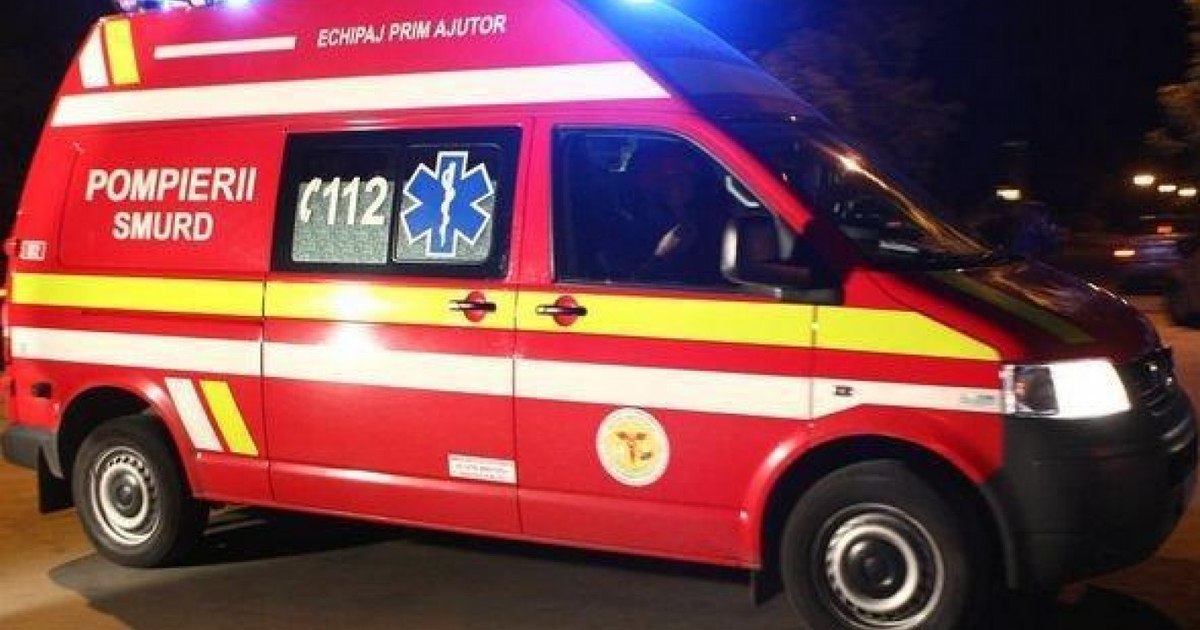
In a busy intersection, the siren of an ambulance breaks the noise of the city for a few seconds. Drivers pull to the right, some brake suddenly, others look in the mirror in a hurry. The ambulance passes, but not always at the speed expected by the traffic. And in those moments, almost inevitably, the question arises: if it’s an emergency, why doesn’t it go faster?
An answer comes from a message published by ISU Cluj, written by a SMURD neonatal intensive care driver. A perspective that completely changes the way the “emergency” inside an ambulance is understood.
Not all emergencies look the same
“In the last few days I have had some unpleasant situations in traffic. Horns, tensions and nerves from drivers who did not understand why the ambulance I drive had its light and acoustic signals working, but it was not traveling at a very high speed”, sent the driver of the SMURD truck, in a message distributed by ISU Cluj.
The difference lies in the type of mission. Not all ambulances transport patients in the same conditions, and the mode of travel is adapted to each medical situation.
In the case of neonatal intensive care ambulances, patients are newborns in critical condition, transported in incubators and connected to medical equipment.
Why speed is not always a priority
In such cases, patient stability is as important as intervention time.
“In such missions, the priority is not always maximum speed, but patient safety. Strong acceleration, sudden braking or speeding over bumps can have consequences for an extremely fragile newborn.”the message shows.
This means that the medical team can reduce the speed even in an emergency, to avoid any movement that could destabilize the patient.
The ambulance does not thus become less “expedite“, but more attentive.
Siren means priority, not top speed
In public perception, acoustic and light signals are associated with the idea of maximum speed. In reality, their role is to allow fast passage through traffic, not to impose a fixed pace of movement.
There are missions where every second counts and speed is increased as safety conditions allow. But there are also situations where every brake or acceleration must be calculated, because the patient cannot be exposed to shocks or vibrations.
Neonatal intensive care ambulances fall into this second category.
What actually happens inside the ambulance
From the outside, only a vehicle can be seen trying to get to the hospital as quickly as possible. From the inside, every kilometer is a combination of medical decisions and constant attention.
“Please, before you judge or get angry, consider that every ambulance has a different mission. Just because it’s not going very fast doesn’t mean it’s not an emergency. It just means the crew is adapting the way they travel to the needs of the patient they’re transporting.”the SMURD driver sent from the message published by ISU Cluj.
Inside, the priority is not the road itself, but the stability of a life at the beginning.
Between traffic perception and medical reality
For other road users, the ambulance is a vehicle that must be allowed to pass quickly. For the crew, it is a mobile medical unit where every decision has direct consequences for the patient.
The difference between these two perspectives explains the tensions that sometimes arise in traffic, but also why not all ambulances drive in the same way, even if they have the siren on. Sometimes the fastest form of intervention does not mean the fastest speed.
