
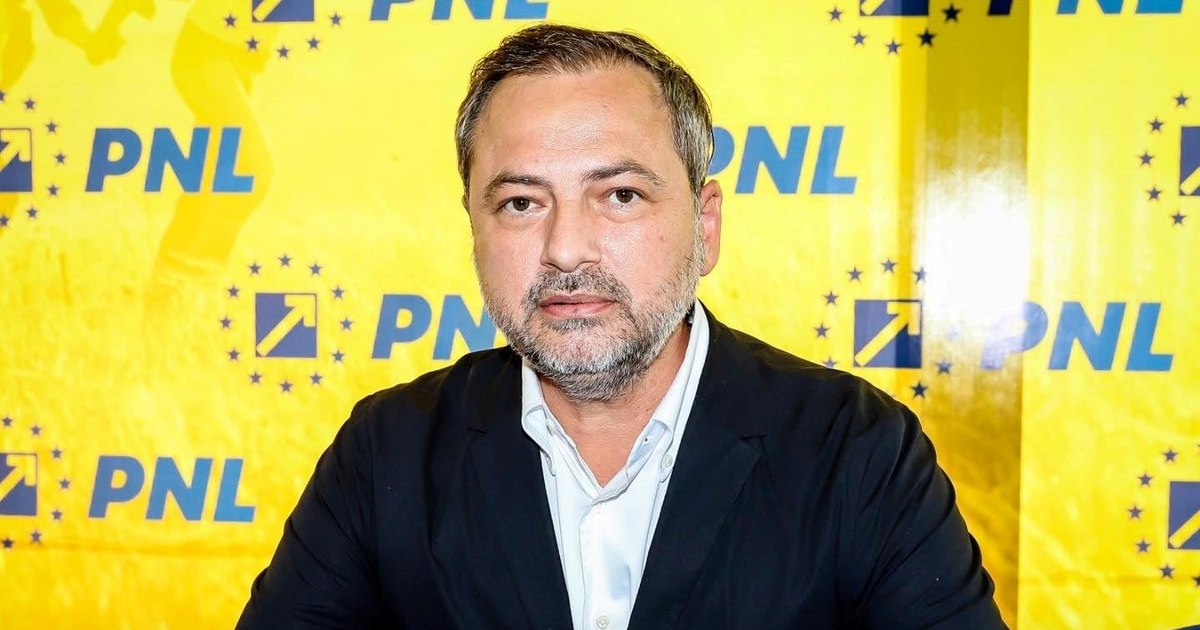
Liberal MEP Dan Motreanu declared on Friday evening, July 3, that the decision of the Ilfov Court to suspend the decisions of the PNL leadership “it seems to transform a constitutional principle into one which the Constitution does not enshrine”.
On June 18, 16 protesting parliamentarians asked the Ilfov Court to suspend the decisions of the National Political Bureau regarding the sanctioning of those who would have voted for the investiture of the Vestea Government.
The court ruled in their favor on the same day. PNL announced that it will appeal the decision within the legal term.
A day later, the 16 parliamentarians filed a new action, requesting the suspension of the decisions by which the leadership had convened the Extraordinary National Council and the Extraordinary Congress. The Ilfov court set the date of July 3 for judging this request.
Daniel Fenechiu, the leader of the PNL senators criticized the decision of the Ilfov Court to temporarily suspend two decisions adopted by the liberal leadership, arguing that the courts should not intervene in the way a party establishes its political strategy.
“If parliamentary voting is free, then party status becomes optional”
About the decision of the court in Ilfov, Motreanu said that “seems to transform a constitutional principle into one that the Constitution does not enshrine: if parliamentary voting is free, then party status becomes optional.”
“This is precisely where the legal problem begins. No one disputes that, according to Article 69 of the Constitution, parliamentarians exercise a representative mandate and vote according to their own conscience. The prohibition of the imperative mandate is one of the fundamental guarantees of democracy.
But this constitutional guarantee cannot be extended to the conclusion that a political party no longer has the right to enforce its own status and protect its political identity“, he adds.
Dan Motreanu claims that the parliamentary mandate and the membership of a party are two distinct legal relationships. According to him, the mandate is regulated by the Constitution and concerns the relationship between the elected and the electorate, while membership in a party is governed by the Political Parties Law and the formation’s statute.
He argues that PNL members voluntarily joined the party and undertook to abide by the statute and internal rules, which is why the leadership has the right to sanction them if they are violated.
“The same statute establishes the obligation of each member to respect the decisions of the statutory bodies, to promote and defend the political options of the party and not to carry out actions contrary to its interests. The same statute provides that a serious violation of these obligations may attract the sanction of exclusion.
PNL asks for explanations regarding the constitution of panels that judge disputes regarding political parties: “We request full transparency”
These provisions are not mere statements of principle. They represent legal rules voluntarily assumed by each member of the party.”
“The parliamentarians in question were not elected as independents”
He adds that “the parliamentarians in question were not elected as independents, nor in a single-member system,” but “they obtained the mandate within a system of proportional representation on party lists.”
“In such an electoral system, citizens vote, first of all, for a political party, its program and the list of candidates proposed by that party. The political legitimacy of the chosen one is therefore strongly linked to the political formation on whose list he/she ran and the commitments assumed by it to the electorate.
This is one of the foundations of proportional representation in all European democracies,” emphasizes the PNL MEP.
Dan Motreanu states that European standards recognize the autonomy of political parties to establish their internal rules, including those regarding the discipline and sanctioning of members, and the courts should only intervene in exceptional situations.
He claims that this principle is also applied in the European Parliament, where MEPs have a free mandate, but can suffer political and organizational consequences if they repeatedly violate the decisions of the group they belong to.
“Exclusion from the party does not mean the loss of the parliamentary mandate”
“No one considers that such measures violate the freedom of the mandate. They do not affect the MEP mandate, but exclusively the relations between the elected and the political group of which he is a part.
This is exactly the essential legal distinction in the present case. Exclusion from the party does not mean the loss of the parliamentary mandate. The parliamentarian keeps his mandate, precisely because it is protected by the Constitution. The measure produces effects exclusively on the legal relationship between the party and its own member.”
The MEP claims that, if the parties could no longer apply their own status to MPs, the obligations assumed by them upon registration and the sanctions provided by the internal rules would become ineffective.
In his opinion, such an interpretation would affect the autonomy of political parties, guaranteed by the Constitution, the Law on Political Parties and European standards.
“The obligations provided for by the statute were assumed at the time of acquiring party membership and did not cease with election as a parliamentarian. The political responsibility of a party member who is also a parliamentarian or minister cannot be canceled by the existence of the representative mandate.”
