
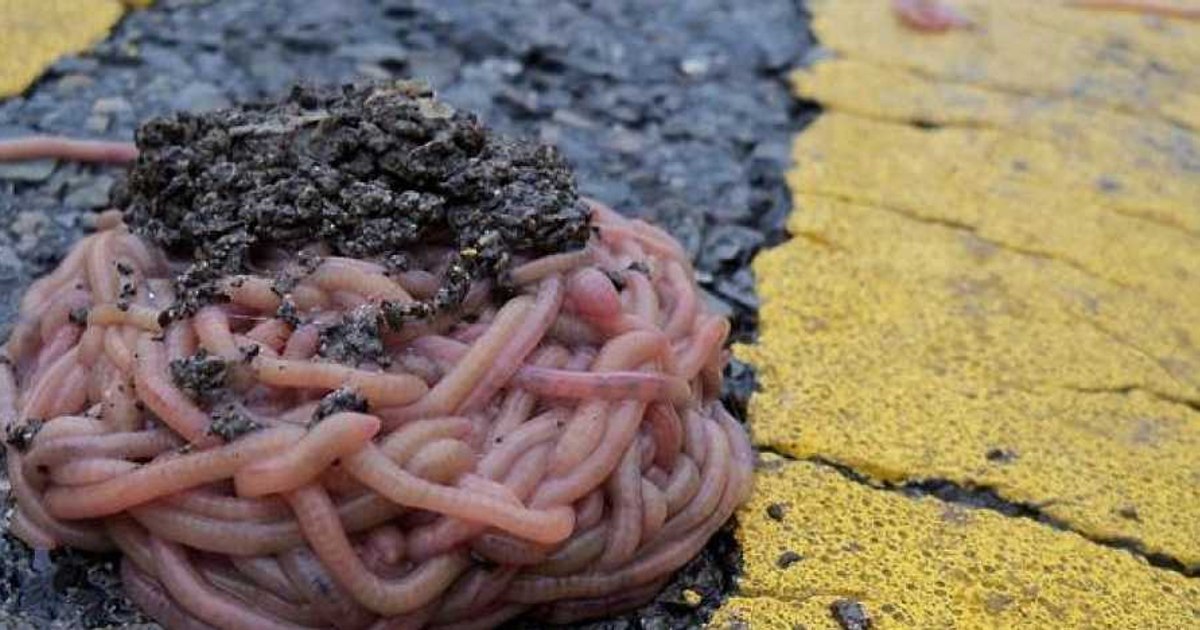
Worms living near the world's most famous nuclear disaster zone, Chernobyl, appear to have developed new superpowers, researchers have discovered.
The worms from Chernobyl developed new capabilities PHOTO archive Adevărul
In a new study, cited by The Independent, a team of scientists visited Chernobyl to investigate nematodes, small worms with a simple genetic structure that reproduce quickly.
The researchers collected the worms from soil samples, rotting fruit and other materials, then tested local radiation levels.
Radiation levels ranged from low levels comparable to those in large cities to high levels similar to those found in outer space. The scientists then took the worms to New York University where they were frozen and studied.
Dr Sophia Tintor, lead author of the study, told the Daily Mail: “Chernobyl was a tragedy of an incomprehensible scale, but we still do not have a clear understanding of the effects of the disaster on local populations. Selection for species or even individuals within a species that are naturally more resistant to ionizing radiation.“
Since the 1986 disaster, animals have continued to live in the Ukrainian region, despite persistent radiation, nearly 40 years later. Researchers have previously found that animals in the Chernobyl Exclusion Zone are genetically different from the same species found elsewhere.
Matthew Rockman, professor of biology at New York University, added: “These worms live everywhere and reproduce rapidly, so they go through tens of generations of evolution while a typical vertebrate has yet to reach maturity“.
The researchers found that despite the high radiation, the worms' genomes were not affected. The exciting discovery does not mean that Chernobyl is safe, but suggests that worms are hardy animals that can survive extreme conditions, Dr. Tintori revealed.
20 worms with different genes were tested to see if they had an unusual ability to protect and repair their genetic material.
Tintori said the findings show that Chernobyl animals are not necessarily more tolerant or evolved, but that the findings could lead to a better understanding of natural variation.
