
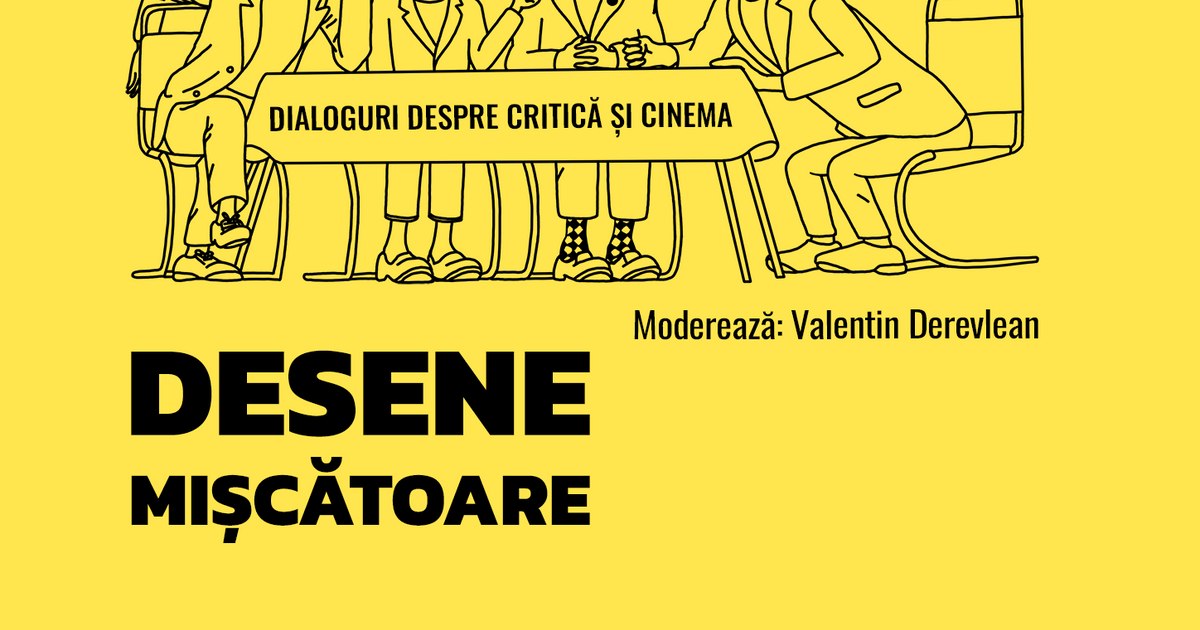
Andrei Gorzo and Mihai Iovănel will have two meetings with Cluj's film-loving readers, on the occasion of the release of the volume “Moving Drawings. Dialogues about criticism and cinema”, recently published by Polirom Publishing House.
• Thursday, April 11, 6 p.m., Book Corner Librarium (B-dul Eroilor no. 15, Cluj-Napoca)
Book launch & autograph session
With authors: Andrea Virginás and Claudiu Turcuș. Moderated by: Valentin Derevlean
• Friday, April 12, 7 p.m., ARTA Cinema (Str. Universităităi no. 3, Cluj-Napoca)
Film Screening: “Unforgiven” (1992, directed by Clint Eastwood). Dialogue with the public
Who was Alex really? Leo Serban? Why does sex take a peripheral place in Quentin Tarantino's films? Why is Nae Caranfil finding it difficult to get out of the 90s? What attracted Pauline Kael to trash culture? What connections does the enigmatic and queer prose of Henry James make between the films of François Truffaut, Jacques Rivette and Claude Chabrol? What is the place of Clint Eastwood's latest western in all this? And why is there a quote from George Lucas on the credits? A non-linear journey, full of flashbacks and cameos, into the world of cinema, literature and film criticism of the last 60 years. On one page Schofield revolver shots are heard, on another obscure references are discussed. The tempo runs through a spectrum from andante to allegro vivace, and the tone alternates between comedy and elegy. In the end not all remain standing, but something survives from each.
“The six texts in this anthology are just as many attempts, admirable by the verve, tenacity and erudition of Andrei Gorzo and Mihai Iovănel, to decipher the “drawing from the carpet” of the six characters in search of which they set off on this “moving” terrain », literally and figuratively, which is the cinema. They are distinct exercises of admiration – towards three directors, two film critics and a writer who is often screened – done with passion, but also with a necessary touch of irreverence, which also works as a whole, subtly woven from communicating references. The fact that they happen in the form of dialogues, but not in machine-gun exchanges where the fist takes precedence over the mind, but in elegantly paced conversations where the authors really listen to each other and take their time (and notes) before responding, not infrequently in contradiction, it is as if one could not be more welcome in the increasingly polarized and self-sufficient world in which we live.” (Mihai Chirilov)
