
The monstrous scandal involving the St. Pantelimon Hospital in Bucharest, where 17 patients lost their lives within four days, is far from over. The relatives of the deceased need answers, and so do the rest of us. No less than four investigations have been opened in this case. The representatives of patient associations say that regardless of the culprits, many Romanians will look at the public hospital as a morgue from now on
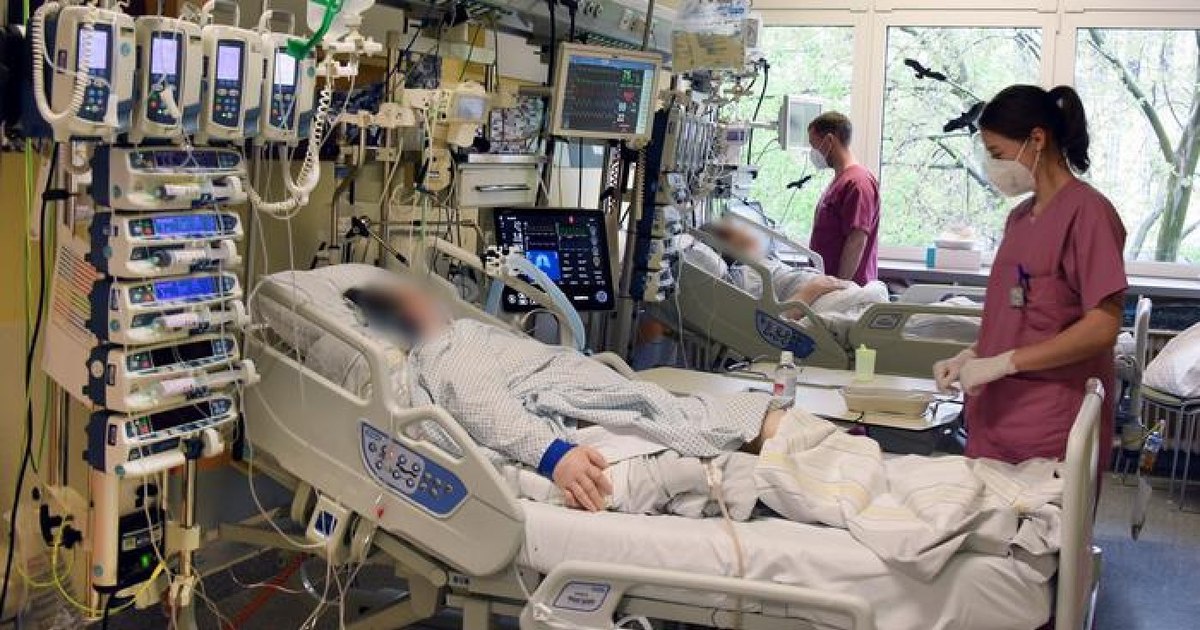
17 patients dead in 4 days. Malpractice or revenge? Photo source: archive
17 people died in just four days. It happened in the Intensive Care Unit of St. Pantelimon Hospital in Bucharest, where the doctors are accused of not having administered the full doses of treatment to the patients. Specifically, it is noradrenaline, a drug that keeps intubated patients alive. Investigators looking into the case now have a very difficult task as the allegations must be proven.
In short, the hospital manager was notified in writing by the directorate of medical care regarding the 17 deaths. This, in turn, had been announced by the former head of ATI who would be in conflict with the current management of the section. Several investigations are currently underway, including the woman's revenge motive. “There are currently no elements to support these accusations, but that does not mean that we are not continuing with the investigation”, said the Minister of Health, Alexandru Rafila. “I find it intolerable to jeopardize trust in the medical staff if you have a vested interest. I'm not saying it happened in this case, but I don't think there are elements to justify these complaints, and we're in the process of getting in touch with the person who made the complaints“, continued the minister.
And the current head of the department is questioning the accusations, which she believes are false. “It is impossible for me to believe that anyone would do such a thing. The information is false. And we are interested in who made the allegations, what is actually happening. Per day, it is not the maximum number of deaths. Last year in the same period there were nine deaths per day“, she specified. “Until now, from the preliminary analysis, no data has been found to attest to a defect in the treatment in the Intensive Care Unit“, the manager of the hospital, Bogdan Socea, reinforced these statements.
We are faced with a dilemma and several unanswered questions. Are we talking about retaliation, malpractice, or a general practice that occurs in hospitals due to lack of funding? “QIn the medical field, there is always competition, competition, and this can be seen in the way the medical system works. It is not a novelty. But these games of influence affect the patient, and here is a big problem“, Radu Gănescu, president of the Oncology Patients Association, told “Adevărul”.
“What happened there is hard to imagine, hard to believe…and we will be left with deep consequences“, also commented Cezar Irimia, the president of the Federation of Associations of Cancer Patients. He is of the opinion that, regardless of the culprits, “mthe last patients will look at the public hospital as a morgue from now on. Because that's what it turned out to be after all.”
Although he admits that the healthcare system in Romania is in a deep coma, Cezar Irimia does not believe that intensive care doctors would have killed patients in cold blood. “Such a thing is impossible. We are talking about doctors who, many times, fought with their bare hands to save us. I cannot, until the ongoing investigations are completed, accuse or point to one doctor or another. However, if it happened due to medical malpractice, let's not make the mistake of blaming the whole guild. Because that's not the reality. Doctors have dedicated themselves most of the time to us, the patients, to do something to save our lives, improve our quality of life or even cure us when possible“, he also specified.
Little money, incomplete treatments
What happened at St. Pantelimon? If the allegations are true, why was the treatment not given according to the protocol? One reason would be the lack of money in the system, which causes the treatments to be halved to reach everyone, according to the president of the Federation of Associations of Cancer Patients. “So that doctors don't have to choose between who lives and who dies. Often, the underfunding of the system leads doctors to try to give a helping hand to all patients, even sharing treatments. Therefore, they are no longer made to the standard provided by the protocol. I don't think that doctors are criminals, on the contrary, they tried to help all those in need as much as possible“, also declared Cezar Irimia.
Radu Gănescu, the president of the Oncology Patients Association remembers that such a situation occurred in many hospitals in Bucharest and the country during the COVID pandemic. “When hospitals were overcrowded, there were no more beds in ATI, and doctors were put in the position of triaging patients, of deciding who dies and who lives. That is, who goes into intensive care and who does not. Who has a better chance of survival and who is on the verge of losing the fight for life. If you ask me, I don't agree with that. Everyone has the right to life. No one has the power of God to make such a choice between patients regardless of age, comorbidities, etc“, he specified for “Adevărul”.
How ethical is it to let a person die, when his chance of survival anyway is minimal, modest, asks psychiatrist Gabriel Diaconu. “Is it ethical to artificially prolong a life with medication, with invasive maneuvers, aware that, in fact, you are only contributing to an agony? ATI doctors are very vulnerable to such judgment. In Romania, the axis of consciousness continues to operate. The axis of consciousness tells you that we are going to the point where nothing can be done”.
But, says Cezar Irimia, the underfunding of the system and the lack of coherent health policies often lead to major slippages that shake confidence in the public medical system in Romania.
However, Radu Gănescu is of the opinion that such a practice is untenable. Not working. “I know because I am a patient and have been taking my treatment for over 40 years. If you do not take your treatment in the required dose, in the recommended quantities, you are taking it for nothing. And I have the medicine for nothing if I share it with four other patients in the idea of helping them all because, in reality, I'm not helping anyone. I know this as a patient”, explains Radu Gănescu.
Then, he continued, if that drug did not exist in sufficient quantities in the hospital, the management of the unit had to request it possibly with a notification at the level of public authority. That is, if it's true that they didn't have the medicine and shared it. “Dif they had the medicine and reduced the doses based on perhaps more than medical criteria, then it is clear that there is malpractice. If this was done because it is a general practice, we are talking about patient safety here. But I can't believe that a doctor would deliberately violate a protocol and the Hippocratic Oath”the president of the Association of oncological patients.
There are many voices commenting on the subject. Opinions are divided, camps formed. Psychiatrist Gabriel Diaconu stated in a message published on social networks that everything is nothing but “a scandalous story to “take the face” publicly, interweaving elements of truth with lies sfrunted so that the canvas, the fresco, the final painting discredit some people, destroy rather than build. I want to be very clear. And here, I send a message to the investigators from the homicide department, who are dealing with the case, in rem. A reasonable suspicion must be investigated. Beyond suspicion, however, intensive care doctors – in fact our elite troops, the best of us – must be protected and supported, because they are all we have.”
