
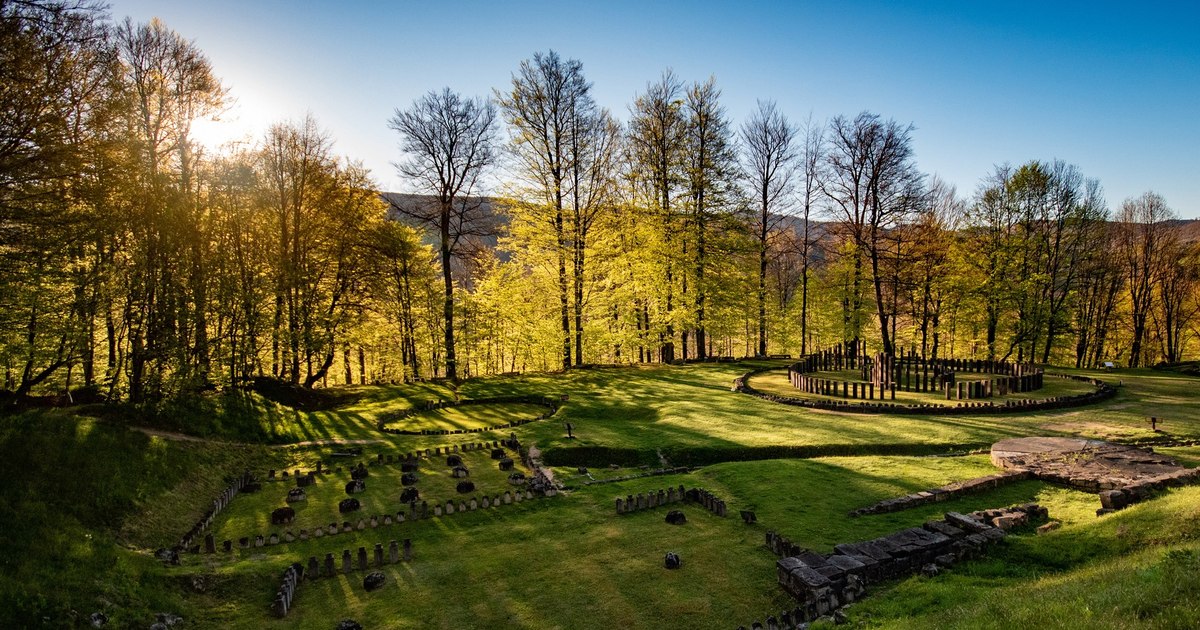
Four Dacian fortresses in Hunedoara welcome their guests these days in a relaxing spring atmosphere. The most visited Dacian settlements in Romania are located in the Orăștiei Mountains.
Dacian fortress Sarmizegetusa Regia. Photo: Discover Hunedoara
Hunedoara County contains the largest concentration of Dacian fortresses in Romania. The most popular of them are in the Orăștiei Mountains, in places that have become more accessible in recent years, after some mountain roads have been modernized.
Sarmizegetusa Regia – the capital of the Dacians and the Dacian fortresses of Costești, Blidaru and Piatra Roșie appear these days adorned by the fresh green of the forest and glades, show the images published by the General Directorate of Monuments Administration and Tourism Promotion of Hunedoara County, on its page, Discover Hunedoara .
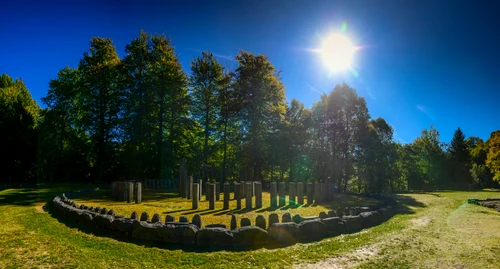
Image 1/16:
Sarmizegetusa Regia Foto Discover Hunedoara (11) jpg
The Dacian fortresses in the Orăștiei Mountains can be visited daily, until 6 p.m., after the spring schedule. From May 1, the visiting hours will be extended.
“Between March 1 and April 30, 2024, the historical monument from Grădiștea de Munte – Sarmizegetusa Regia can be visited daily between 9:00 a.m. and 6:00 p.m. The last entry of tourists to the site area is 30 minutes before closing time“, informs the Sarmizegetusa Regia administration.
The same program is also valid for the Costești, Blidaru and Piatra Roșie fortresses, while the Dacian settlement at Bănita can be visited, but access to it is difficult, due to the steep slope.
Sarmizegetusa Regia, a history of two millennia
Sarmizegetusa Regia, a UNESCO monument in Hunedoara, is among the most important tourist attractions in Romania. The old capital of pre-Roman Dacia, founded more than two millennia ago, is located in the Orăștiei Mountains, at the foot of Godeanu Peak (1,656 meters), considered by some historians as the “holy mountain of the Dacians”.
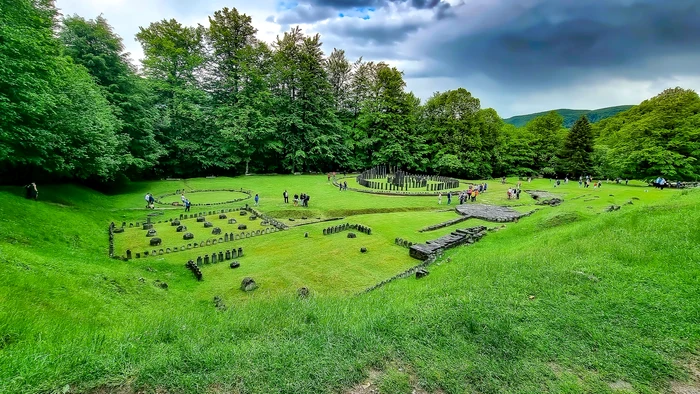
Sarmizegetusa Regia. Photo: Discover Hunedoara
In Antiquity, Sarmizegetusa Regia (video) spread over more than a hundred terraces arranged by people. The most important were in the sacred precinct, which included the most important edifices of the Dacian capital.
The strong walls that protected the large terraces of Sarmizegetusa Regia (IX, X, XI) were meant to prevent them from sliding. Other smaller walls, built in the murus Dacicus technique, protected the sacred precinct of the Dacian capital from the hill and sides.
“The stepped arrangement of the three terraces, enclosed by their strong and imposing white limestone walls, must have been impressive, recalling, while preserving the proportions, the image of ancient Pergamon”archaeologist Ioan Glodariu (1940–2017) pointed out.
Sarmizegetusa Regia was a flourishing settlement from the Iron Age. It was devastated at the end of the wars of conquest of Dacia and remained little known to people, until the beginning of the 19th century, when the first systematic research took place, which led to its discovery. Today, its ruins are visited annually by more than 60,000 people.
Burebista's fortress
Located about 20 kilometers from Orăștie, above the Grădisti valley, the Dacian fortress of Costeşti (video) was built during the time of King Burebista, in the 1st century BC. AD, and served as a military fort, but also as a residence for the chiefs of our ancestors. It is among the oldest stone Dacian fortresses in Romania.
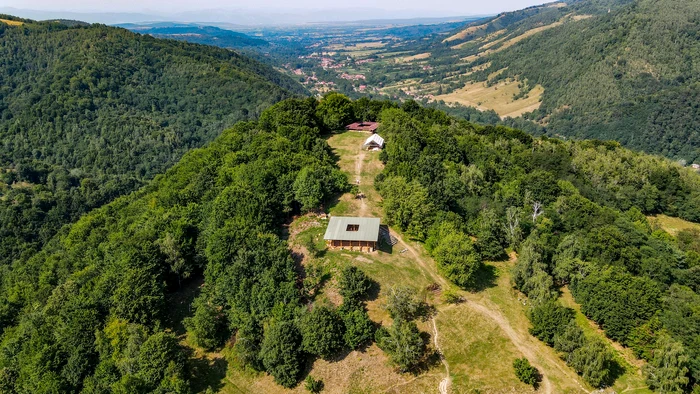
The residential towers of Costești Citadel. Photo: Discover Hunedoara.
It was devastated during the wars of conquest of Dacia by the Romans (101 – 106). Several of its constructions (two residential towers, six bastions, four sanctuaries, the ruins of a water tank, walls) are still visible today, although they have deteriorated, especially in recent years.
The most extensive consolidation and conservation works of the historical monument took place at the beginning of the 80s, and in the last three years, one of its “palaces” was restored and protected from the elements.
The Dacian fortress of Blidaru, the stronghold of the Dacians
The Dacian fortress Blidaru (video) was built in the 1st century BC. and it was one of the strongest military fortresses of the Dacians. It had a trapezoidal shape, walls built in the murus dacicus technique, with thicknesses of up to three meters and heights that reached five meters in Antiquity, and included six strong defense towers, an inner tower and eight casemates.
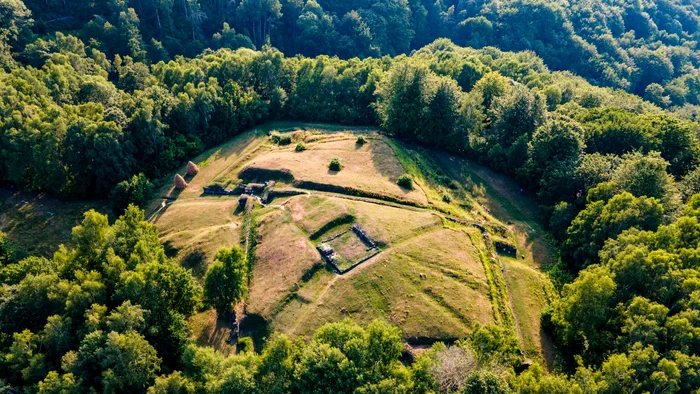
Blidaru fortress. Photo: Discover Hunedoara
The entrance to the fortress was initially made only through one of the towers, made in the “a chicane” system. If the invaders destroyed its wooden gate, they hit the back wall of the tower, being then forced to turn to the right, towards another gate, making their progress difficult. A second entrance to the fortress, also flanked by two walls, was built later.
According to archaeologists, the “casemates” sheltered behind the walls were not found in other Dacian fortresses. The Dacians' fighting machines would have been placed on them, which could throw the projects into the valley, up to 300 meters, to prevent the approach of the enemies.
Several civil settlements were discovered around the Blidaru fortress, on terraces made in steps, connected to each other by road networks, and nearby, in the place called Pietroasa lui Solomon, there was a sacred area with several temples.
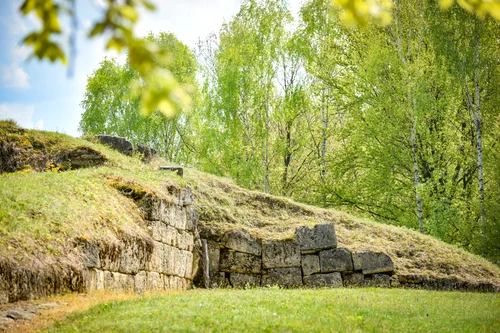
Image 1/13:
Dacian citadel Blidaru Photo Discover Hunedoara (4) jpg
Civilian settlements were defended by several towers, apparently solitary. The most spectacular and well-preserved of them is located in the place called Poiana Perţii and would have been used for the defense of the fortress and one of its water cisterns.
The Dacian fortress Piatra Roșie, full of mysteries
The Dacian fortress Piatra Roșie was built in the 1st century BC. BC and lasted until the Daco-Roman wars at the beginning of the second century.
Its ruins were covered by the forest (video), and the settlement was rediscovered only in the early years of the 19th century, when “treasure fever” gripped the locals of the surrounding villages.
The archaeologists, coordinated by Constantin Daicoviciu, only discovered the monuments at Piatra Roșie in 1949, and the first conclusions published by the historian showed that the settlement would rather have had a military character, having the role of defending Sarmizegetusa Regia.
The archaeological excavations led by Constantin Daicoviciu revealed the paved road, the ancient walls and towers, but also the remains of a mysterious edifice, an alleged ancient temple, as well as some precious artifacts, such as the bronze bust of a female deity and fragments of a disk of antique iron.
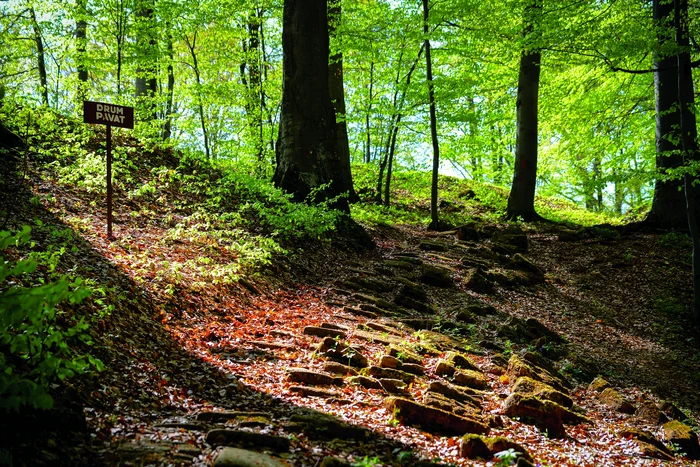
Dacian fortress Piatra Roșie. Photo: Discover Hunedoara.
In the 2000s, treasure hunters found other iron discs here, richly ornamented with floral and animal motifs, which could have served as cult objects or to show the prestige of the owners of the fortress.
Recently, the settlement was researched, for the first time, with the help of LIDAR, laser scanning and mapping technology, and the conclusions, presented by the researcher Aurora Pețan, were that it was much larger in Antiquity, it had not only a military role and also included the hills from the surroundings on which there are several unexplored terraces, but which preserve ancient traces of habitation.
