
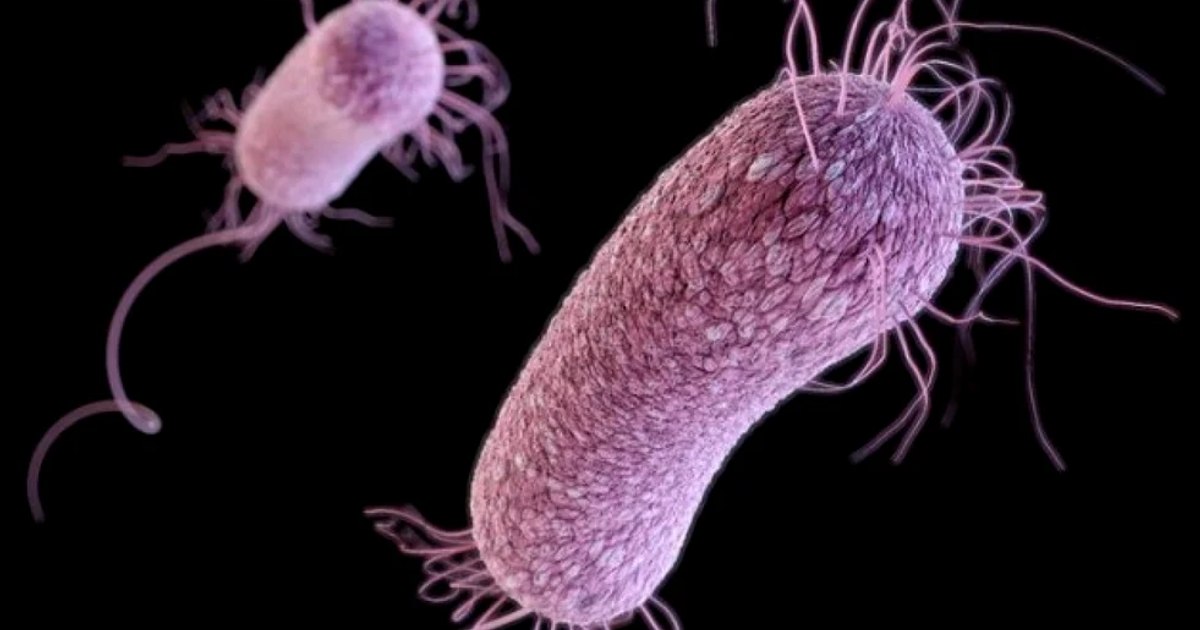
Common infections will kill millions if drug resistance through antibiotic misuse is not curbed, says England's former chief medical officer.
Bacteria are becoming increasingly resistant to antibiotics PHOTO: Archive
The Covid-19 pandemic willshe looked like a minor” compared to what will happen to humanity due to the growing number of superbugs resistant to current drugs, warned Professor Dame Sally Davies, the former chief medical officer of England, writes theguardian.com.
Davies, who is currently the UK's Special Envoy for Antimicrobial Resistance (AMR), died two years ago from an infection that could not be treated.
She paints a grim picture of what could happen if the world fails to tackle the problem in the next decade, warning that the problem is “more acute” than climate change. Drug-resistant infections already kill at least 1.2 million people a year.
“It seems that there are a lot of people with untreatable infections and we should move to isolate untreatable people so that they do not infect their families and communities. So it's a really bleak picture. It would make some of the Covids look minor”said Davies, who is also the first woman to serve as Lord of Trinity College, Cambridge.
AMR means that some infections caused by bacteria, viruses, fungi and parasites can no longer be treated with available drugs. Exposure to drugs allows organisms to develop resistance to them, and overuse of drugs such as antibiotics accelerates this process.
Widespread resistance would make much of modern medicine too risky, affecting treatments including C-sections, cancer interventions and organ transplants.
“If we don't make significant progress in the next 10 years, then I'm very scaredDavies said.
Without the development of new treatments, “it will continue for decades and will not die out. We know that with viruses, they wear themselves out, generally develop herd immunity, but this is not the case.”
Last week, the UK government announced a national AMR action plan, with pledges to reduce the use of antimicrobials in both humans and animals, strengthen surveillance of drug-resistant infections and encourage industry to develop new drugs and vaccines .
Launching the plan, Maria Caulfield, the Health Secretary, said: “In a world recovering from the profound impact of the Covid-19 pandemic, international collaboration and preparedness for global health challenges have taken on an unprecedented level of importance.”
Davies spent more than a decade warning about the problem, but said he was really hit when “beautiful” her daughter, Emily Hoyle, died of a drug-resistant infection at age 38.
Hoyle suffered from cystic fibrosis and had undergone two lung transplants before being infected with Mycobacteroides abscessus, which was resistant to treatment.
The team that treated her “tried everything”, Davies stated. “But I would think that for me, looking back a year before she died, I thought it was likely that this would kill her. And she knew six months before she died that she couldn't be treated and that she would probably die from it. She had a very beautiful death – she had a very dignified death, laughing, joking, making fun of her trouble in front of her husband, her family, everyone. It was very special. But she gave me permission to use her story as my own because, well, it became something personal to me, a second Christmas.”
Hoyle's death strengthened her determination to change the situation, Davies said, describing it as a matter of intergenerational fairness.
“My generation and the older ones used antibiotics (and) we're not doing them again. We do not ensure that our food is produced with as little use as possible. And I owe it to my children and – if I have them – to my grandchildren and to the next generations to do the best I can.”
There are also equity issues now, she said. One in five deaths from AMR is in a child under the age of five, usually in sub-Saharan Africa, where Davies said the problem is “particularly widespread and disastrous”.
Many of these countries are also heavily affected by the climate crisis, and Davies said the two issues are interconnected.
“If we don't control and mitigate AMR, then it will kill more people than climate changeshe said.
“Climate will manifest itself in many ways, but think about flooding, sewage, displacement, storms and what they spread, and the lack of drinking water in drought; infections are increasing.”
There are efforts worldwide to reduce the misuse of drugs such as antibiotics in medicine, although the Covid-19 pandemic has stalled progress on many of these initiatives. Few new antibiotics have been created in recent years, and the problem is “even more complicated” because it involves sectors such as agriculture, but also human health.
More than two-thirds of antibiotics are given to farm animals, Davies said, usually to promote growth or prevent infections in overcrowded and unsanitary conditions, rather than to treat specific infections.
Some Asian fish farms “add antibiotics to fish feed”, in part because it's cheaper, she said, but also because of a lack of research on what infections occur in local breeds of fish, such as tilapia, and what vaccines might be needed.
“If you don't have proper, careful use,” she said, “you run the risk of getting really out of control.”
Animals, including humans, excrete up to 80% of the antibiotics they absorb, she points out, “contaminating the environment“. Factories producing antibiotics may not control their effluents, allowing “dramatic amounts” to enter water systems.
Despite his warnings, Davies insisted he was a person “with the glass half full”, overflowing with enthusiasm when discussing projects that find a different approach. Major US poultry supplier has stopped using antibiotics, 'so it can be done' she said.
Advances such as genomics and artificial intelligence “invigorates” the science of new antibiotics. She also hopes that programs to incentivize pharmaceutical companies to create new antibiotics will pay off.
Ideally, such drugs should be kept in reserve as a last resort in case existing drugs do not work, so that insects do not develop resistance to them. However, it is difficult for companies to guarantee a return on investment in research and development.
Different countries are exploring alternative means of funding, such as NHS England's subscription model, whereby a fixed annual fee is paid for access to antimicrobials, regardless of the volume used.
Davies is part of the UN World Leaders Group on AMR. In September, the UN will hold a high-level meeting on the issue, and the group is pushing for targets to be met by 2030, including a 10% reduction in global human deaths from AMR, at least a 30% reduction in the use antimicrobials in agriculture and ending the use of “antimicrobials of medical importance for human medicine” in agriculture, where they are not needed to treat diseases.
Although it is “honored” to be part of this group, stated that more formal structures are needed. “We need some form of governance between countries, a bit like a COP on climate change”Davies said.
Particularly important would be the establishment of an independent scientific group, similar to the IPCC, “otherwise, only academics will say “we need this goal””. And as fair as that might be, if you haven't taken low- and middle-income countries along for the ride, there's no reason why they would – or should – accept these goals.”
