
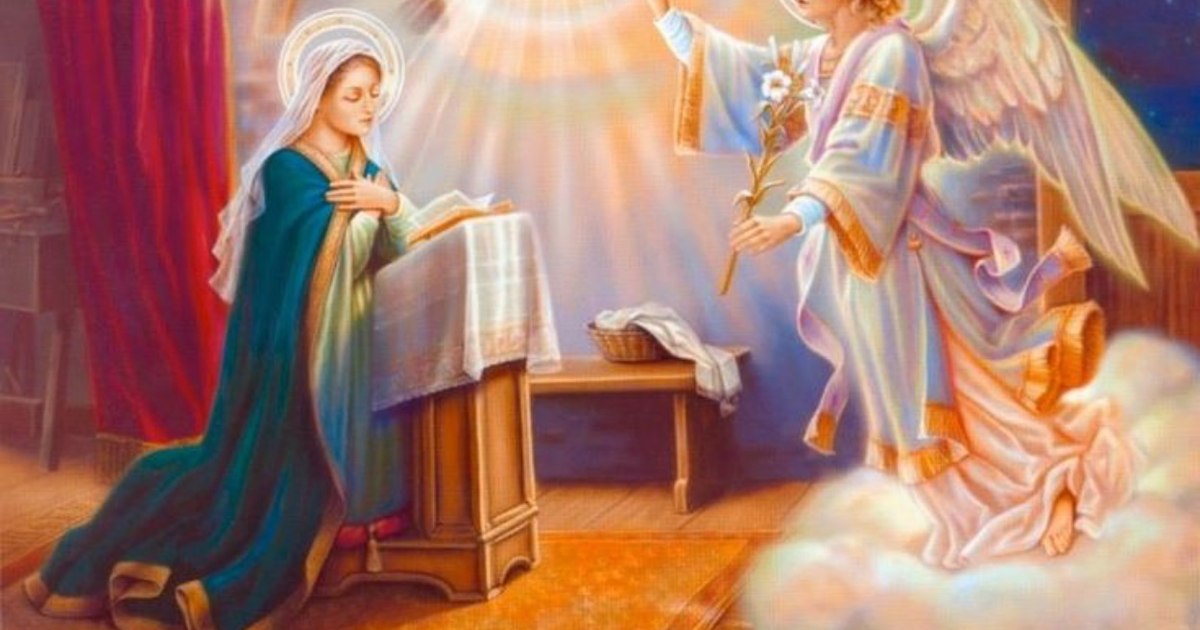
Annunciation 2026, celebrated on March 25, is one of the most important days in the Orthodox Christian calendar. It is the first great feast of the Easter Lent in which believers indulge in fish and marks the moment when the Virgin Mary learned that she would give birth to Jesus Christ.
Also popularly known as Blagovestenia or Cuckoo Daythe celebration is accompanied by numerous traditions and beliefs preserved from generation to generation.
The meaning of the holiday
The Annunciation recalls the moment when the Archangel Gabriel announced to the Virgin Mary that she would become the mother of the Son of God. The event is described in the Gospel according to Luke and is considered one of the most important moments in the history of Christianity.
The holiday has a fixed date, on March 25, being placed exactly nine months before Christmas. Even though it falls every year during the Easter Lent, the Orthodox Church offers a release for fish, precisely to mark the importance of the day.
The ethnographer Simion Florea Marian showed in the work “Romanian holidays” that this day is so important that it is placed on the same symbolic plane as Easter, because without the Annunciation there would be no Nativity.
In popular tradition, the day is considered a high holiday, in which it is not good to work. It is said that those who work on this day may have bad luck or losses, and certain gestures are avoided so as not to affect the abundance in the household.
What does Annunciation mean?
The popular name Blagovestenie comes from Slavonic and means “good news” or “good news”. The term refers directly to the message brought by the Archangel Gabriel.
In the popular calendar, the holiday is also known as Cuckoo Day, because, according to tradition, on this day, for the first time in the year, the song of the cuckoo is heard, considered a sign of the coming of spring. He begins to sing until Sânziene or Saint Peter, when he drowns himself with barley. The cuckoo, a bird with many symbolic values, sings from the spring equinox to the summer solstice. In the popular tradition, it is said that from Sânziene the cuckoo turns into a cuckoo until the Annunciation, when it becomes a cuckoo again.
There are also beliefs related to this moment. In some areas, people count the number of times the cuckoo sings, believing that this number may indicate the number of years they have left to live. Also, the direction from which the song is heard is interpreted as a good or bad sign.
Annunciation traditions on March 25
Of the Annunciation, one of the most famous traditions is the untying of the fish. It is said that people who eat fish on this day will be lucky and feel good “like a fish in water” the whole year.
In many areas of the country, people put bread and salt on the doorstep as a symbolic offering to the angels, a gesture that would bring prosperity and protection to the household.
Also on this day, there is a belief that it is not good to argue, because disagreements on March 25 could bring trouble throughout the year. Also, certain household activities are avoided, such as hatching eggs, for fear that malformed chicks may emerge.
Tradition also says that the weather on the day of the Annunciation could indicate what the weather will be like on Easter, which is why people keep a close eye on the weather conditions on this day.
For many believers, the Annunciation is not only a religious holiday, but also a moment of reflection and balance. Beyond traditions and superstitions, March 25 marks the beginning of a period of renewal, both in nature and in people’s lives.
