
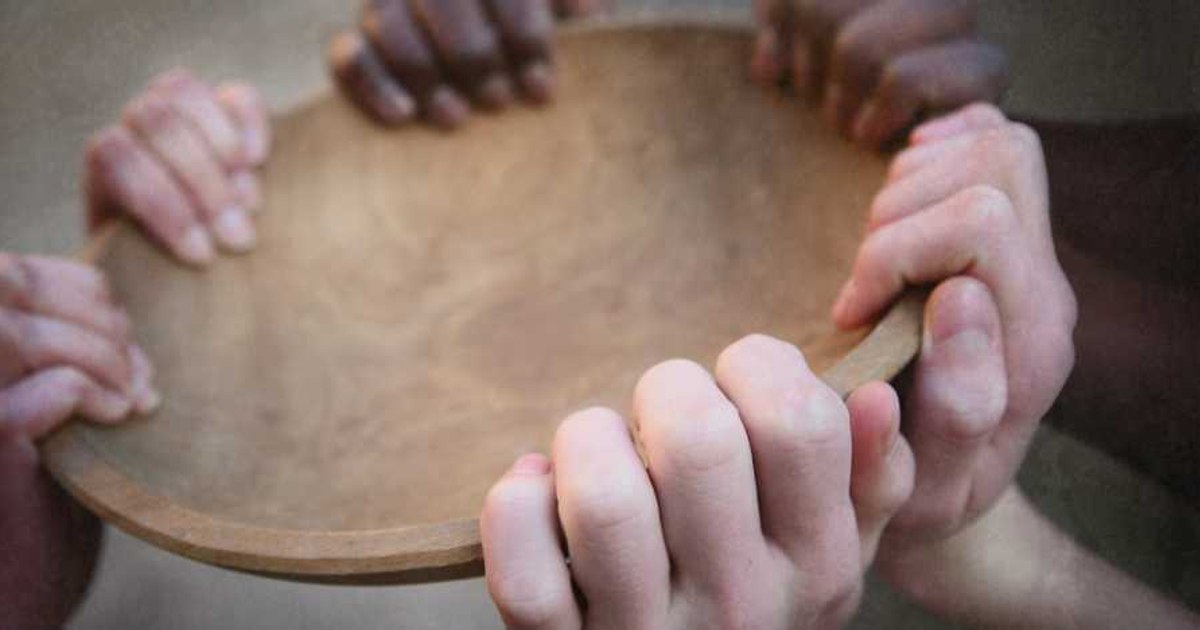
The data presented by Save the Children and World Vision Romania should give thought to the governors: over a million children live at risk of poverty, hundreds of thousands have dropped out of school, and infant mortality has reached the highest level in the last ten years.
Romania currently has over 3.6 million children, but their number continues to decrease from one year to the next. For example, in 2025, 145,725 births were registered, the lowest level in recent decades, which shows a social context in which Romanians think twice when they decide to bring a child into the world.
Three out of ten children live in poverty
Beyond these general figures, the reports published by Save the Children and World Vision Romania bring to the fore a series of problems that constantly appear in the statistics and which, in many cases, are found in the same family or in the life of the same child.
According to Save the Children data, more than 1.16 million children, i.e. three out of ten, live in poverty or social exclusion, and many of the parents barely cope with everyday life.
In this context, even nutrition becomes a problem, because more and more families say that they cannot afford a meal with meat, fish or equivalent vegetable proteins even once every two days – from 14.6% to 17.2% in the case of all families with children and from 19.5% to 25.9% in the case of single-parent families.
Also, Save the Children shows that almost 60% of the families in the organization’s programs would not be able to support the school costs without external support, the percentage rising even more in the case of families in severe poverty, where it reaches almost 90%.
For children, this means not only a lack of basic resources, but also an absence from activities that are part of the school experience, such as field trips or camps, which nearly half of children affected by poverty do not participate in.
These problems appear from the first years of life, because Romania remains the country in the European Union with the lowest participation in early education, and these differences are amplified as more than 425,000 children and adolescents between the ages of 7 and 17 ended up not being in the education system anymore.
The largest number of underage mothers
Although the total number of births in our country represents only 4% of births at the EU level (4.04%), Romania has a contribution in Europe six times higher in the case of births to minors (26.19%) and more than 10 times higher in the case of births to girls under 15 (41.39%).
Data from 2024 show that 5,815 children were born to underage mothers, of which 496 were born to girls under 15, and in some cases it is not the first child, almost one in five children born to underage mothers already have older siblings, which shows that the phenomenon persists in certain communities.
The number of infant deaths increased
After several years of decline, infant mortality rose to 6.6 deaths per thousand live births in 2024, the highest level in a decade, while vaccination coverage continues to decline, and for the first dose of MMR vaccine the rate reached 47.4%.
The dramas of children who go on stage, at the end of the year celebration, in rubber slippers. “They are the most delicate 111 cases”
The differences between counties in terms of vaccination are significant, with values exceeding 70% in some areas, but falling below 30% in others, which shows an uneven evolution at the national level.
Emotional problems, increasingly present in discussions with teenagers
The problems related to the emotional state of children are equally serious and more and more teenagers complain of pressure from all directions: from home, from school, and from the social environment.
Anxiety among teenagers is a common problem. Unfortunately, it’s not just one story that repeats itself, but many different stories that ultimately lead to pretty much the same conclusion, according to a recent survey by World Vision
Some children come after long periods of tension at home, others encounter problems at school, where the pressure of grades and the fear of not falling behind accumulate over time, without seeming serious at first. There are also those who spend most of their day on the Internet, and the difference between what they live there and what they live in reality becomes difficult to manage.
From all these directions, the same states end up gathering: restlessness, fatigue, difficulty concentrating, sometimes simply the feeling that I can no longer cope with the rhythm. Not necessarily as medical labels, but as how they simply describe their days.
Many of the teenagers say that they don’t really have anyone to talk to about the things that are bothering them, or that when they do, they don’t feel like they are fully understood. Thus, almost a quarter of the teenagers in the survey carried out by World Vision Romania say that adults listen to them rarely or almost never, and 30.8% believe that emotional problems and anxiety represent the biggest problem for teenagers in Romania. School pressure (20.2%) and phone and social media addiction (18.1%) complete the list of problems identified by young people.
The data are part of a survey conducted by World Vision Romania among 613 teenagers (15-18 years old), mostly from rural areas, beneficiaries of the organization’s programs. The study is not representative at the national level, but captures the concerns and emotional state of children and adolescents from vulnerable communities.
Regarding the question of what makes them happy, they mentioned, in order, time spent with family (40.3%) and time spent with friends (31.6%), hobbies (12.4%), phone, social media and games (6.2%) and school success (5.2%).
Social benefits, beyond clichés: Romania remains a country of deep inequalities
What would teenagers like to change
Survey results show that many teenagers feel that things around them are not working as they would like. When asked what they would change if they could do so, their answers were:
* 26.8% of the respondents say that they would reduce school pressure
* 24.8% want more opportunities for the future
* 23.8% ask for more emotional support
* 8.8% want more activities and spaces for young people
* 7.7% say they would like more time spent with their family
* 6.9% want less bullying.
“Children and adolescents tell us more and more clearly that they not only want to be protected, but also to be listened to. They often perceive that school, family and institutions communicate unilaterally, without real participation on their part, and this gap between generations can lead to a decrease in trust in institutions, accentuated in a world dominated by digital pressure, misinformation and constant online exposure. Therefore, public policies and programs dedicated to adolescents must emphasize mental health, support emotional, combating online and offline bullying, the real participation of children and a more flexible education, oriented towards competences and personal development”, said Mihaela Nabăr, executive director of World Vision Romania.
