
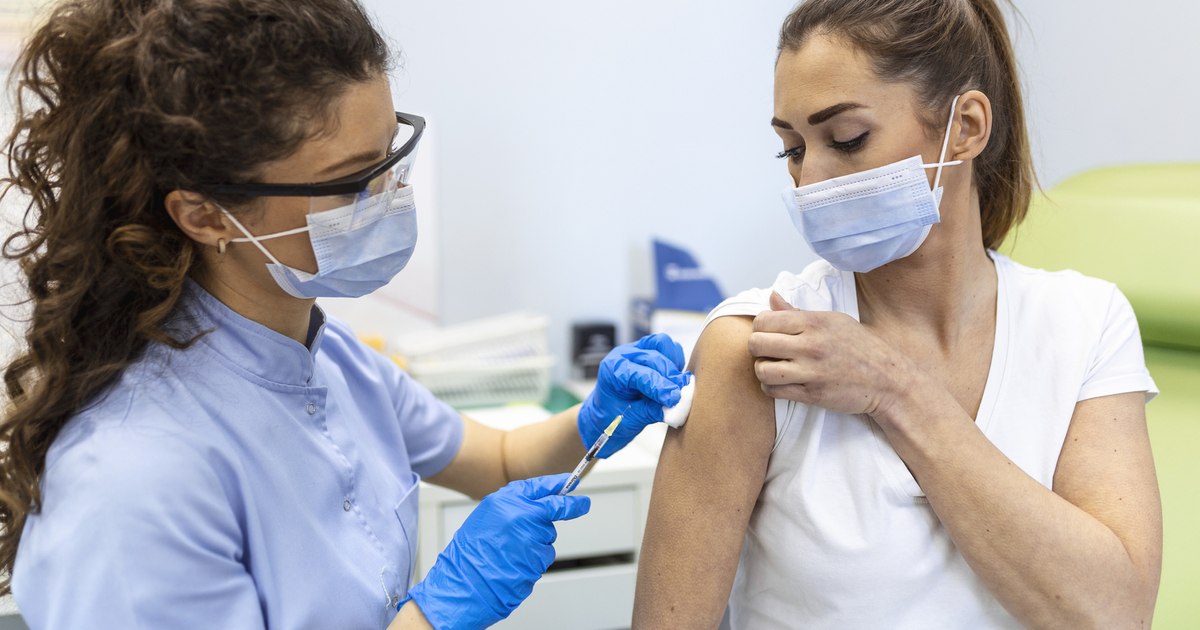
Vaccines are meant to provide protection or reduce the effects of infectious diseases, but there are research that shows that some vaccines can be associated with a lower risk.
Vaccination could reduce the risk of dementia. Photo: freepik.com
Some of the prevented disorders by vaccination are associated with the accelerated brain atrophy and with an increased risk of dementia, which appeared years away.
Thus, vaccines not only protect against infectious diseases or reduce their severity, but some of them are related to a lower risk of dementia, Avram Bukhbinder, a doctor at Massachusetts General Hospital, who conducted research between vaccines and dementia shows.
“They offer protection against potentially very serious infections, especially in the elderly, and the fact that they can prevent this is already huge. It seems to be an additional benefit and, finally, this adds an even more convincing reason to make our routine vaccines.”says the specialist, quoted by The Washington Post.
Richard Sima, a neuro -cercerator who became a science specialized journalist, quotes studies have shown that many vaccines can be associated with a lower risk. It lists four of the most common vaccines that can influence the evolution of this condition.
The flu vaccine
Only in the United States, tens of millions of people are affected by the flu, and the latest statistics show that between 27,000 and 130,000 people died, in season 2024 – 2025, following the complications caused by it, according to the Center for Disease Control and Prevention (CDC). The influenza season, in North America, usually takes place between October and May.
Influenza and pneumonia, a possible complication of influenza, are associated with five neurodegenerative diseases, including dementia and Parkinson’s disease, according to a 2023 study based on data analysis of over 400,000 people.
“I do not know how many times we hear in the world of adults:” Someone has made the flu, he stayed in the hospital for two weeks and since then it has never been the same. As it has collapsed “,” says Dr. Avram Bukhbinder, according to The Washington Post.
The American publication argues that numerous studies have shown that flu vaccination is associated with a lower risk of dementia, even many years after administration.
A 2022 study, conducted by Bukhbinder and his colleagues from the Medical Science Center at the University of Huston, analyzed a medical database with over 1.8 million adults aged 65 and over. They found that people who had received at least one flu vaccine had a 40 percent lower risk of developing Alzheimer’s, the most common form of dementia in the next four years.
Another 2024 study, conducted on over 70,000 participants, showed that the flu vaccine was associated with a 17 percent reduction in the risk of dementia. The specialists of the Center for Disease Control and Prevention (CDC) recommend that all people over 6 months old make the annual flu vaccine, usually in September or October.
Vaccine against Zoster area
The vaccine against the shingles has the most solid evidence of reducing the risk of dementia, several major studies in the last two years confirming the results of older research, according to The Washington Post.
The authors cites a 2025 study, conducted on over 280,000 adults in Wales, who showed that vaccination against the shingles was associated with a reduction in the risk of dementia by 20 percent over a period of seven years.
“There may be additional benefits, beyond the direct protection that the vaccine offers against a certain disease, this is just an additional reason to vaccinate us.” said Pascal Geldsetzer, assistant professor of medicine at Stanford University of Medicine and the main author of the study, according to the American publication.
Another study, subsequently conducted on over 100,000 patients in Australia, has reached the same conclusion: the vaccine against the shingles is associated with a low risk of dementia.
Even if the connection with the prevention of dementia was not completely proven, the vaccine remains extremely useful: it prevents the reactivation of the varicella-zosterian virus, which causes varicella in childhood and remains latent to the nerve cells. At maturity, the virus can be reactivated in the form of the shingles, a disease characterized by a painful eruption, with a burning sensation, which in some cases can lead to chronic pain or serious complications.
The CDC recommends two doses of vaccine against the shingles for adults over 50 or for those over 19 years with weakened immune system.
The vaccine against RSV
The syncytial respiratory virus (RSV) is a common respiratory virus that, in most cases, causes mild symptoms, similar to a cold, but can cause severe infections in children and adults over 65.
In 2023, the American Food and Drug Administration – FDA) approved for the first time a vaccine against the syncyte respiratory virus (RSV) for use in humans.
A recent study, conducted on over 430,000 people, showed that the Anti-SV vaccine and the shingles were associated with a low risk of dementia over a period of 18 months, compared to people who received the flu vaccine.
The Center for Control and Prevention of Diseases recommends vaccination of all adults over 75, as well as those over 50 years of age with an increased risk of infection with RSV.
TDAP vaccine
Several studies have shown that the vaccine against tetanus, diphtheria and convulsive cough (TDAP) is associated with a low risk of dementia.
A 2021 study, conducted on over 200,000 patients, reported that the elderly who received both the vaccine against the shingles and TDAP area, had an even lower risk compared to those who made only one of these vaccines.
According to The Washington Post, CDC specialists recommend Routine vaccination with TDAP for all teenagers and a boiler every 10 years for adults.
How vaccines work
Research has shown that severe infections, such as influenza, herpes or respiratory infections, are associated with accelerated brain atrophy and with an increased risk of dementia, which occurred years away.
“We believe that uncontrolled systemic inflammation contributes to this phenomenon. It is very likely that patients have already had Alzheimer’s or other forms of dementia in an early explained the doctor Avram Bukhbinder, according to The Washington Post.
Dr. Pascal Geldsetzer stated that the varicella-zosterian virus, which causes the shingles area, has the clearest biological links, because it remains latent in the nervous system and can directly affect the brain. Vaccination against varicella, in childhood, can prevent the installation of this virus from the beginning, notes the publication.
Although more vaccines are associated with a low risk of dementia, there are limits in the way studies were performed. The connection is a associative type, not causal, because the people who choose to be vaccinated may be different from those who do not.
“Those who are, on average, more motivated to take care of their health, who adopt healthier behaviors, are the ones who decide to be vaccinated”, completed the Pascal Geldsetzer doctor.
Even if the researchers are trying to take into account these factors, it is not possible to completely eliminate the behavior differences that influence the risk of dementia.
How can vaccines reduce the risk of dementia
There are two biological assumptions about how vaccines could reduce the risk of dementia. The first is that vaccines decrease the risk of contracting diseases and severity of infections, which have been associated with a higher risk of dementia.
Another possibility, which does not exclude each other, is that the vaccine itself activates the immune system in a beneficial way. Vaccination “It can train or refine the response of the immune system”, added Dr. Bukhbinder.
Vaccines, like any medical treatment, can have some risks and side effects, so it is important to talk to your doctor about your specific health needs.
“I would say that, in general, the benefits of vaccines surpass the risks”, said doctor Avram Bukhbinder.
In addition, 45 percent of the cases of dementia could be delayed or prevented by lifestyle and environmental changes, according to a Lancet Commission on Dementia, quoted by The Washington Post.
To reduce the risk of dementia and maintain our cognitive health as long as possible, research recommends steps such as adopting healthy living habits, maintaining social ties, moderate alcohol consumption, blood pressure control and treating hearing loss (for example, with the help of hearing aids), says specialists.
