
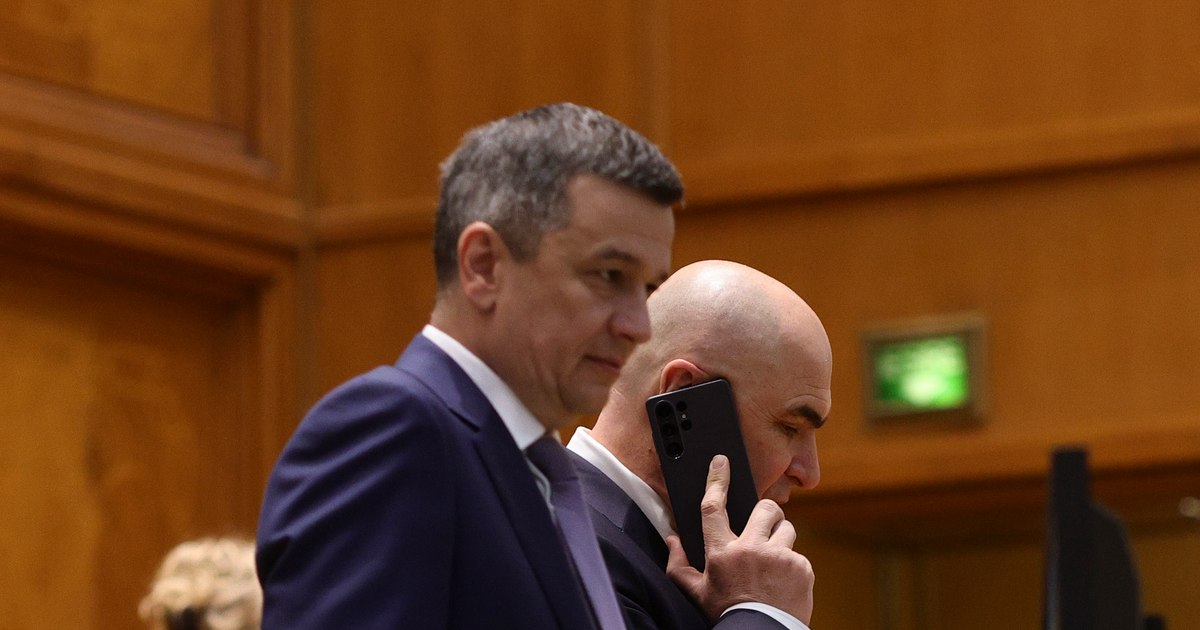
While waiting for an announcement on April 20, the date transmitted by the PSD as being decisive in making a decision within the party to remain in government, the intentions of the decision-makers are becoming clearer. For the PSD, a possible move into the opposition is not so simple, given that the AUR does not accept a collaboration and does not want to vote alongside the social democrats.
Political analyst Radu Delicote declares for “Adevărul” that the pressure from the territory was decisive in creating the situation in which the Coalition may fall apart after the holidays.
“The PSD wants to have more power of influence, at the coalition level, from an administrative perspective, there is pressure from all the governing parties, from the mayors, the presidents of the county councils, and from the county councilors who no longer necessarily find an interlocutor, I would say, openly, in Bucharest, at least in Ilie Bolojan And this is where all this desire for change comes from. political partners left for the original road no longer exists“.
The coalition, plagued by internal conflicts and tense negotiations
Dysfunctions in the coalition are fueled by constant conflicts and a lack of common direction, which affects both policy decisions and the relationship with local government.
“So, we see a lot of arguments, we have a lot of statements on sources where some argue with others. There are negotiations, many times, randomly thrown in the press, just to intimidate one party or another. There are many wings, the wing of supporters, the wing of challengers, the wing of the disaffected, from all parties. So these things seriously damage the functionality of the running-in of the governing coalition“, says the analyst.
The PSD has already sent a clear signal regarding the relationship with the current prime minister, being open to the renegotiation of this position within the coalition. Sorin Grindeanu told coalition partners PNL and USR to “refrain from lessons” after Prime Minister Ilie Bolojan suggested that the PSD strategy, which aims for changes in the Government without considering the consequences, would reflect a form of political arrogance.
“To speak of arrogance now from the Victoria Palace is a bit laughable“, declared the PSD leader.
In fact, the pressure that the PSD puts in the public space on the governing partners would aim at a move within the Coalition to withdraw support for Prime Minister Ilie Bolojan.
“PSD has already clearly and bluntly said that it no longer wants to work strictly with Bolojan and is willing to negotiate within the coalition for another prime minister. Now, whether that will happen or not, we will probably see clearly in the steps that they also mentioned.
First, that internal referendum with the 20 or how many thousand members will be asked inside the PSD what they want to do.
Two, including the positioning of the PNL, because here too things are a bit unclear. And thirdly, the positioning of the other partners, the positioning of the PSD, the positioning of the PNL, the subsequent positioning of the coalition partners and subsequently a vote of confidence in the Parliament“.
Prime Minister Ilie Bolojan announces five strategic measures in the field of energy. Ivan: “The issue of fuel rationing was not raised”
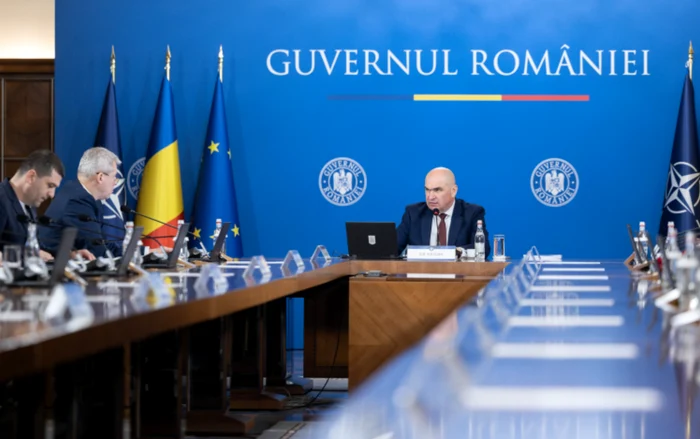
The opposition, a complicated scenario for the PSD
Although discussions about PSD leaving the government are more and more frequent, the parliamentary reality and possible political isolation complicate this scenario. The lack of collaboration with the AUR limits the options of the social democrats who also have the responsibility of making decisions taking into account the leaders in the territory who are pressing for the relaxation of the austerity measures.
The argument brought by the social democrats for the April 20 consultation is related to the fact that the package of social measures was not taken into account. In mid-March, Sorin Grindeanu announced that the social-democratic parliamentarians will vote on the budget for 2026, but that they want to introduce, through amendments voted in Parliament, social support measures amounting to 1.8 billion lei.
If a consensus is reached in the PSD on leaving the government, the remaining partners should pass a vote of confidence in the Parliament.
“Because the confidence vote, in fact, will show how solid this coalition is, how many votes it relies on or not. In any case, the political crisis, as many publications label it, does not exist in the classical sense. And if we have a minority government, it will work. Obviously with the handbrake on to some extent, but it will work. And if we will have another settlement of the governing coalition, in the parliamentary mathematics, as it shows today and in the electoral interests that the ruling parties have, this coalition is bound to work at least in the next period“, says Radu Delicote.
At the same time, the option of a government in which the AUR would have a role is excluded by the parties currently in power, including for electoral reasons.
“Other scenarios in which AUR comes to power, more than likely, are not taken into account by the parties. Because in any scenario where the AUR is in power, electorally, the AUR will manage to score points much faster and damage any other political math“, concludes the analyst.
Ilie Bolojan says that resignation is not an alternative to consider and draws attention to power games that can have serious consequences in a period that is not without challenges from an economic point of view.
“Changing one person or another, out of political arrogance, out of a calculation of political positioning, without thinking about the effects you generate and what you put in place and what needs to be done to solve the problems, means, how can I tell you, that you did not calculate your actions correctly and especially that you did not think about what, however, the interest of our country means in this period“, Bolojan told Digi24 at the end of March.
