
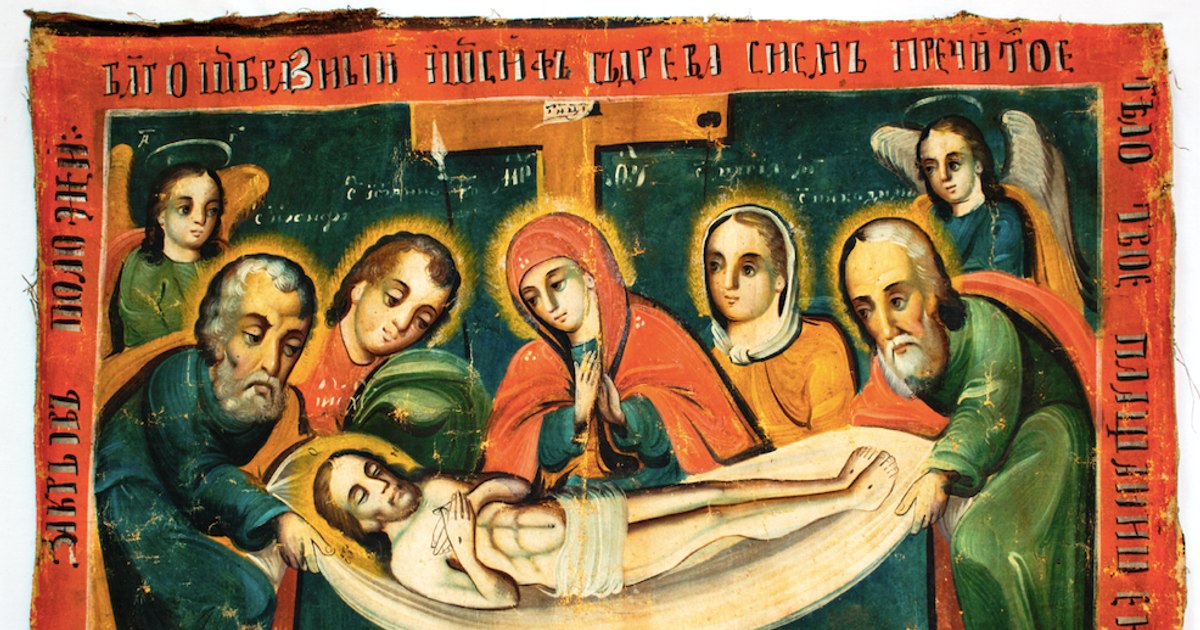
Easter is coming up and for many that means preparations, shopping and family time. In the cities, the celebration is felt especially in the commotion before it. The way Easter is lived has changed over time. In the past, it was more about community: people gathered, followed the same customs, and celebrated together. Today, the differences between village and city can be seen more clearly. At the same time, new customs are emerging from other places – from the Easter Bunny to egg hunts.
About all these changes, but also about the way in which traditions are preserved or transformed, “Weekend Adevărul” spoke with Paulina Popoiu, the director of the National Museum of the “Dimitrie Gusti” Village in Bucharest and the author of the volume “Romanian Holidays. Easter and Christmas in Icons and Words”.
“Weekend Adevărul”: If we look at the past, how did Easter actually feel in a community and how present was the religious dimension?
Paulina Popoiu: Of course, we cannot separate Easter from the religious side, because it was born within a religion. We speak of the Mosaic religion, because the Christian Easter, as we know it, is based on the Easter of the Mosaic religion. I don’t know if we can separate the meaning, at least over time, it has evolved a lot as a holiday, and today we are in a situation where, like the other holidays, Easter has been commercialized a lot. How did people live in the past? They lived according to some very strict rules, well respected by the community, which involved religion and organization according to the seasons.
Within the Christian Easter we must also see the pre-Christian component: the announcement of spring, the rebirth of nature, the beginning of the year – because, at a certain point, Easter also marked the beginning of the year. We see this component, but we cannot completely separate it from religion. If we talk about red eggs, painted eggs, we are actually talking about a pre-Christian component. Nowhere in the Bible does it say we have to make red eggs. We have, indeed, the sacrifice of the lamb, which the Jews also did when they left Egypt.
As for how people used to live, they lived by rules that the whole community followed. It is important to know that on these holidays – Easter, Christmas, the great religious holidays – the community met. It was not an individual celebration, a celebration that took place only within the family, it was a community celebration.
From Community to Consumption: How Easter Shifts Between Village and City
Drawing a parallel between the past you speak of – where everyone was close and there was the idea of community – and the present, we see that Easter is becoming a celebration of consumption. What does this change look like and how did we get here?
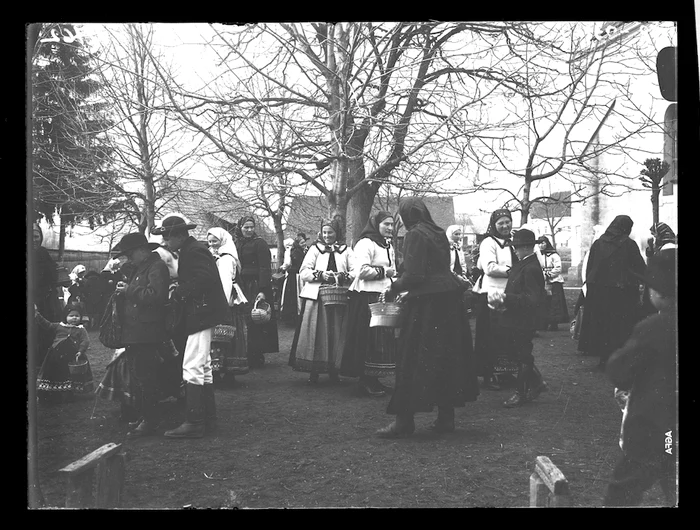
Although the holidays have become commercialized, we have to make a difference between the urban community, the community of big cities especially, and the rural community. If we, those who live in the city, run for shopping, for gifts, for red eggs or for lamb, through all the shops, the same thing does not happen in the village. There, the holiday is much more religiously respected. There, the community meets, the great pilgrimages take place, the ceremonies related to the Flowers take place. Still in the rural community, especially in the conservative ones, and here I would also refer to Maramureș, and to more isolated villages in the Apuseni Mountains, there the celebration takes place differently.
In the city, we devote ourselves almost entirely to shopping. And we lose sight of the spiritual component of the celebration. For example, children, who are also influenced by this commercialization, do egg hunts, look for the Easter bunny. They are now newly entered into the community, newly entered into our mindset. Because they come, for example, the Easter bunny comes from Northern Europe and penetrates, but there are moments of fun, moments of celebration, which especially children enjoy, so even we, the adults, do not have the patience to expel them.
But they are not characteristic of us, so it also depends on the area in which we live, because the bunny, you saw, appears everywhere lately. If you ask a young child what Easter is, they will tell you that the bunny comes, brings presents and hunts for eggs and chocolate. So, it no longer has the spiritual component. In the village, however, things are different.
Basically, we are witnessing an adoption of new traditions that come from other places. How do you view this exchange?
We are an open system. In the end, any country, any community is no longer like in the old days, when things happened between closed borders or in villages that didn’t communicate who knows what with the city or other areas. Now everyone walks everywhere, so we no longer have that typical peasant who never left the village. Now we find them in Spain, in Italy, everywhere. Not only city people but also village people.
Then all these new components, all these new habits, coming from other areas, come with them. Or we also go and walk on trips and come away with some new ideas. It is natural for there to be this exchange between cultures, because they are not born and raised in isolation from each other.
Related to these differences, town and village – and the fact that the village still preserves traditions and the idea of community – what explanations could we find for the fact that the village remained, in some areas of the country, more anchored in these traditions?
First of all, because they are more isolated villages, perhaps with an older population, which have passed down all these customs from generation to generation. But we still have something to say: the fact that the church, in our country, still has a very important role. And then, the village priest is the one who coagulates, around the church, the Orthodox faith. Then you will see, for example, that the church, on Easter night, is full of people in the villages. And here, in the cities, the church is full, but maybe with other customs, goals, so to speak, because there are also the young people who pass by, they make the night of the Resurrection a night of fun.
The only year in which the Holy Light in Jerusalem was not lit
In the village, however, they go with the Easter baskets, they sit nicely lined up until the priest finishes the service, they take Light, the priest blesses the baskets. There are some stages that the village goes through. We live differently: we go to church, to the city, we take Lumina, after which we come home and with that we kind of ended the connection with the community. There the children go out into the street, knock the eggs against each other. There is still this custom of taking eggs, and if you break your neighbor’s, you take your neighbor’s too. There are various customs that are still preserved in the village.
What we mean by traditions and who keeps them
Through your work, you have explored period-specific symbols. What are some Easter gestures or customs that we still do today, but whose meaning we may no longer understand?
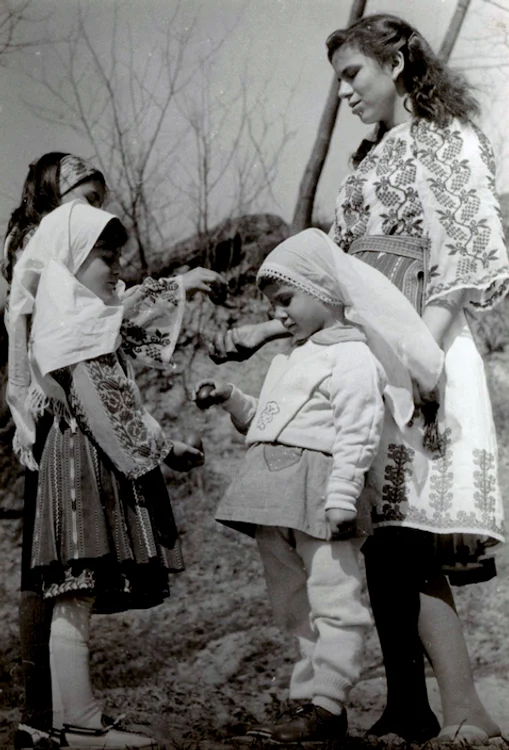
Now, unlike many other meanings that have been lost for Christmas, the Easter ones are still quite well preserved, because, for example, we redden Easter eggs – both in the city and in the village. We know very well that we have to blush them on Maundy Thursday. We also know legends related to the story of frying eggs. So we still perceive. Of course there are symbols that appear on the inked eggs that we no longer understand.
For example, if you’re going to see geometric patterns on an egg, you’re sure to wonder what else that would be. They are beautiful, they are art. They are not only art, they have always had meaning. Or the solar motif, for example, related to pre-Christian beliefs – as the village people say, the lost path, the way of life. There are many symbols whose meaning we still understand, but also many that we have lost. I’m referring to the craftsmen who make the painted eggs and who sometimes answer the question of what they mean: “well, it’s beautiful, that’s how I saw it at my grandparents’, my mother’s, my father’s”. There are also such things, which are still preserved, and some which are lost.
At the fairs, during this period we see a lot of craftsmen, artisans. What role do they have today?
First of all, they are the ones who keep the tradition itself. The tradition of dyeing eggs, for example, only they know and pass it on – and at our fairs, you will always see that we also have workshops to learn how to dye eggs, both for children, but also for their parents or grandparents. Their role is, on the one hand, to preserve the tradition, on the other hand, to pass it on, even if sometimes it is also transmitted in a more interpreted form, so to speak.
The second role – we are very lucky here, in our country. Here, these craft traditions are still very well preserved. You will not find anywhere else, especially in the West, but not even here, people who know the technique of dyeing eggs so well. Not only that with wax, there are several techniques that our craftsmen master and pass on. Then, another role that they have is related to these symbolic motifs that we are talking about, which, in the vast majority of them, they also know as meaning and which they still practice in their art, consciously, not only for the beauty, but also for the symbolic. Another role would be that of identity.
Easter bunnies are nibbling on our wallets. Romania, in first place in the EU for the price of chocolate
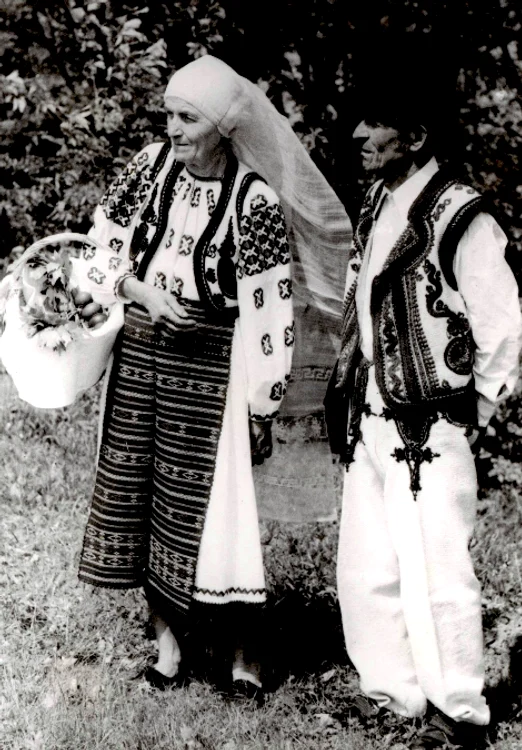
We, at the Village Museum, and, in general, the museums of ethnology, also have this role of underlining and preserving the cultural, ethnic, national identity, because you will see that there are differences, for example, between the motifs used by the Romanian and Ukrainian embroiderers. There are also differences in color. Therefore, I, as a specialist, less so the common man, can know which is the egg made by a Bucovinian or which is the egg made by a Ukrainian from Maramureș. Of course, their great role is that of transmitting the tradition and transmitting it in its sometimes genuine form, to preserve and pass on to the next generations, a treasure that we keep in museums, sometimes closed, but that they know from the inside.
The risk of turning into a show
Going forward, is there a risk that the traditions become more of a show for the public, rather than something authentically lived, as in the more secluded, rural communities you mentioned?
Unfortunately, the phenomenon is already happening. Of course there are many of our traditions that are starting to become spectacle. Especially the dance, the song, the hora. They were originally also performances, but with a meaning. Now, they are changing. And yes, they are often just for show.
And if we were to keep just one thing from the way Easter was lived in the old days, what would it be?
First, the spiritual essence of Easter must be preserved. He already has a point. Its purpose is to emphasize what we know, in Orthodoxy, as the sacrifice of Jesus Christ, for the purification of the world. That would be the spiritual essence of Easter. He was not a show, he was not a tradition, he was a spiritual element that coagulated around him the faith of the community. And faith keeps the community even more united – you know that in the village they say that a man without God is not a man.
Then, around this faith, around this celebration, the community feels more united, more coagulated around the church, which is a spiritual center of each village. If we were to preserve anything, then we should preserve this spiritual essence of Easter, to understand that it is not fun, it is not a gift, it is not the Easter Bunny. These are added elements, but on a pattern, on an essence that also identifies us, as Orthodox.
