A CNAS project that changes the way the national curative health programs are run has provoked harsh reactions from patients and private providers of medical services.
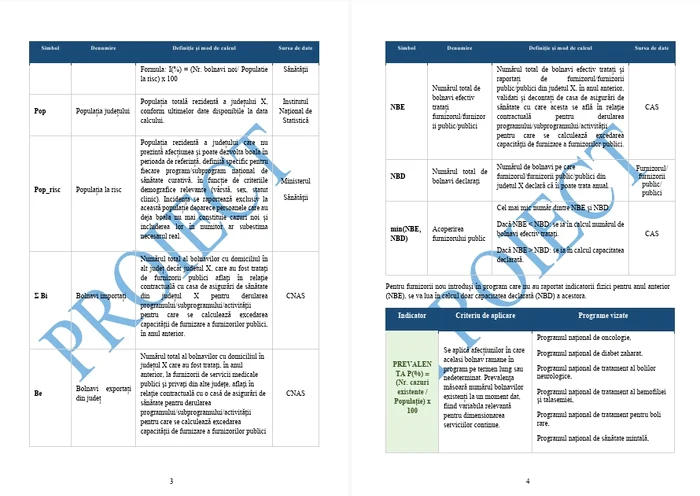
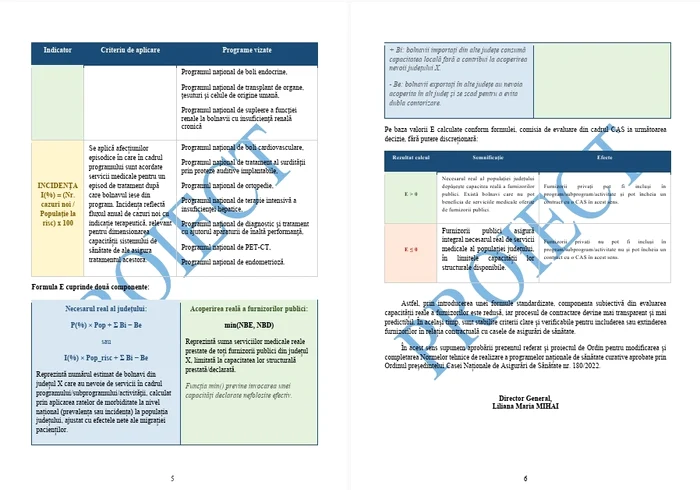
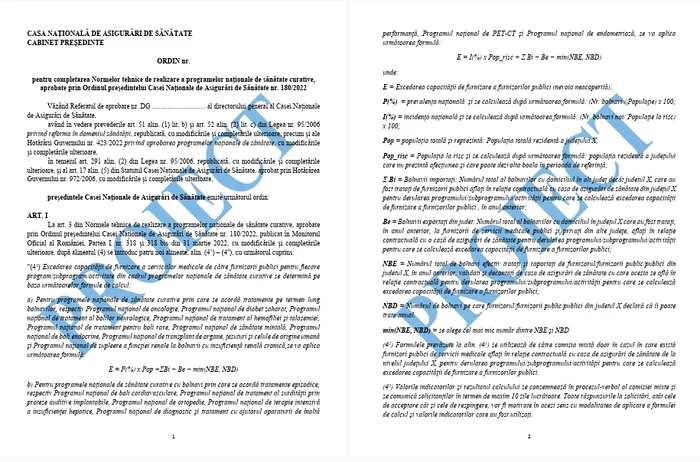
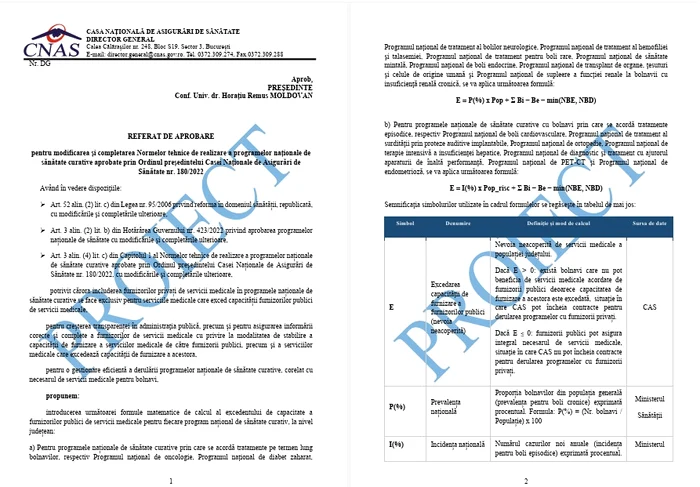
The National Health Insurance House put, at the end of last month, in transparency “The report and the draft Order of the President of the CNAS for the completion of the Technical Norms for the realization of national curative health programs, approved by the Order of the President of the National Health Insurance House No. 180/2022”. The document has sparked controversy, the fiercest criticism being that the draft does nothing more than condition private providers’ access to the National Health Programs (NHS) by introducing a rigid mathematical algorithm.
A mathematical formula would determine whether or not public hospitals have the capacity to treat patients, before the private system receives state funding for the same services.
Patient associations and private medical employers criticize the bill, accusing it of limiting patients’ right to choose where to be treated. In addition, insured patients could be forced to wait on public hospital lists, even if private facilities have immediate treatment capacity.
“It contradicts OECD principles and may affect Romania’s path towards accession”
The Association of Private Medical Service Providers (PALMED) reacted on Tuesday, June 2, 2026, accusing that “the CNAS project risks delaying patients’ treatments and reducing their chances of survival.”
“PALMED requests the immediate withdrawal of the project and the resumption of the development process on grounds that respect the patient’s interest, the realities of the medical system and the standards that Romania states it wants to adopt”asks for the patronage of private medical service providers, warning at the same time that “the measure contradicts OECD principles and may affect Romania’s path towards accession”. The sustainability of the health system and the efficient use of public funds is endangered by this measure, the project limiting patients’ access to treatment, PALMED also signals, accusing that we are not facing a reform, but a “attempts to administratively limit patient access to a significant part of the existing medical infrastructure in Romania”.
Through this regulation, the patient is removed from the equation, because the proposal does not measure the waiting time, the waiting lists, the continuity of the treatment, the actually available capacity, the number of patients who cannot be taken or the impact of the delay in the treatment on the evolution of the disease, the employer also says.
“QInstead, the project is based on formulas that compare the estimated need of patients with capacities declared by public providers. Practically, for the CNAS, it doesn’t seem to matter whether the oncology patient starts treatment today or in three months. It does not matter if the patient with major cardiovascular risk is investigated before or after the occurrence of a heart attack. It does not matter if the patient with multiple sclerosis irreversibly loses his neurological functions while waiting for access to treatment”is also shown in the PALMED position.
On the other hand, patronage draws attention, the private sector today provides approximately 78.5% of specialized clinical service providers; approximately 82.89% of paraclinical and imaging service providers; approximately 89% of dialysis services; 88% of the National Program of oncology-drug treatment; 82% of the National Oncology Program – radiotherapy treatment; approximately 43% of Romania’s medical staff.
There is also the question of the investments that private providers have made in recent years, amounting to hundreds of millions of euros, in hospitals, laboratories, oncology centers, diagnostic and treatment infrastructure and modern medical technologies, or the normative act launched in the debate does not answer many of the providers’ questions. I don’t know what would happen with the ongoing contracts, with the patients already in treatment, with the investments made based on the existing regulatory framework.
“What happens to providers who have built medical infrastructure and are still waiting for CNAS approval to make access to it available to patients? The state cannot encourage investments, it cannot delay for years their integration into the system and it cannot subsequently change the rules so that these capacities become irrelevant”PALMED also shows.
Such a measure, on the other hand, is likely to affect Romania’s very accession to the Organization for Economic Cooperation and Development (OECD), states the employer, also appealing to patient associations and professional associations to join the effort to convince the institution to withdraw the proposed normative act. At the same time, the patronage proposes “establishing a real working group with the participation of all relevant actors” and “carrying out an independent impact analysis” for the development of a patient-centered methodology and real access to treatment. It is also requested that in this process the full use of the existing capacities of the health system, regardless of the form of ownership, is taken into account.
“It’s unenforceable in the first place. I don’t know who had the idea”
The president of the National Association for Patient Protection (ANPP), Vasile Barbu, told “Adevărul” that the normative act was obviously not developed by specialists.
“It is unenforceable in the first place. It’s stupid. I don’t know who had the idea.” said Barbu, specifying that from the discussions he held with the representatives from the CNAS management, such an approach was not considered, but, on the contrary, “other solutions for solving the waiting list”. Moreover, although the authors of the project invoke the waiting list, the document has nothing to do with any solution to facilitate patients’ access to investigations and treatment.
Uncertain services for patients without income included in health programs. “Who Sets the Complications?”
“Moreover, it is unenforceable, because the disease does not wait. The man is getting sick now, and they say they will analyze and make a contract if necessary. (…) It is clear that it is not made by specialists”, Barbu also said.
“In recent years, public hospitals have abandoned outpatient clinics, because they received money based on the number of beds”
In the form in which the project was launched in public debate, the immediate effect, if the normative act were to be applied, is to block private providers, which, in fact, hits the patients. Barbu draws attention to the fact that patients often use both state and private providers, even more so in the process of obtaining a diagnosis, only after establishing a clear diagnosis is the patient enrolled in the national program.
“Seven after the diagnosis has been established, it is found that it cannot be treated in the private clinic. Here, for example, 96% of medical tests are done in the private environment. And imaging and medical laboratory tests are done in the private environment. Public hospitals in recent years have abandoned outpatient clinics because it did not suit them. That they received money for the number of beds”, Barbu signaled.
The fact that today the financing of public hospitals, which since the pandemic have been financed even for non-performed services, and the imposition of performance criteria leaves them without money, draws the attention of Vasile Barbu. Or orienting patients for services that public hospitals, at least on paper, would have the capacity to do could be a solution for these hospitals.
“There are also provincial hospitals, municipal hospitals, city hospitals, which have no patients. If they saw that the medical document is not completed, patients avoid going to that hospital. There were scandals, there were a lot of image problems, related to the level of competence, cases, deaths, complaints. They didn’t answer properly. Poor management. People realize at the local level that if they put that manager, who was what he was before and now became a hospital manager, he didn’t give a competition, the hospital is... And it is treated in private”Barbu also explained how it came to be that hospitals were bypassed by patients.
On the other hand, the disease does not wait for the authorities to find that in the respective county the city or municipal hospitals, or the emergency hospital, do not have the necessary capacity to treat the patients of the respective county.
The problem of waiting lists can instead be solved, the president of the ANPP claims, if the medical criteria are strictly taken into account.
“The list should be made, but based on medical criteria. That is, in the patient’s electronic file, when I have the referral in the computer system, for a medical analysis, there the doctor also says what is the pathology on the disease code and also says what is the level of urgency or early approach. And then based on this data, a waiting list is created, and based on the capacity of the provider. I go to a provider that I choose, the House does not have to tell me who I have to go to. But I go there and from there it tells me – I have 5 days at your risk. But, looking at the computer system, you have 3 days. – And today the criterion is first come, first served.” Barbu also pointed out.
The association will submit comments on the document, and if the final form, which will come into force, will still be against the patients, action will also be taken in court, Barbu said.
The national in vitro fertilization program will be financed from European funds. The announcement of the Minister of Labor: “We succeeded”