
Scientists come with news that could rewrite the future of medicine: a hidden mechanism in the body is able to strengthen the bones and, moreover, reverse the effects of osteoporosis-the disease that turns every step into a risk.
A mechanism hidden in the body can reverse osteoporosis and rebuild fragile shutterstock bones
In this article you will find out how the researchers have identified the GPR133 cell receiver, how its activation can rebuild fragile bones, what role exercises in amplification of the effect and what perspectives this discovery for developing innovative treatments against osteoporosis, for bone health. You will also understand what involves the potential for applying this discovery to people and what are the next steps to turn the theory into real treatment.
Research revealing the GPR133 receiver, the key to bone regeneration in osteoporosis
Researchers at the University of Leipzig, Germany, along with a team from China’s Shandong University, have brought to light “switch” Biologically essential: GPR133 cell receptor (also known as adgrd1), crucial for maintaining bone density.
The variations of the GPR133 gene had previously been associated with bone density, causing researchers to turn their attention to the protein they encode. This is the key in which osteoblasts – cells responsible for bone formation – can double their efficiency.
Tests on mice were revealing. When the responsible gene was missing, the animals developed fragile bones, similar to those of patients with osteoporosis. But the activation of this receiver with the AP503 substance has radically changed the situation: the bones were restored and became much more resistant.
“Using the AP503, recently identified by a computer assisted as a stimulator of the GPR133, we managed to significantly increase bone resistance to both healthy and osteoporosis,” explains Biochemist Ines Liebscher at Leipzig University, quoted by Sciencealert.
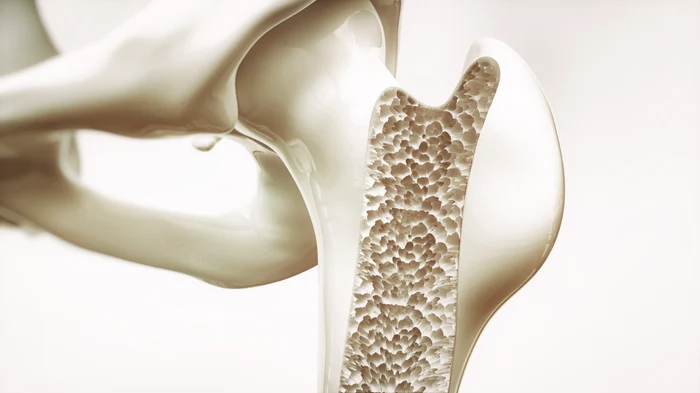
A mechanism hidden in the body can reverse osteoporosis and reconstruct the fragile bones archive
How to activate the GPR133 receiver and exercise can strengthen the bones and prevent osteoporosis
“It is as if we have pressed a button that forces the natural builders of the skeleton to work faster and more efficiently.”explains Biochemist Ines Liebscher.
Surprisingly, experimental treatment seems to collaborate with physical exercises, amplifying the effect of bone reinforcement – a scenario that opens new perspectives to prevent fragility at older age.
Many factors influence bone strength, and this offers multiple scientists to find methods that prevent problems such as osteoporosis and promote a healthier old age.
The potential impact of innovative treatments against osteoporosis: Reconstruction of fragile bones
Osteoporosis affects millions of people worldwide, and current treatments only manage to slow down the disease, with the risk of serious side effects, such as an increased risk of other diseases or becomes less effective over time. The possibility of reconstructing the degraded bones, not just stopping the loss of density, would mean a radical change, especially for menopausal women, the most exposed to this condition.
“The potential this receiver for medical applications has is huge, especially in a world that ages quickly”stresses Juliane Lehmann, a molecular biologist at the University of Leipzig.
Treatment of osteoporosis: from the discovery of the GPR133 receiver to an effective human treatment
Although the results have been confirmed, so far, only in animal experiments, researchers are confident that mechanisms are similar in humans. The following steps include safety tests, dose establishment and clinical trials, to turn the discovery into a real treatment.
This could lead to the development of a revolutionary osteoporosis therapy, based on the activation of the GPR133 receiver, capable of regenerating fragile bones and providing for millions of patients the chance of a stronger and healthy skeleton.
