
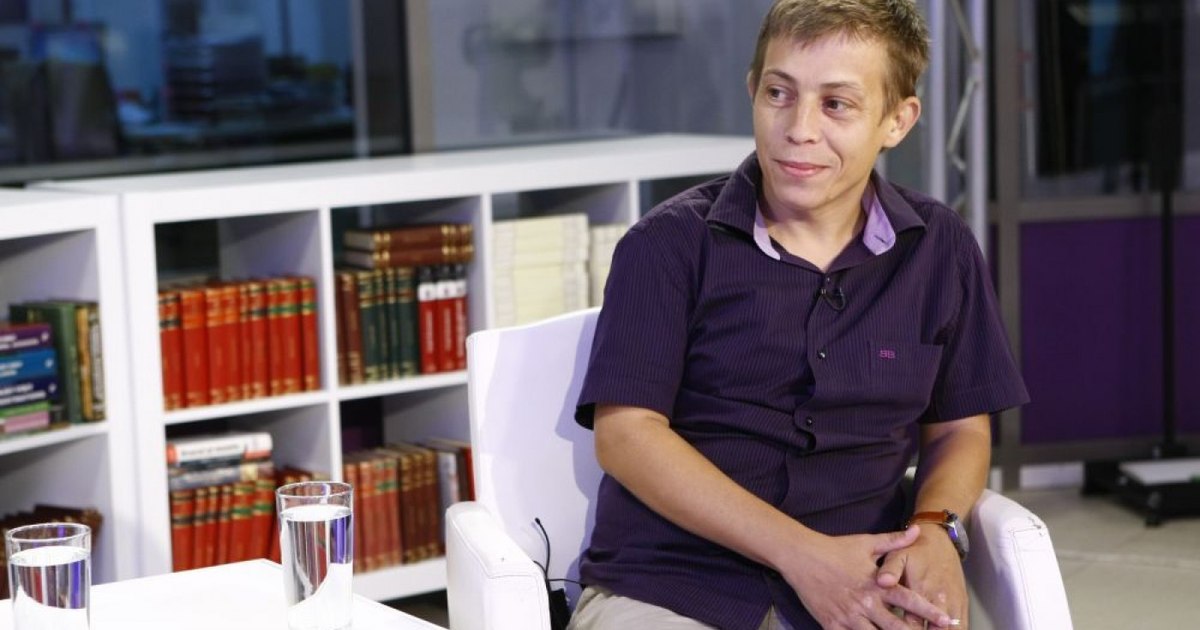
The cases in which patients are left without care for hours show, in the opinion of Radu Gănescu, the president of the Coalition of Organizations of Patients with Chronic Diseases in Romania (COPAC), “an undesirable image of the health system”. In an interview given “The Truth”he explains why hospital tragedies can no longer be blamed solely on a lack of money or policies, but on the lack of responsibility of those who actually work in the system.
Photo: David Muntean
“When we talk about the health system, we talk about policies, institutions, hospitals, managers, doctors, nurses, everything that means the system. But in cases like this, it’s the people on the ground that make a system dysfunctional.” he says. In his opinion, the time when “a patient is forgotten in a ward and no one looks at him for seven, eight hours” it no longer depends on the decisions of the National House, the Ministry of Health or the local authorities, but on the people. “The fact that they lack any accountability and simply don’t want to do their job shows us the unwanted mirror of the system,” says Radu Gănescu.
He draws attention that in hospitals “there is no penalty.” Even if serious errors occur, “the salary goes forward and things disappear, appear elsewhere or in another hospital.” In the absence of real sanctions, the behaviors are perpetuated, and the patient remains the one who pays.
From his perspective, the current control mechanisms have no real tools. The National Insurance House settles medical services, but does not check whether they are actually performed. “We have no human resources and there is no control of the quality of the medical act. We see that the decentralized hospitals, subordinated to the local authorities, often remain only on paper. (…) Many times the local authorities want to have hospitals, but at the same time they do not take care to have the quality of care or to offer services those hospitals, just to be open. Why? Because very simply, some money comes and some people are paid even if they provide services or not medical, as an example from that case.”
The Departments of Public Health are, in turn, outdated. “One very, very important thing: the only public health response agency that provides the authorizations, which is supposed to control, has limited capabilities in each county. There are few people for what it should be, and there are also the friendships between doctors, nurses, and those who work in a certain environment. And such things are generally hidden, they do not appear publicly. And the ones that appear publicly, we all see that they are more or less solved. Maybe if the Minister of Health arrives, we see that in the last 10 years, the perspective is as follows: Something happens, the Minister goes, measures are taken. The Minister does not go, no measures are taken. That’s about our level of control”says Radu Gănescu.
The Beiș case
The whole discussion comes against the background of the recent incident at the Municipal Hospital in Beiuș, when a 79-year-old woman was left without medical supervision for hours, until she fell into a coma and died a day later in Oradea. During all this time, no one intervened, and it was a nurse who called 112 from inside the hospital.
We remind you that the internal investigation ended with a single sanction – a 25% reduction in a doctor’s salary for six months – while the family filed a criminal complaint for manslaughter and a civil action for malpractice. The case is now being investigated by the Beiuș Prosecutor’s Office, to determine what happened during the eight hours in which the patient was completely ignored.
Medical regulations prohibit leaving patients unattended, regardless of ward. “It’s rule number one,” explains Radu Gănescu. “The fact that this is happening shows a serious management deficiency. If you can’t provide permanent shifts and services, you have to reorganize. The Ministry of Health has said for years that if there is no inpatient capacity, those facilities can become outpatients. There patients can be safely treated and monitored.”
He believes that many tragedies arise from the refusal of local governments to recognize their limits. “If you don’t have staff, equipment and resources, you can’t claim to operate as a hospital. It’s up to local management and what each community wants to offer. But if you can’t, you’d better stop hospitalizing than put lives at risk.”
Investigations without consequences
As for conducting internal investigations, says Gănescu, they have no real efficiency. “The vast majority of them end up with penalties of 10% of the salary. It has no value as long as you lose a man’s life.”
At the same time, Romania has a malpractice law, but it is non-functional. “The doctor pays the insurance, but the patient or his family are not compensated. In recent years, only one case has been won. The lack of applicable legislation makes it impossible to hold them accountable.”
In Radu Gănescu’s opinion, cases of malpractice occur frequently in Romania, but few patients know what this notion means legally or how they can act. “A patient who is not treated or seen by a doctor, nurse or anyone is already a case of malpractice, especially if it leads to death.” he explained.
The lack of medical education and information makes people think that “that’s the system” and stop asking for explanations, and unclear legislation discourages any action.
In such situations, adds the president of COPAC, patients or families can first notify the ethics board in the hospital, then the College of Physicians and, if necessary, go to court. “The media also plays an important role, because often only after a case becomes public do the authorities react.”
Regarding the causes that lead to such situations, Radu Gănescu explains that “not enough communication between doctors, patients and families”. In modern hospitals, the clinical pharmacist works directly with the doctor to avoid dangerous drug interactions. In Romania, this role is almost completely absent.
“Usually, we don’t talk to the family. What should I talk about with the family? That I don’t have time to talk, that I’m a doctor, I know everything. This was happening until ’89. Unfortunately, there is still, let’s say, this trick of the paternalistic system. We know everything, we treat, you know nothing. It’s not like that anymore. Now the dialogue between patient and doctor is a partnership. Because they need to have a lot of information, especially what medicine is being done now, targeted therapy, in order to treat me in a correct way. These things have to happen.”
The COPAC president also comes up with a comparison with European systems: “We have 15-16 million inhabitants and 700 hospitals. Poland has 38 million and 900 hospitals. In Europe, more than 80% of treatments are done on an outpatient basis, at the family doctor or at home. Here, everything is done in the hospital. The result is predictable: crowded hospitals, high costs and low efficiency.”
“There are hospitals where the heater does not work, where there is no anesthetist or he is on vacation and they reschedule you in a month. We have learned that everything happens in hospitals, but that is not how medicine is. Hospitals should treat serious cases, which really need surgical interventions and multidisciplinary teams. The rest should be solved in outpatient clinics or in primary medicine”it signals.
He also explains why patients prefer to go directly to Bucharest, Cluj or Iasi. “Because there I know I can find specialists, equipment, medicines. In small hospitals, patients arrive only to be sent further. This is how waiting lists appear, and county and city hospitals remain almost empty. The salaries flow anyway, regardless of how many patients are treated.”
Hospitals that “revolve after the sun”
According to him, a solution would be the formation of medical networks between hospitals in a region. “When a patient has a heart attack, the ambulance should know exactly where to take him. Don’t waste time between hospitals that don’t have cardiologists or equipment. Each unit should have a clear role in the circuit.”
Radu Gănescu also says that the private system should be complementary to the public one, not an alternative for those who can afford it. “Insurance must follow the patient. If I am insured, I should be able to go to private without paying out of pocket. The private system should intervene where the public does not work. Who wants better conditions, pays extra. But basic access must be guaranteed to all.”
He believes that the most difficult reform is that of mentality. “We have huge, over-regulated legislation. There is no lack of laws, but their enforcement. Many very good doctors leave not for the money, but because they want to do real medicine, with teams and research. Those who remain must be supported to do their job, not to struggle with bureaucracy and lack of equipment.“
Finally, Radu Gănescu says that in Romania there are also hospitals that operate according to European standards. “I have seen hospitals that revolve around the sun, as they say, with dedicated teams and very good conditions. But they are exceptions. It should become the rule. When people go where there is quality, and the other hospitals run out of patients, the system will balance itself.”
