
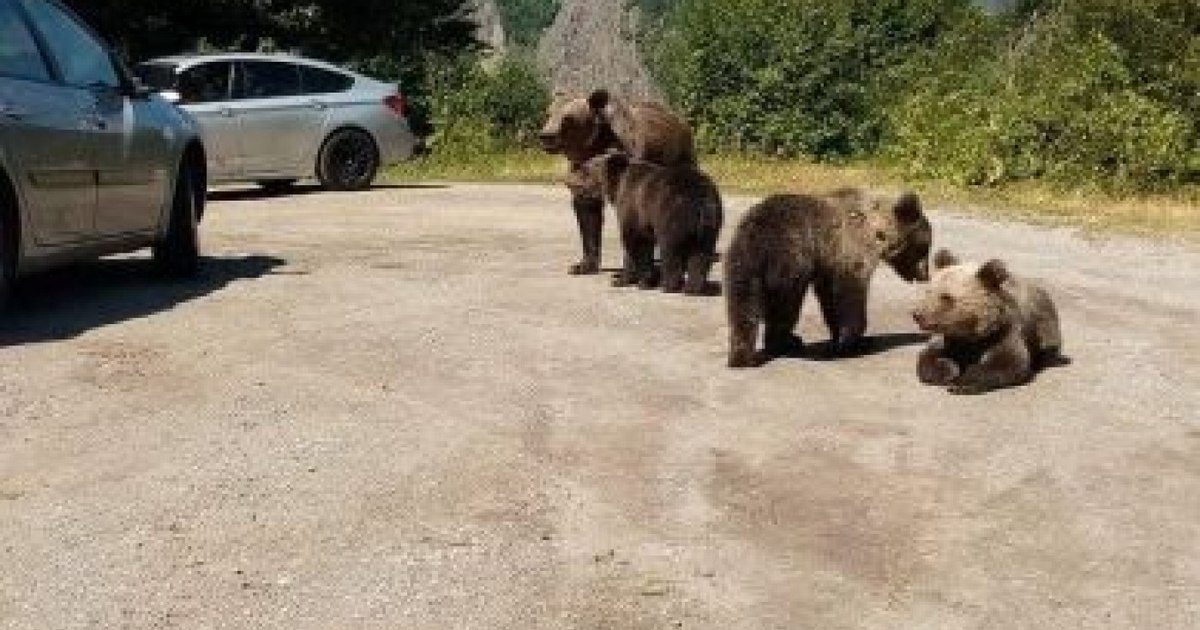
Activists challenge Tanczos Barna’s brown bear proposal and argue that the state has failed to protect both people and the species: “Romania’s problem is not that the law protects the bear too much. The problem is that the state protected the people too little and the bear too little.”
Agent Green reacted critically to the statements of the acting Deputy Prime Minister Tanczos Barna regarding the need to change the European legislation regarding the brown bear. The environmental protection organization believes that the idea of removing the species from the list of protected animals does not solve the causes of conflicts between humans and bears, but on the contrary perpetuates the ignoring of preventive measures recommended by specialists.
“Look what brilliant idea Tánczos Barna has come up with. After spending years fueling anti-bear hysteria, blocking the implementation of the National Brown Bear Conservation Action Plan and promoting the death penalty as a universal solution, he now wants to remove the brown bear from the list of strictly protected species in the European Union.” Agent Green said on Friday, June 12, in a message published on Facebook.
“This moral idiot is fascinating. Don’t think he cares about people. He only cares about trophy hunters, who are not people. By the same logic, we could demand that Tanczos Barna be stripped not only of his parliamentary immunity, but also of his human status. Let us squeeze him like a tick or mosquito without legal consequences because he is toxic and spreads serious diseases in society.
His initiative has no logic. You have a patient with a fever. You refuse treatment. You refuse prevention. You refuse to eliminate the cause of the disease. After which you complain that the patient is still sick and conclude that the thermometer should be shot.
For years, experts have been saying the same thing: conflicts between humans and bears are reduced by waste management, protecting farms, electric fences, quick interventions, education and identifying truly problematic specimens. It works everywhere it applies.
But all this is complicated. It requires a rational brain. It requires work. Requires administration. It requires skill.
It’s much easier to declare total war on a species. In this logic, if there are road accidents, we ban cars. If there are fires, we remove fire from the list of natural phenomena. If there are floods, we ask the European Commission to declassify the rivers.
Now we are told that the bear must lose strict protection because there are conflicts with humans.
But precisely for conflict situations there are derogations, interventions and legal mechanisms already provided for by European legislation. Romania’s problem is not that the law protects the bear too much.
Romania’s problem is that the state has protected the people too little and the bear too little. It has abandoned local communities. He abandoned prevention. He dropped out of education. He abandoned the implementation of his own plans.
And now we are asked to believe that the bear is to blame?
In just a few years, one of Europe’s most spectacular species has been transformed from a symbol of wild nature into a permanent public enemy.
Not because the bear has changed. But because some politicians have discovered that fear brings more votes than solutions. And supporting the trophy hunting industry.
The brown bear is not Romania’s problem. Romania’s problem is the inability to intelligently coexist with its own nature.
And when a politician tells you that the solution is to reduce the protection of a species after years of refusing to apply measures that would have reduced conflicts, you are not looking at a conservation plan. You are looking at an attempt to turn an administrative failure into a political victory,” sent the environmental organization.
The reaction comes after the interim Minister of Agriculture, Tanczos Barna, said that Romania should initiate steps at the level of the European Union to change the legislation on the brown bear, citing the example of Germany, which obtained the change of protection status for the wolf.
