
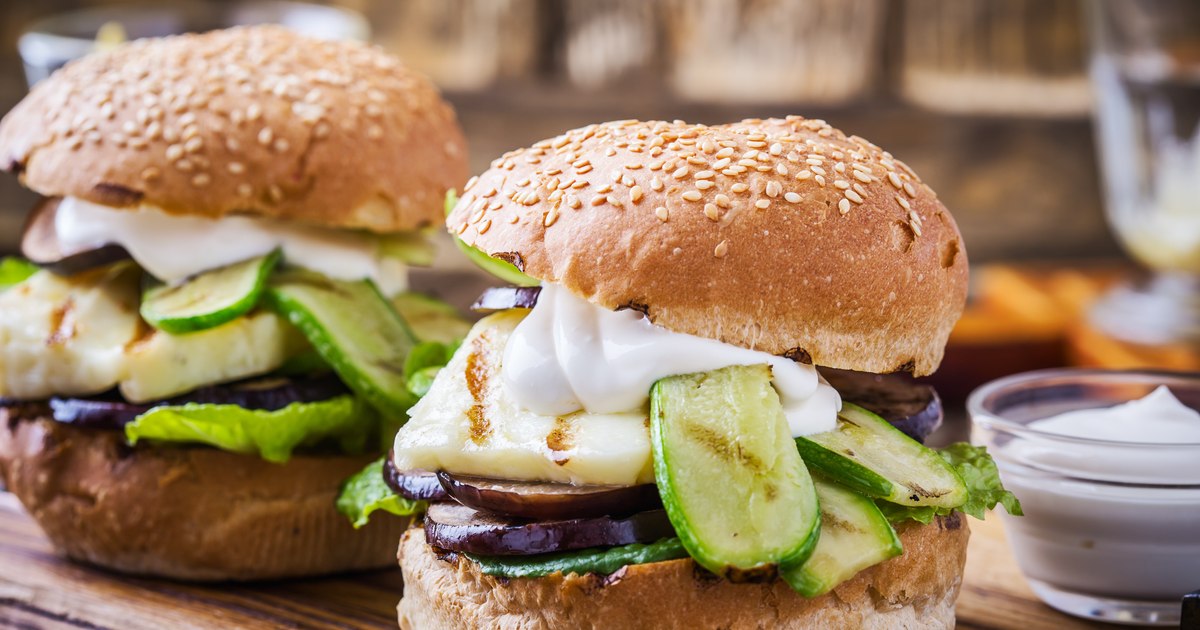
The discussion about the “plant burger” is not a mere label dispute, but an identity negotiation. “The food works as an emotional regulator, a marker of belonging and a moral symbol”, explains the clinical psychologist and the psychotherapist Mirela Maftei. When a “cultural word” – such as “burger”, “sausage” or “steak” – is attached to a plant based on herbal, reactions of rejection and confusion are activated. In the psychological level, the feeling that “something is taken” is triggered, the cognitive dissonance (my values vs. my habits “) and the mechanisms of identity protection (” this is not what “).
Photo source: Shutterstock
Food as emotional and social language
According to the psychologist, foods are emotionally loaded because they function as affective anchors. “Family tables, holidays or smell of a roast produce episodic anchors that encode pleasant emotions. Subsequently, sensory signals reactivate the affect by classical conditioning” explains Mirela Maftei. In addition, the internal sensations of hunger and satiety are interwoven with the affective state: often, eating becomes an emotional adjustment strategy: a way of calming or depreciation.
“Food is a social language. What you eat communicates values, status, gender. In many microcultures, meat means power, care or hospitality”, she points out. In the research they carry out “The correlation between the type of parental attachment and the disorders of eating behavior among adolescents”, Notice how the dynamics of attachment shape the body image and food control. “Early attachment patterns, for example a critical or avoidant parental figure, are linked to perfectionism, body control and vulnerability to the pressure of norms”, says the psychologist.
Why a vegetable burger can be perceived as a threat
“What we cook and eat is part of the self -scheme. You are what you eat. When a consecrated symbol is resigned, we activate the identity defense,” explains Mirela Maftei. According to the theory of social identity, the culinary scorers delimit “us” and “they”. Terms such as “Vegan” or “Plant-Based” can be read as tribe signals, causing polarization. At the same time, in the culture of normative masculinity, the reduction of meat consumption can be perceived as a loss of status, and the vegetable label becomes a message about who you are – not just what you eat.
Language plays a major role in accepting new products. “The words are affective triggers. Burger – not only describes a form; activates a whole cultural narrative: the barbecue, the family, the Sunday”, says the psychologist. When the same word is used for a vegetable product, for some normalizes, and for others “profanize” the tradition. “Sensory framing -” juicy, crisp ” – reduces resistance better than moralization (” healthier “” more ethical “). The clarity of formulation (‘based on herbs, burger type’) decreases semantic anxiety ”, she adds.
Many people declare themselves pro-sustainability, but they reject the plant alternatives. “Here the so-called paradox meat operates: I love animals, but I eat animals. This interior conflict produces discomfort, which is managed by rationalizations (” only occasionally “), denying the animal agency or devaluation of the alternative (” it is not good “).”
The psychologist also describes another form of internal conflict: self-disrepany: the difference between “I ideal” (eco, healthy) and “current I” (daily habits), which generate shame and irritation. “Therefore, a pro-vegetal message can be rejected not for content, but because it activates this discrepancy.”
The tradition of fasting and modern paradox
Nutritionist Maria Varga believes that the debate on vegetable burgers has removed from the essence of nutrition: health and quality of food. “The attention moves from health, which is the main purpose for which we should eat, on language and emotions, on memories. It should be clear to focus on the real benefit that the food brings to our body: quality nutrients, sustainable origin, naturally raised animals.“She says.
Maria Varga recalls that Romanians have a millennial tradition, equivalent to periodic vegetable nutrition. “For over 2,000 years, Romanians have eaten vegan, minimum twice a week and in all big positions: that is over 200 days a year”, explains the doctor. This practice, she says, was gradually lost after communism, when eating habits have changed. “Today, people no longer eat fast, but from camps: either anti or pro-vegan, without reporting to the authentic content of food.”
The doctor also draws attention to the confusion created by commercial labels. “Personally, I do not like the food labeled” Plant-Based tuna “or” Plant-Based salmon “. They are very weak vegan alternatives from the point of view of quality and can confuse the public. If we keep the traditional names and add only the “Plant-Based” label, we induce confusion. “
For her, the key to a healthy diet lies in simple, integral, not semi -prepared preparations that mimic meat: “Healthy food means cooking at home, from foods as few, environmentally friendly and seasonal, whether it is with or without meat. ”
When the food becomes a story
“The vegetable burger does not upset us as a food object, but as a psychological object: it reaches memory, belonging, status, the way we tell our story”, completes the psychologist Mirela Maftei. The solution, she says, is to look at culinary language as a bridge space, not conflict. “If we honor the tradition and extend the culinary repertoire without imposing identities, we reduce the dissonance and make room for more flexible choices. In the cabinet, in school, in the media or on the shelf, the key is not to replace, but to enrich who we are, and what we eat.”
“Goodbye burgers and vegetarians”
The European Parliament voted on October 8, 2025 the prohibition of using the terms “steak”, “sausage” and “hamburger” for products that do not contain meat, according to the AFP agency.
The proposal, supported by the right -wing politicians, was adopted with 355 votes for and 247 against. The new regulation aims to prohibit names such as “vegetarian steak” or “vegetarian burger” for herbal preparations.
“It is about transparency and clarity for consumers and the recognition of our farmers’ work,” said Céline Imart, MEP from the European People’s Party, the initiator of the draft law. She added that the goal is not the prohibition of plant alternatives but “Promoting terms with their true significance.”
However, the measure is to be negotiated with the Member States of the European Union, Agerpres notes.
The subject strongly divided the European plenary. German deputy Peter Liese considered “shameful” that Parliament devotes his time “such absurdities”, arguing that “no one considers consumers stupid – if on a package he writes” vegetarian burger “, each can decide whether or not he buys it.”
On the other hand, the ecologist MEPs criticized the initiative, accusing the “meat lobby” of trying to weaken their competitors in the innovative food industry. “This law is not about clarity, but about protecting the interests of the old players”, a Dutch said Anna Strolenberg.
Vegetable products that mimic meat have experienced rapid growth in recent years, due to increasing interest in healthy eating, animal welfare and reduction of carbon fingerprint. In 2020, a similar proposal was rejected, but changing the political balance after the European elections of 2024, when the right and extremely right gained land, relaunched the subject.
