
Palaces and castles are definitely the places that bring you closer to the events of history. So visits to such an edifice give you the opportunity not only to admire the architecture or the works of art exhibited inside, but to accumulate information. The old continent has a multitude of edifices within whose walls history has been written. In the following article, we present some of the most famous and spectacular palaces in Europe.
Palace of Versailles (France)
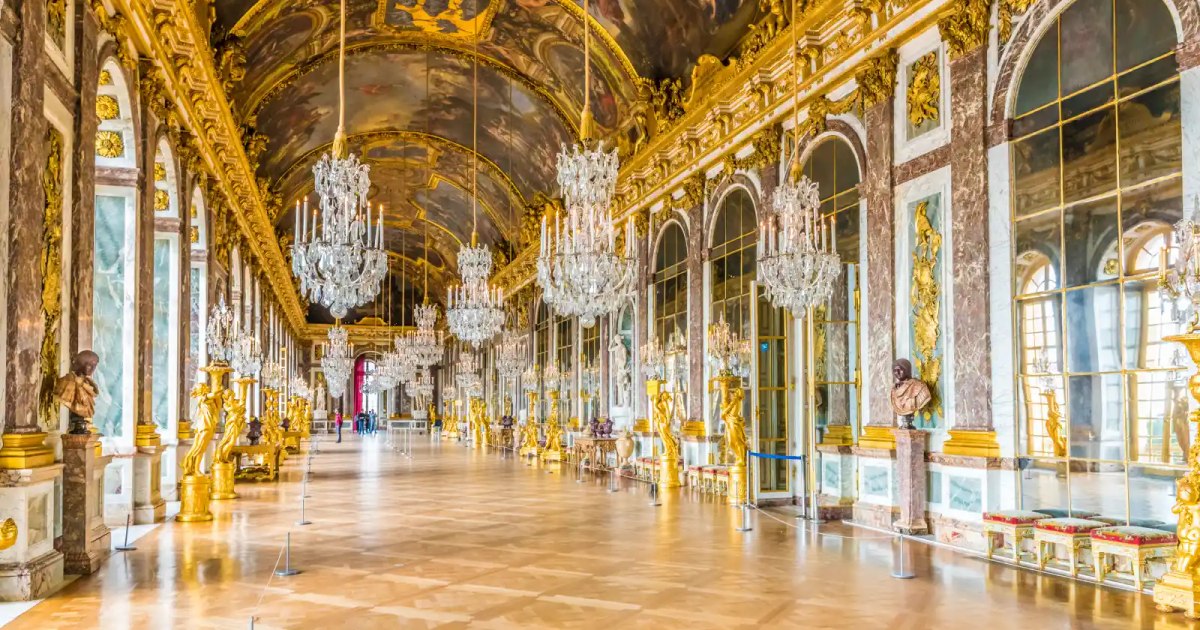
“You are now in the Hall of Mirrors” – “You are now in the Hall of Mirrors”. That’s what the audio guide says when you enter the most famous room in the Palace of Versailles. And it’s hard not to be overwhelmed by the grandeur of the place, even if you won’t see it free, as in the presentation photos, but full of hundreds of tourists from all over the world. The hall with 357 mirrors witnessed important events in history. The “Versailles Peace Treaty”, which ended the First World War, was signed here on June 28, 1919. It was also here that the German Empire was proclaimed in 1871.
Built in the French Baroque style, Versailles is the most famous palace in the world. Louis XIV, the “Sun King”, transformed it from a hunting lodge into a symbol of absolute power and moved the Royal Court of France here in 1682. Designed by Louis Le Vau and Jules Hardouin-Mansart, the palace covers over 63,000 square meters and contains 2,300 rooms. A visit here is a lesson in history, but also in human nature, and helps you understand the scale of luxury that led the French to start the Revolution of 1789.
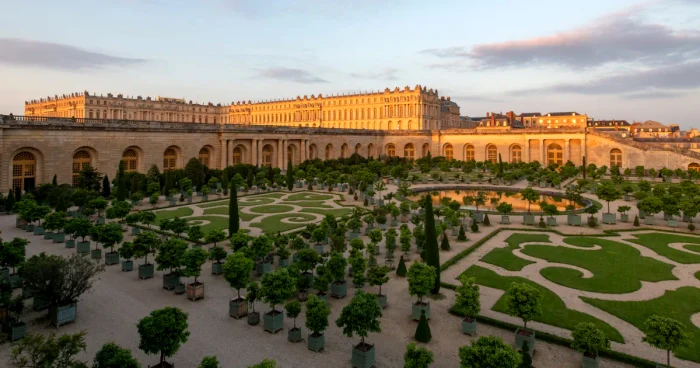
You can’t talk about Versailles without mentioning the palace’s geometric gardens. Imagined and created by the landscape architect André Le Nôtre, in the 17th century, it covers an area of 800 hectares. And if they were once reserved only for the privileged few, now, with a ticket of around 30 euros, they can be admired by anyone who travels to France and wants to discover the history of this fascinating place.
Neuschwanstein Castle (Bavaria, Germany)
Probably the most romantic castle in the world, Neuschwanstein inspired the castle in the logo Disney.
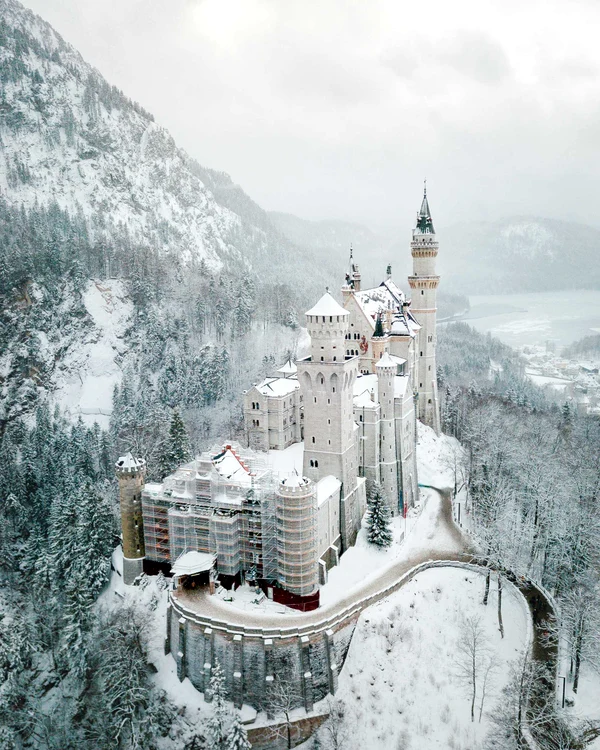
Built at the end of the 19th century in the Romanesque-Neo-Gothic style, with slender towers and a spectacular location on a mountain top in the Bavarian Alps, it really creates a fairy-tale image. But the back story did not have a happy ending. The castle was the dream of Ludwig II of Bavaria (the “Swan King”), who wanted a personal refuge where he could escape from political reality into a mythical world. Moreover, the interior is inspired by Germanic legends and the works of Richard Wagner. But the king died in 1886, just a few months after being declared unfit to rule. He was only 41 years old and his death was shrouded in mystery. The castle was never finished.
Alhambra (Granada, Spain)
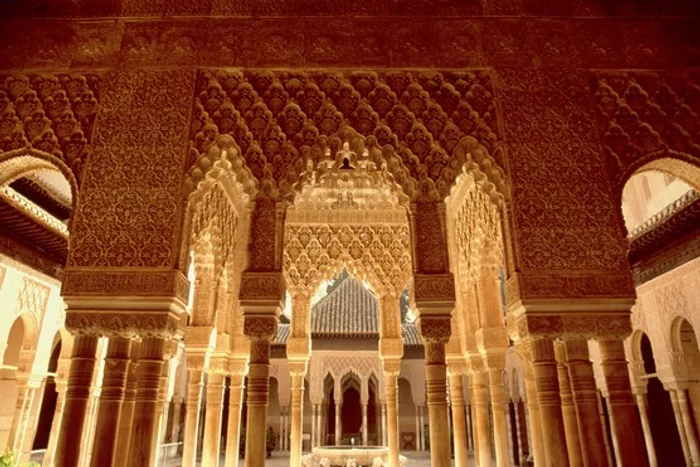
A complex of Moorish palaces and fortresses, the Alhambra is the best-preserved example of Islamic architecture in the West, a UNESCO World Heritage Site.
Built between the 13th and 14th centuries, the Alhambra reflects the idea of ”paradise on earth” in Islamic culture: flowing water, lush gardens and perfect harmony between nature and architecture.
The Nasrid palaces, considered the heart of the Alhambra, are decorated with extraordinary detail: walls covered in arabesques, calligraphic inscriptions and complex geometric patterns, all executed with almost hypnotic precision.
The city was the last bastion of Islamic civilization in Spain. In 1492, Boabdil, the last Moorish king, handed over the keys to the Alhambra to King Ferdinand II of and Queen Isabella I of Castile with the conquest of Granada. Although it was adapted for the new Christian rulers, the complex largely retained its original artistic identity, thus becoming a symbol of the meeting of two worlds.
Doge’s Palace (Venice, Italy)
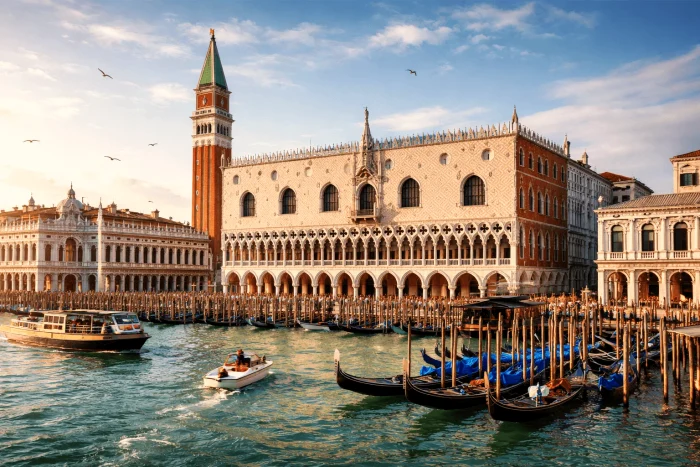
With a pink-white marble facade and delicate arches that seem to defy gravity, the Doge’s Palace was the political and legal center of the Republic of Venice for nearly a thousand years.
Over time, it has been affected by several fires, and parts of it have been rebuilt. The main structure and facade that we see today mostly belong to the Gothic phase of the 14th century.
A young woman bought a mansion in Italy for the price of a car: “It’s still far from being completed, but the dream is gradually becoming a reality”
Inside, the Great Council Hall (Sala del Maggior Consiglio) is one of the largest halls in Europe and houses paradise by Jacopo Tintoretto, considered to be one of the greatest paintings on canvas in the world. The palace also contains works by Veronese, Titian and Giovanni Bellini.
It is interesting to know that Giacomo Casanova was imprisoned in the dungeons of the palace in 1755, but made a spectacular escape a year later. It was the only successful escape in the history of the prison.
Schönbrunn Palace (Vienna, Austria)
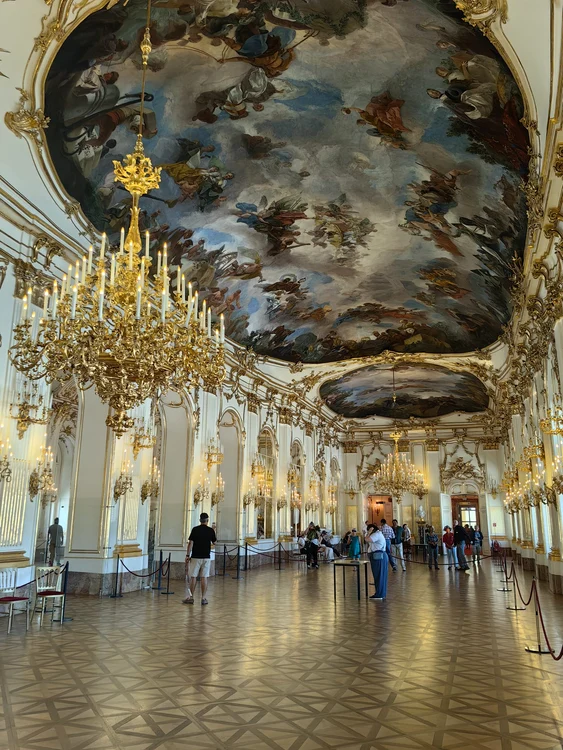
The summer residence of the House of Habsburg, Schönbrunn is the Austrian equivalent of Versailles. Built in the Austrian Baroque style, it has 1,441 rooms and gardens spread over 160 hectares, with the famous Gloriette on the hill. It was originally a hunting ground, but later became the center of court life of the Austrian Empire and a symbol of the power of the Habsburg dynasty.
The young Mozart performed here at the age of 6, before the Empress Maria Theresa, one of the ablest rulers of the 18th century. Her strategies raise ethical questions today: she used all her daughters, including Marie Antoinette, for marriages that would strengthen alliances between the great European powers.
History buffs will find here important relics of the life of Franz Joseph, the last emperor of the Austro-Hungarian Empire. Perhaps the most important in the minds of the visitors of the castle remains the tragic story of Princess Sissi. At the palace, there is also an audio guide in Romanian, and the way the events are narrated turns the visit into a special experience.
Fontainebleau Castle (France)
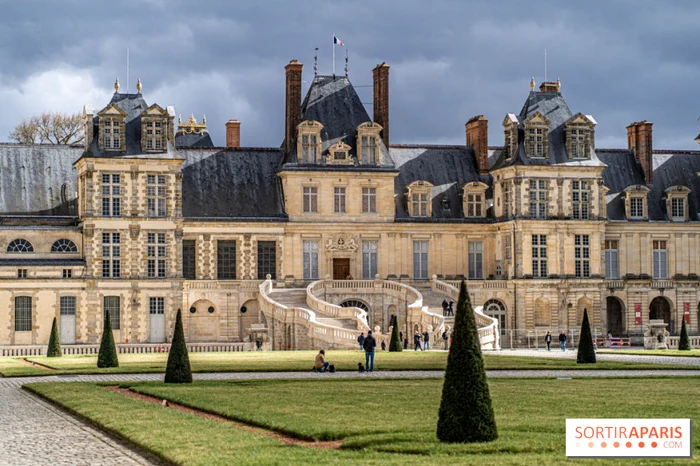
Back in France, Fontainebleau is one of the largest French royal palaces and the only one to have been inhabited by every French monarch in modern history: from Francis I to Napoleon III.
With a blend of styles accumulated over the centuries (Renaissance, Baroque and Neoclassical architecture), Fontainebleau has a more intimate atmosphere than Versailles. Horseshoe Staircase from the court of honor is one of the most photographed elements of the castle.
One of the most dramatic moments in French history took place at Fontainebleau: the abdication of Napoleon Bonaparte. On April 6, 1814, after successive military defeats before the European coalition, Napoleon signed the act of unconditional abdication. He initially tried to abdicate in favor of his son, but the Allies refused. The text of the abdication marked the official end of the First French Empire. In the days immediately following, Napoleon bid farewell to the Imperial Guard in the palace courtyard, a famous moment often called “Farewell from Fontainebleau”.
Louvre (France)
The helmet from Coțofenești will be restored after the theft from Holland. The artifact, temporarily exposed with signs of damage
The most visited museum in the world is also a former royal palace. Originally built as a medieval fortress in the 12th century by King Philip II, the Louvre was expanded and transformed over the centuries into a palace. In fact, it was the main residence of the kings of France until Louis XIV moved to Versailles.
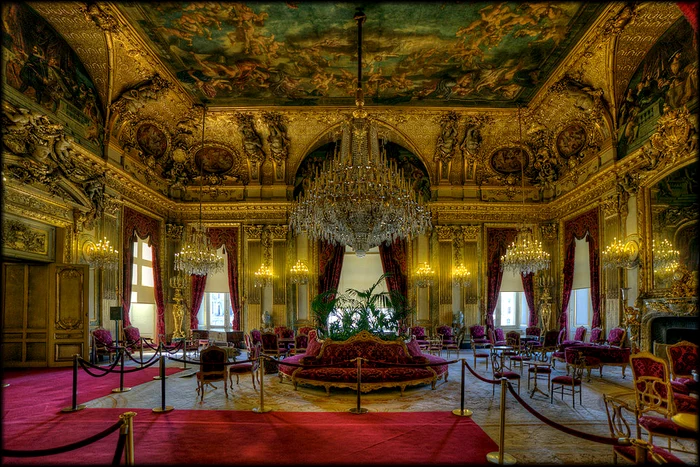
Moreover, the Louvre impresses not only with the works of art that tell the history of the world, but also with its spectacular architecture. Napoleon III’s apartments in the Louvre Palace are part of the palace’s major transformations of the period Second Empire (1852–1870), when Paris was remodeled by Baron Georges-Eugène Haussmann.
The apartments are an example of imperial power expressed through architecture: luxurious, theatrical and designed to impress diplomats and Europe’s elites. It also marks the last great moment that the Louvre functioned as an imperial residence, before it was fully transformed into a museum.
Buckingham Palace (London, UK)
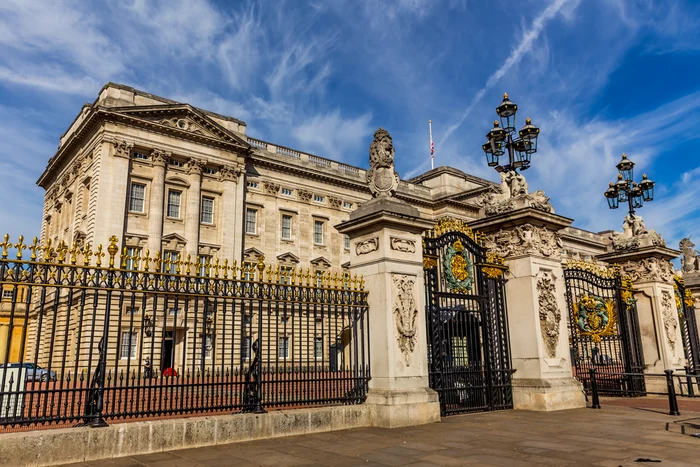
The list couldn’t end without Buckingham. The official residence of the British monarchs since 1837, Buckingham is the center of British royal life and one of the most visited places in the world.
Its current neoclassical facade dates from 1913 and was designed by Aston Webb. The palace has 775 rooms, including 19 state rooms, and houses one of the largest private art collections in the world. Works by Rembrandt, Vermeer or Rubens and Canaletto are also exhibited here.
The balcony of the palace has hosted historical moments: from the celebrations after the victory in the Second World War, to the appearance of the royal family after coronations and weddings. The funeral of Queen Elizabeth II in 2022 gathered millions of people in front of the palace.
