
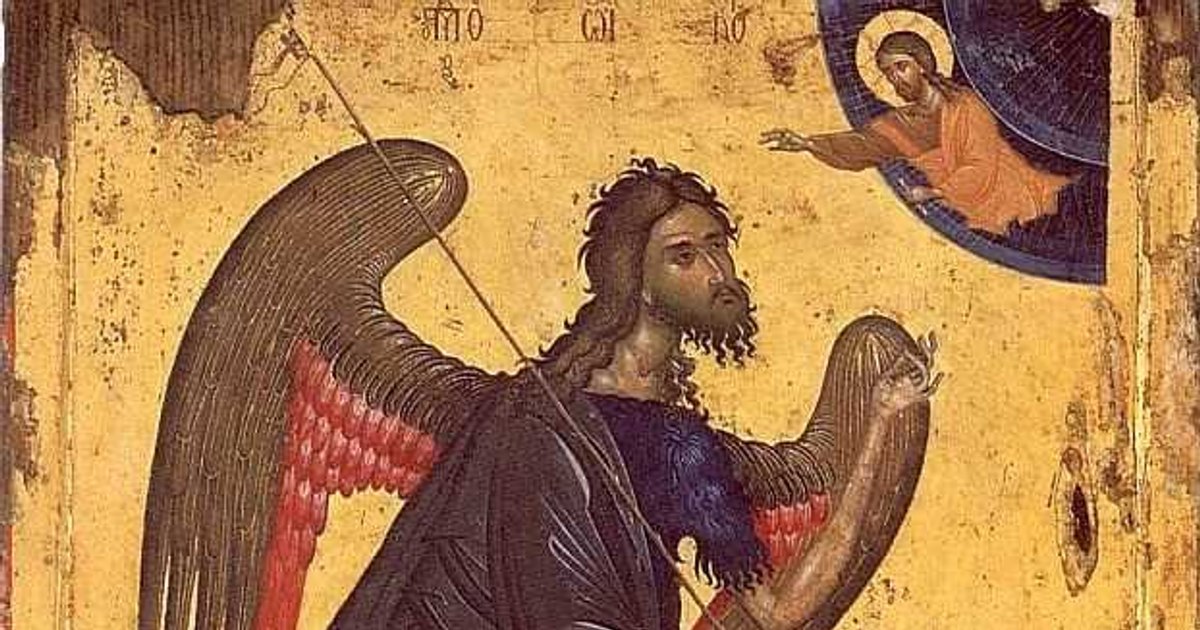
On January 7, Orthodox Christians celebrate the Council of Saint John the Baptist, the one called by God to prepare the way for the Savior Jesus Christ. It is the holiday that ends the cycle of winter holidays and secular traditions are also connected to it.
The Cathedral of Saint John the Baptist is one of the biggest Christian holidays, being dedicated to the prophet considered the bridge between the Old and the New Testament.
What is the meaning of Saint John’s Day for Christians?
Priest Gabriel Cazacu: “It is a tribute to all the sacrifice that Saint John the Baptist made in this world. It is honored several times throughout the year. It is a cathedral of Saint John and it is celebrated in a very special and special way by the Church, being grateful for all the sacrifice of Saint John the Baptist, the Forerunner of the Lord.”
Who was St. John the Baptist and what is the significance of January 7th
St. John the Baptist is known in the Orthodox Church as the Prophet, Forerunner and Baptist of the Lord Jesus Christ. The last great prophet of the Old Testament lived ascetically in the desert, preaching repentance and baptizing those who wanted a new life in the Spirit of God. He baptized Jesus in the Jordan River, a fundamental event in the history of salvation, when the light of the Holy Trinity was also discovered, according to basilica.ro. The Cathedral of Saint John the Baptist is the feast dedicated to the one who baptized Jesus in the Jordan River, being marked shortly after Epiphany (January 6) and emphasizing his essential role in the short life of Christ.
“John lived an austere life, wearing clothes made of camel hair and feeding on honey and locusts, a symbol of asceticism and total dedication to God. Having fulfilled his mission, he was martyred by beheading at Herod’s command, because he had rebuked him for his sin.” the cited source also specifies.
“There is no better model for faithful men than Saint John the Baptist”
“”Angel” is called in the gospel, and his akathist presents him as “an earthly angel and a heavenly man”, because he led an angelic and heavenly life, for 30 years in the desert: “And there was John dressed in a camel’s hair garment, he had a leather belt around his waist and ate locusts and wild honey”. And when he went out to preach, he taught people without looking at his face or to their office, but thrust his bold and unrelenting word like a dagger into the soul of every one, that he might win them all for the Kingdom that was to come.” says the Bishop of Slatina and Romanians, PS Sebastian, in the “Word of the Hierarch”, on the website of the diocese.
Saint John the Baptist is, for many reasons, a model. “There is no more suitable model for faithful men than Saint John the Baptist, and for women the best model is the Mother of God”the hierarch also points out, calling John the Baptist the greatest saint of the Orthodox Church, from whom “we can learn perfect asceticism, pure life, full devotion to the Lord, courage and, above all, verticality and principle”.
How many times a year is Saint John?
The Orthodox Church dedicated six holidays to Saint John the Baptist, as follows: The Council of Saint John the Baptist (January 7); The first and second discovery of the head of Saint John the Baptist (February 24); The third discovery of the head of Saint John the Baptist (May 25); Nativity of Saint John the Baptist (June 24); Beheading of Saint John the Baptist (August 29) and Conception of Saint John the Baptist (September 23). Three of these are best known to believers:
January 7 – Cathedral of Saint John the Baptist
This feast is celebrated the morning after the Baptism of the Lord (Baboteza) and is meant to commemorate Saint John for his direct role in the baptism of Jesus Christ. Just as the Baptism of the Lord is the testimony of the revelation of the Holy Trinity, John receives the honor of being the first to baptize the Savior and openly recognize him as the Son of God. The order of the Council shows the importance of John’s testimony for the faith and places him at the center of the history of salvation as a “voice crying in the wilderness” (cf. Isaiah 40), according to basilica.ro.
The day of January 7 is important in the homes of Romanians, being since ancient times the holiday that ends the cycle of the main winter holidays. It is an occasion for blessing, wishes and customs aimed at bringing good luck and health in the coming year.
June 24 – Birth of Saint John the Baptist
It is the day when the Church honors the birth of Saint John, considered a wonderful event, prophesied by the angel Gabriel to his parents, Zacharias and Elizabeth. His birth from aged parents is regarded as a miracle preceding the birth of Christ, symbolizing the step of rapprochement between the Old and New Testaments.
In the popular tradition, the Birth of Saint Ion the Baptist coincides with the Sânzienel celebration, to which are linked agricultural traditions and rituals intended to bring growth and rich fruits.
August 29 – Beheading of Saint John the Baptist
It is the feast that commemorates the martyrdom of Saint John, when he was beheaded by order of Herod because he had publicly rebuked him for his sin. Cutting off the head has a deep meaning in Orthodox spirituality: it is a call to asceticism, repentance and soul care, an example of confession of faith to the end. In the Church’s calendar, this day is one of fasting and prayer, as an example of humility and spiritual courage, according to basilica.ro.
Traditions of St. John the Baptist
Romanians worshiped Saint John the Baptist in numerous customs, some of which are preserved to this day.
One of these is “Watering”, or “Sprinkling with Agheasma” – believers use holy water (Agheasma) to sprinkle each other, a symbol of purification and blessing of the whole year. In different areas of the country there is the “Udatul Ionilor” custom, which assumes that people with the names Ion, Ioan, Ioana, etc. to be sprinkled, or “baptized”, for luck, health and growth.
In Maramureș there is “Vergelul”, a common feast attended by girls and boys. Cheers are made, pairs are formed and thus the winter holiday season ends.
In Bucovina, there was the custom of decorating the gates of those who can name Ion/Ioan/Ioana with decorated fir trees, as a sign of celebration.
In Oltenia, in the villages in the south of Olt County, it was practiced, especially in the villages near heavily trafficked roads, where there was a danger of “dirtying” the water, the custom of “Guarding the Fountains”, actually a fun occasion for the village boys who gathered near the fountains, with food and drink, and spent the night together, taking care not to “dirty” the water.
In all areas of the country, people celebrate by organizing large parties, often with music and dancing, to honor the celebrants of the day, being the last big party, with which the holiday ends.
Among the people there is, related to this day, as in the case of all the big religious holidays, the belief that those who work in the household will have great difficulties in the year that has just begun.
What names are celebrated by Saint John
In Romania, the day of Saint John the Baptist (January 7) is an occasion of joy in millions of families in which there are people who bear names with biblical roots: Ion, Ioan, Ionuț, Ionel, Ionică, Nelu, Ivan, Jan, etc.; Ioana, Ionela, Nela, Ivona, Jana, Vanya.
