
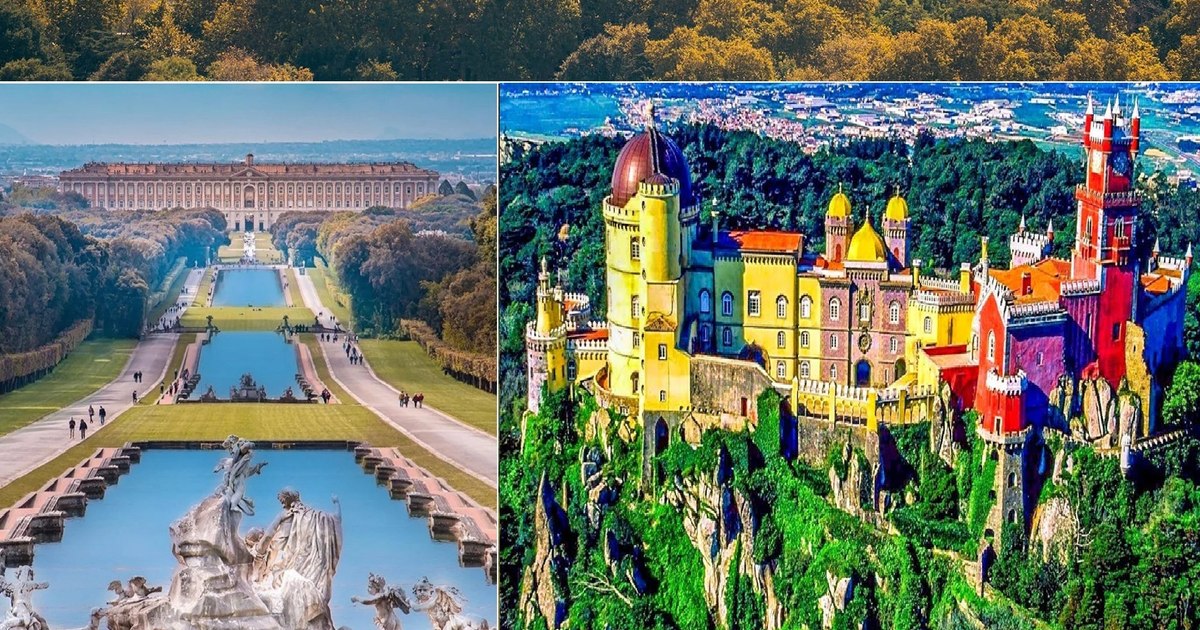
Europe hides between its palaces walls that cut your breath, true works of art carved in stone and gold, loaded with history, mystery and unforgettable stories that have crossed the centuries. Among the most fascinating are the Pena National Palace in Portugal, the Topkapi Palace in Turkey and the Royal Palace in Caserta, Italy-three architectural jewelry that not only delight the eyes, but also wear visitors on a time trip.
Three of the most spectacular palaces in Europe: Topkapi, Caserta and Pena Colaj DMS
Each palace tells the story of a royal era, the tastes and ambitions of the monarchs who built them. The vibrant colors and the fantastic towers of the Pena Palace rise above the Sintra mountains, often enveloped in the fog, creating the impression that you walk into a Portuguese fairy tale. In Istanbul, the Topkapi Palace reveals the opulence of the Ottoman Empire through spectacular inner courtyards, luxurious harem and treasure collections that fascinate generations. And in Italy, the Royal Palace in Caserta impresses with the great combination of baroque and neoclassic architecture, with large gardens, cascades and artesian fountains, which rival the fast Versailles.
These palaces, fairy tales are not just tourist destinations; They are witnesses of history, keepers of mystery and inspiration for anyone who dreams of discovering the greatness of the past through the beauty of art and architects.
Topkapi Palace – Istanbul: The window to the fast of the Ottoman Sultans
In Istanbul, the city on two continents, in which Europe and Asia meet, the Topkapi Palace, the heart of the Ottoman Empire for centuries, rises. Spread on 80,000 square meters, the grand complex was the main residence of the Sultans, a place where luxury, politics and mystery were mixed behind the impenetrable walls. Today, the Topkapi Palace is not only a museum, but a real time trip, an open window to the life of the Sultans and their secret universe.
Built in the fifteenth century on the historical peninsula of Istanbul, Topkapi is inscribed on the UNESCO World Heritage List in 1985 and retains a collection of treasures, archive documents and unmatched art objects. The most important areas include the structures of Birun and Endin, the three monumental gates-Bâb-ı Hümâyun, Bâbüsselâm and Bâbüsse-, Harem of the Sultans and the Hasbahce Garden, also known as Gulhane Park. Each corner of the palace emanates opulence, from the impressive inner courtyards to the rooms decorated with mosaics, golden ornaments and luxury oriental furniture.
Surprising connection between Topkapi and Romania
The Topkapı Palace is not only a symbol of the Ottoman fast, but also a place that carries unexpected fingerprints in the history of Romanians. Behind his walls were made decisions that changed the fate of the Romanian countries, and today, the museum hides a treasure of huge sentimental value for Romania: Stefan cel Mare’s sword.
Exposed in the weapon hall, the ruler’s sword – over one meter long, adorned with the coat of arms of Moldova and Slavonic inscriptions – attracts the eyes of thousands of visitors annually. Legend has it that it would have been given to the Sultan as a sign of a diplomatic pact, but other sources claim that it was taken as a war. Regardless of the road, its presence at Topkapı turns the palace into a place where Moldova’s memory meets the memory of the Ottoman fast.
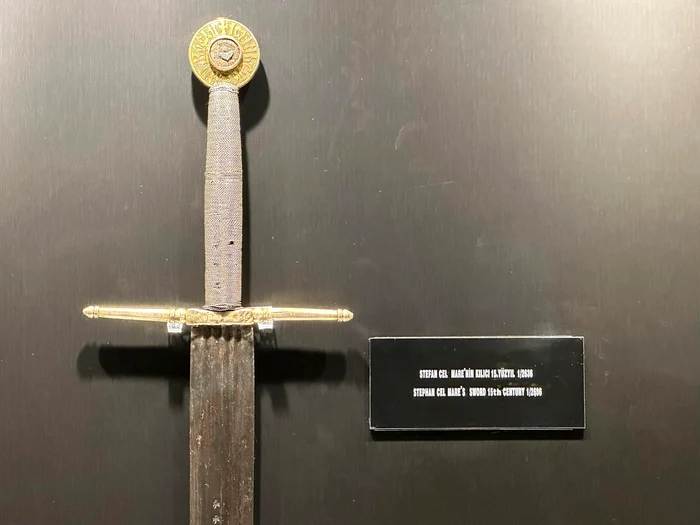
Ștefan cel Mare’s sword at the Topkapi Palace in Istanbul Photo Daciana Stoica for Adevărul
The Romanians approached Topkapı even more with the success of the series Suleyman Magnificul, but the real connection goes much further than the small screen. In the medieval era, the voivodes from the north of the Danube maintained permanent relations with the high gate, and many decisions related to their rulers were taken between the walls of this palace. Thus, Topkapı remains not only a tourist monument, but also a living page in the common history of Romanians and Ottomans.
How to get to Topkapi and what to visit
For the Romanian tourist today, the visit of Topkapi is more accessible than it seems. Istanbul is just an hour and a half of flight from Bucharest, with daily direct flights, and once it arrives in the city, the palace is easy to access with public transport or taxi in the Old Center, being a few steps from Hagia Sofia and the Blue Mosque. The entrance to the museum offers the opportunity to explore the greatness of the Ottoman Empire, with an audio or guided guide that reveals the secrets of the sultans and the fascinating stories hidden in the harem or in the collections of artifacts.
By visiting the Topkapi Palace, tourists not only admire an impressive architecture, but walk into a world where power and beauty were expressed through each column, garden and royal room. It is a place that perfectly combines history, art and legend, offering a memorable experience that should not be missed by any traveler.
The Royal Palace in Caserta-Italy: the versailles in the heart of the campaign
Just a few kilometers from Naples, the royal palace in Caserta (Reggia di Caserta), rightly nicknamed, is imposingly The “Italian Versailles”. Built in the eighteenth century at the command of Bourbon and designed by the architect Luigi Vanvittelli, the palace impresses with the baroque grandeur and neoclassical elegance, through luxury and refinement, being registered today in the UNESCO World Heritage.
With over 1,200 rooms, rooms decorated with frescoes, golden stucco and precious marble, a staircase of monumental honor and a royal theater, a miniature version of the San Carlo Theater in Naples, Caserta breathes luxury and power. Behind his walls, the history of Europe has often written: from the Bourbon era, to the Napoleonic occupation and to the strategic role of the Second World War, when the palace was the headquarters of the Allies.
Gardens, sumptuous stairs and tourist routes
But the true magic is revealed on the outside: the gardens, stretched on 120 hectares, hide a 3 -kilometer waterway, sprinkled with artesian fountains and waterfalls. The shady alleys crossed the park, and the central porch, in the form of a telescope, completes the picture of a landscape where nature and art meet in a harmony that cuts the visitor’s breath.
For the Romanian tourist, Caserta is closer than it seems: a direct flight for about two hours to Naples, followed by a road with a train of only 40 minutes to front of the palace. Once, the experience is a memorable one – a walk through the Italian royal fast, between frescoes, sumptuous stairs and spectacular gardens, which make Caserta a destination that competes with the largest courts of Europe.
Penal National Palace – Portugal: The Basm Castle of the Artist King
On the peaks of the Sintra Mountains, often enveloped in the mysterious fog, the Pena National Palace, the Romantic Jewelry of Portugal, perhaps the most spectacular nickname and fairy castle.
Built in the 19th century on the ruins of an old monastery of monastery in the Hieronymous order, the palace was the daring dream of King Ferdinand II of Saxa-Coburg-Gotha, nicknamed “King Artist” Due to his talent in art, architecture and gardening.
In love with the indescribable beauty of Sintra, Ferdinand imagined a summer palace where the Gothic, Manugel and Oriental styles merge in a unique color and shape show. The red and yellow towers, the exotic domes and the crenelated walls seem detached from the pages of a fairy tale. The huge park around, with shaded alleys and hidden corners, completes the picture of a magic realm, where nature and art meet in a harmony that cuts the tourist’s breath and transforms the visit into an adventure between dream and reality.
Visit the Pena Palace – the fairy tale castle of the artist king with Romanian historical ties
King artist Ferdinand II also has a subtle connection with the Romanian history: he came from the same family of Saxa-Coburg-Gotha, of which the members of the Royal Dynasty of Romania, including Carol I and his descendants. Thus, Pena is indirectly linked to the destiny of the Romanian monarchy, adding a special charm to the visit.
How to get to Pena and what to not miss
For the Romanian tourist, Pena is only a few hours away: a direct flight about four hours to Lisbon, then a 40 -minute train to Sintra and, from there, a short transfer to the palace. Once on his peaks, the view over the Atlantic and the green valleys cut your breath, completing the experience of a place where history and fantasy are intertwined.
The Pena Palace is not only a monument, but an invitation to step into a land of imagination-an architectural fairy tale that fascinates generations and remains one of the most beautiful destinations of Europe.
Three palaces, three fairy tale universes: experiences that cut your breath
Each of these palaces is more than just a construction: it is a frozen dream in time, an invitation to walk in the times when royalty dictates the rhythm of history. From the vibrant and romantic colors of the Pena Palace in Portugal, to the opulence of the sultans in the Topkapi Palace in Istanbul and to the Baroque and neoclassical refinement of the Royal Palace in Caserta, each place is not visited – it is lived.
In Europe, history is not learned only from books: it breathes among the walls, columns and gardens, where architecture and art are interwoven with the legends and stories of the monarchs. Here, the fairy tale becomes a reality, and the visit of each palace transforms the simple trip into a memorable journey between the past and the present, between power, beauty and mystery.
