
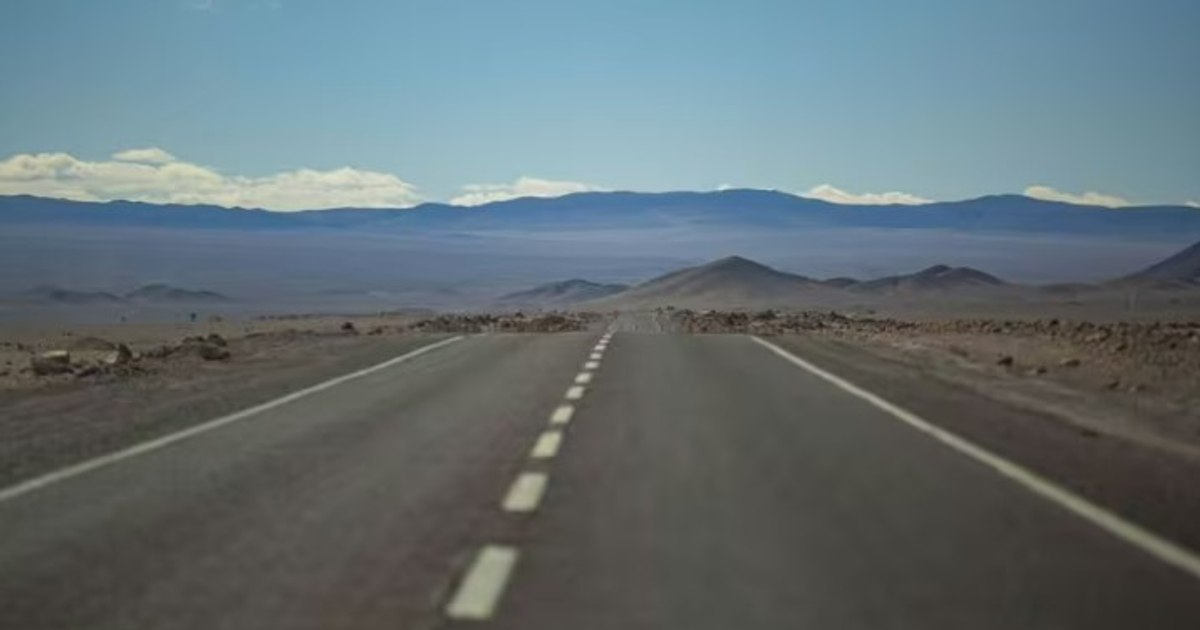
Recognized by Guinness World Records, the Pan-American Highway is the longest road in the world. Its huge route, crossing 14 countries and two continents, includes deserts, rainforests, high mountains and historic cities, and its complete journey can take up to a year.
Although it is called “highway”, the route is not a continuous road, but a network of national roads built and upgraded at different times. The route starts in Prudhoe Bay, Alaska (USA), and ends in Ushuaia (Argentina), a city nicknamed “the end of the world”writes dailyexpress.
On the way, drivers pass through extremely varied landscapes: arid deserts, dense tropical forests, high mountains and vibrant cities. The highway crosses the United States, Mexico, Guatemala, El Salvador, Honduras, Nicaragua, Costa Rica, Panama, Colombia, Ecuador, Peru, Chile and Argentina.
The only major discontinuity is the Darién Gap (Darién Gap), an area of approximately 160 km of jungle between Panama and Colombia, where the construction of a road is impossible for environmental and safety reasons. With rainforests, swamps, mountains and limited infrastructure, the area has been plagued by smuggling routes and armed groups, according to the publication cited.
Travelers attempting to travel the entire Pan American Highway must transport their vehicle by boat or plane between Central America and South America.
Driving the entire highway non-stop can theoretically take two to three months, but most who embark on this adventure need six months to a year, or even more, to explore the local landscapes, cities and cultures.
Over the years, the route has been traveled by motorcyclists, cyclists and even runners.
Construction of the Pan-American Highway began in the 1930s and continued into the 1970s, with each country building and upgrading its own segments. Some portions have been around for a long time, however, and upgrades continue today.
The road can be a real challenge: in the Andes, for example, the road climbs to over 4,000 meters of altitude, where the weather and thin air make travel difficult.
In Central and South America, some sectors are poorly maintained or even impassable during the rainy season.
