
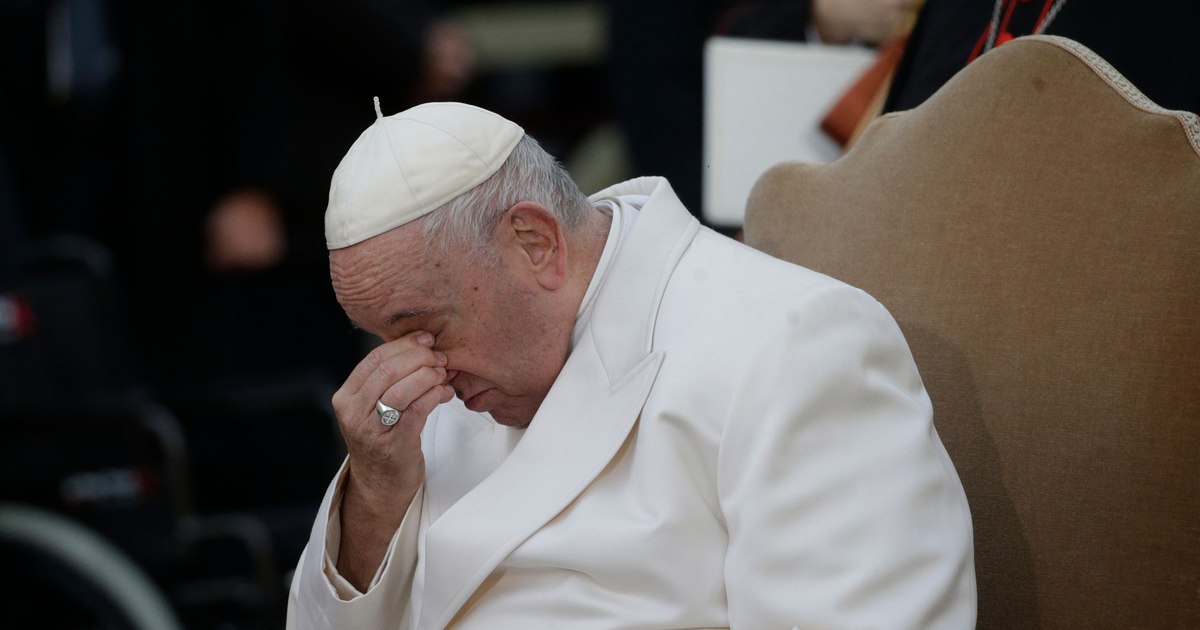
Pope Francis remains admitted to the hospital “as long as it will be needed”, after being detected with “a polymicrobial infection” and follows a new therapy.
Pope Francis remains hospitalized at the photo hospital: Profimedia (archive)
“The results of the analyzes performed on the past days and in the current day have shown a polymocrobial infection of the airways, which caused a new change in therapy. All analyzes carried out to this day are indicative for a complex clinical frame, which involves adequate hospital admission”, On Monday, February 17, the press hall of the Holy See, in a communication to journalists, according to Vatican News.
The director of the press hall of the Holy See, Matteo Bruni, communicated that on the last day “Pope rested well, spent a quiet nighthad breakfast and dedicated to the reading of newspapers. Continues the therapies”. Following the new information. In the meantime, the general audience on Wednesday, February 19, 2025 was canceled.
The Pope was admitted on Friday, February 14, at the “Agostino Gemelli” Hospital in Rome because of a bronchit of which he suffered in recent weeks. Following the analyzes, doctors found that the 88 -year -old pontiff suffers from polymicrobial infection.
Polymicrobial infection can be caused by bacteria, viruses or fungi. Andrea Vicini, an Jesuit and doctor, said that polymaicrobial is a generic term that does not specify the main cause of an infection, according to Reuters.
Vicini, who said he has no knowledge of the Pope’s case outside the Vatican’s public statements, said it is worth noting that the Vatican said that the Pope had breakfast, indicating that he did not wear a respirator.
“It also means that the body is not weakened to the point of not being able to take food and digest them“Said Vicini, a teacher at Boston College.
Polymicrobial diseases, which are recognized with an increasing frequency, are acute and chronic diseases caused by different combinations of viruses, bacteria, fungi and parasites. In general, the presence of a microorganism generates a niche to colonize other pathogenic microorganisms.
The presence of a microorganism predisposes the host to colonization by other microorganisms or two or more non -pathogenic microorganisms, which together cause disease, reports National Library of Medicine.
The disease can endanger life. Symptoms and treatments
In people with an affected immune system, the bacteria that enter the lungs trigger the infection, which causes inflammation of the lung air bags (pulmonary acini) and filling them with liquid, according to the MedLife clinic website.
Symptoms that may indicate lung infection: chest pain, difficult breathing, fever (over 38.5 degrees Celsius) and cough with yellow, green or bloody mucus, (lung pus), sometimes chest.
Other symptoms that may follow include: headache, muscle pain, difficulty breathing or rapid breathing, severe lethargy or fatigue, pallor and wet skin, confusion, especially among elderly, loss of appetite, sweating.
Treatments applied in bacterial penumonia include antibiotic administration. Antibiotics do not treat infections caused by viruses, but the doctor could prescribe antibiotic medication if analyzes reveal a bacterial infection at the same time as a virus presence in the body.
Treatment may also include antifungal or antiviral drugs; Oxygen therapy, if the patient does not receive sufficient oxygen; administration of liquids, to prevent dehydration; Liquid drainage, if the patient has a lot of liquid between the lungs and the chest wall.
