
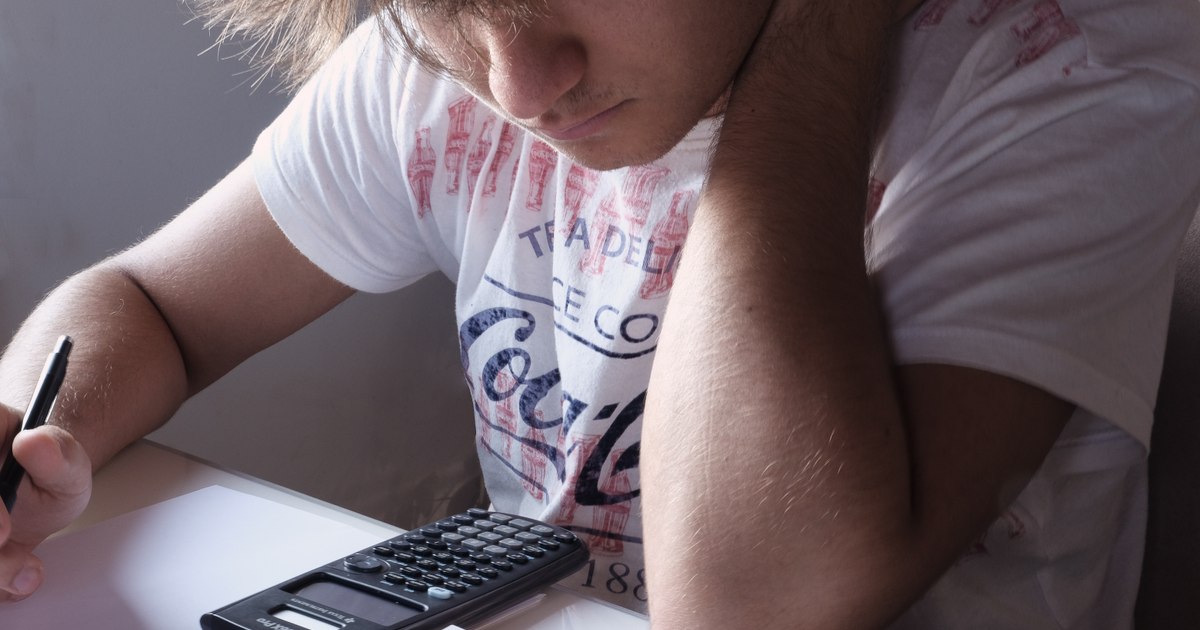
The exams that the students have to take this summer are fast approaching or are underway, and the emotions are more and more intense. When they can no longer be managed at home, parents even turn to the support of specialists.
The parent can provide the child with the most important support before a high-stakes exam such as the National Assessment and the Baccalaureate, or, on the contrary, can become the main source of stress. It is said by psychologists who have parents and children in their office and who try to clarify to the former where they still have to work on the parent-child relationship when they notice excesses.
Psychologist Mirela Ustucă draws attention to the fact that out of the desire to keep children focused on the exam objectives, parents can reach pressures that they are often not even aware of. In other cases, conflict and blockages are reached when what the child wants does not match the parent’s choice, and the psychologist gives a concerted example.
“I had a case – parents who called the clinic because they wanted to send their child to a certain high school, a certain profile, and the child didn’t want that. And because he didn’t want to, didn’t study, didn’t make an effort. The parent said that he doesn’t study and doesn’t allocate time, and because he won’t learn, he won’t enter that high school. And the child said – but I don’t want to go to that high school. (…) The parent didn’t he says it out of malice or lack of love, on the contrary, it is probably in his mind that this is the only way he can secure a future, he is convinced that a certain specialization can ensure a path in life. But if the child does not like it, he has no motivation to learn“, explained Mirela Ustuca.
Motivation is extremely important in the process of knowledge accumulation. It’s just that the motivation is also of several kinds. The intrinsic one would be desirable to act: the child wants, is aware of what achieving the goal entails and is willing to make an effort. Extrinsic motivation also works – when the parent comes and tells him that if he doesn’t take the BAC, he won’t get anything in particular, or that he has to go to a certain profile because he earns well, that he can easily get a job after graduation, but the latter works for a limited time. Ideally, says the specialist, the choice should be the child’s and be consistent with his wishes and aspirations.
“Here the child showed his refusal through the lack of learning, but there are children who obey, who go ahead according to what their parents impose. And it’s risky, it can fail at some point. It is also possible that along the way he realized that he likes it, but he hadn’t thought about that option and was just oriented to another field because that’s where his colleagues went or because it’s fashionable. That is why we cannot draw general conclusions that in such cases the child will suffer, or burnout, or fail. Each case is different. There are cases when they discovered along the way that the chosen profile is ok and others where they gave up when they felt they could make their own decision. Or give up secretly. There are young people who don’t go to college anymore, they give up attending for many months, they don’t even say. And that’s how parents realize they were wrong.” Mirela Ustucă gives other examples.
“I think that from the 10th grade the fields of study should be differentiated”
The choice of specialization, on the other hand, in our education system comes too early, according to psychologist Mirela Ustucă. It takes place at an age when few teenagers really know what they want, and the assignment is, in many cases, an effect of chance. “I think that these aptitude tests in the 10th grade would be the most appropriate to do, because you can already focus on a field and from there start investing more time. (…) I think that the fields of study should be slightly differentiated from the 10th grade, not from the 9th grade. Because the student actually takes all the high schools in the city, notes them all, for fear of being left out, there are few who choose according to their wishes and their skills. From the desire to enter a very good high school, it no longer matters that he is in a profile he doesn’t really like.” says the psychologist.
If we were to make a list of the aspects that teenagers feel the most as pressure around exams, the pressure from their parents would be in first place.
“Many unforeseen things can happen. I know the case of a child who developed a fever during the exam. A small note followed. He didn’t care about this. And I don’t know how much he regretted the low grade, how much he regretted disappointing his parents. We understand that maybe, if not
With the child at kindergarten. How to prepare him for the big step, what mistakes to avoid. “It’s important to be in proximity”
Another important cause of stress is the scenario of how everything will be after a small grade. Many feel that they would “make fun of their peers”, that their grade would show that they are not good enough or smart enough.
What parents can do is to assure them that “there is life after the exam” and that their grade does not reflect how smart or less smart they are. “It is good to monitor our children, but not to put pressure, not to threaten them, not to condition their lives so that they go to the exam with fear. Because the fear will make them focus more on what will happen if they get a low mark than on solving the requirements of the exam”explains the psychologist.
The message parents send to their children should be that “it’s important to be responsible and do your part.”
The enemy of TikTok
A powerful enemy that many parents are finding increasingly difficult to fight against is the social network TikTok.
“TikTok gives kids the idea that in life you can have money without investing in education, and without allocating time for study. But TikTok is a trend that, ok, now it works, it lasts, but we have no way of knowing how long it will last. There may be ANAF control or there may be a fee you pay to publish your video. I mean, things can change and kids have to understand that,” says Mirela Ustuca.
On the other hand, the attitude of parents who raise the issue only before an exam that accessing social networks has left a lot of its mark, including on the child’s choices, shows that, over the years, there has been a lack of a minimum of control.
“It is very difficult now, in the 8th grade, to tell the child that he should not take a role model from there, when he grew up with that role model. I asked them in a middle school class to raise their hand who has TikTok. There were at most five children who said they had none. The parents forbade them so much they still don’t have. But, unfortunately, they are discriminated against, pushed aside by the other students. (…) There are children who have been using TikTok since kindergarten. The glass is filled drop by drop. The danger is from the very beginning. I mean, it’s been said before, leaving your child on the internet is like letting them cross the street without you holding their hand and you being next to them. Instinctively, when we cross the street we hold his hand, even if he is next to us. And unfortunately, yes, TikTok promotes this idea that you can succeed in life and make money without an education, even though people posing as millionaires on the internet have been shown to rent those things. the specialist also drew attention.
What really triggers jealousy in a couple. Psychologist: “There is a fear of abandonment”
Excessive protection in real life, complete freedom on the Internet
In recent years, there has been a trend of excessive protection that parents exercise in many respects, the specialist also draws attention, and this contrasts with the freedom they give children to access devices sometimes without any form of control. Parents are concerned not to receive too many homework, they often challenge the educational process, indirectly putting pressure on the teachers.
“They are more concerned, indeed, with the emotional state of the child, but at the same time they go to the extreme where they are afraid that the child will ever suffer. (…) And at the moment when they have to take the exam, we put pressure on them. But until then we didn’t let them make their own decisions, make mistakes, go to school with the wrong topic, because there are many parents who actually dictate to the child how to solve the exercise. And when she arrives at school, the lady sees, out of 25 children in the class, 24 perfect homework. What do we do, revise the theme or move on? The child didn’t understand, it doesn’t matter anymore. (…) It’s one thing to monitor that he has his homework done or to offer him help when he needs it, and another is to solve for him and think for him”Ustuca also emphasized.
