
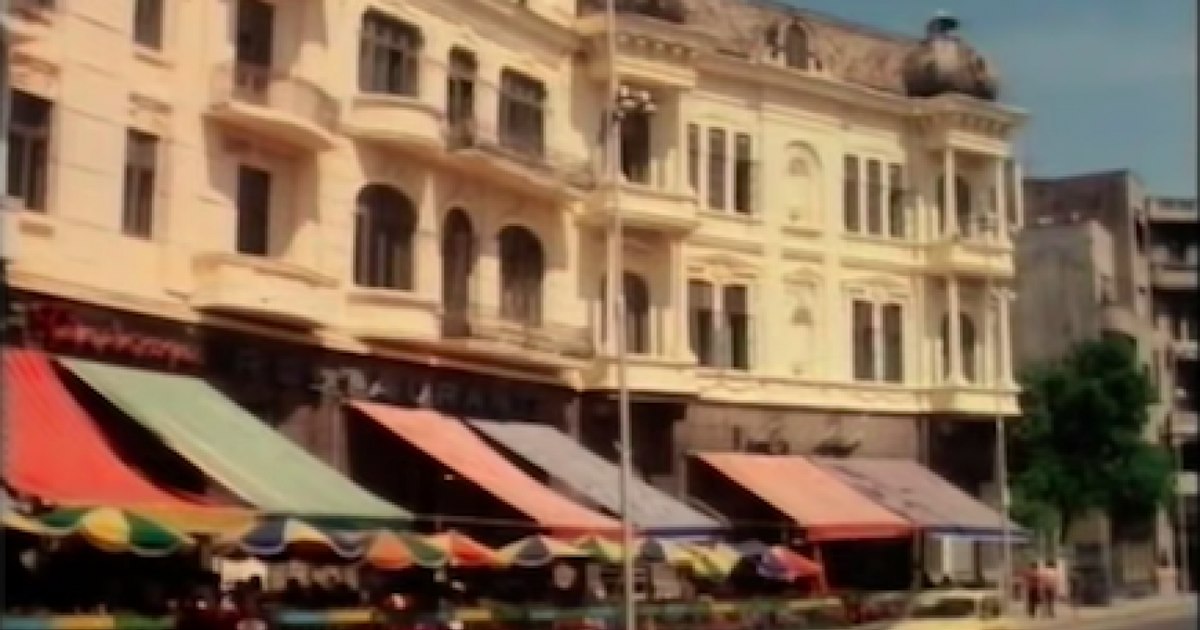
In the 1970s, the Romanian coastline attracted tens of thousands of foreign tourists from Poland, the Czech Republic, East Germany, as well as the famous Swedish tourists. ANAT vice-president Adrian Voican explained the strategy used then and how Romania can once again become a destination for foreign tourists.
The Romanian coast was popular among communist countries. PHOTO: Archive
On June 1, the season started on the Black Sea coast. Last year, more than 1 million tourists spent their holidays at sea. Of these, only 10% were from abroad.
“Adevărul” talked with the vice-president of the National Association of Travel Agencies (ANAT), Adrian Voican, about the period of the 70s, when “the coast lived on tens of thousands of tourists brought from Poland, the Czech Republic, the Democratic Republic of Germany, etc.”
“That coast of the 70s that lived through tens of thousands of tourists, brought from the CAER (Council of Mutual Economic Aid – economic organization of the European communist states created at the initiative of the USSR-no), from the German Democratic Republic, from Poland, from the Czech Republic. We still haven't reached that strength and that level to fill the coast from May 1 to September 30-no), but things are going well“, he believes.
“They lived like nobles with nothing”
Asked how the Romanian authorities managed to make the coast a destination for foreign tourists, Voican said:
“It was a different world, it was a different context. You can't copy-paste a solution from one context and take it somewhere else. First and foremost we had a special monetary situation. You came and exchanged 100 dollars and with that money they lived like in paradise. Convertibility was fake. They lived like nobles with nothing. So it was not possible at their house. But that was the model back then.”
He claims that one of the reasons why such a performance of the Romanian coast was reached was also a consequence of the type of centralized economy in the former communist countries: “If Ceaușescu met with Honecker (Erich Honecker, former president of the German Democratic Republic-nr) or Jifcov (Todor Jivkov, former communist president of Bulgaria-nr) and they determined that 10,000 tourists should come to the seaside, they would come . Now it's a democracy, it's much better. There is no risk of such a dictatorship or monopolization of decision-making power, but the decision is much more difficult to make. It's very complicated.”
“Our parents built the coast in 10 years”
“Our parents built the entire resort complex in 10 years. We, in 30 years, could not renovate them all”, Voican also said. He claims that some communist hotels were designed with good taste by architects – such as the Belvedere Panoramic, the emblematic hotel of the Olimp resort no.
The tourism specialist now also talks about the fact that today every square meter of land is used for construction at the expense of green spaces and other facilities. “Then the spaces were generous. What halls, what kitchens, what facilities… now you would have seven villas in the lobby of a hotel at that time. No highways were built, a pity, but a barrage of wonderful resorts were built all along the Romanian coast. He found clientele for the seaside, signing some contracts with some communist leaders in the model of those years, and he was full.“
“Bunny trains are starting to come”
Voican remembers that in the student season in May the season started. “We were saying: the bunny trains are coming. When they started coming they didn't stop“.
When asked about the accommodation conditions at the seaside during communism, he stated: “It was still a poor country where you really enjoyed what little you had.”
The entrepreneur claims that, however, foreign tourists did not have high expectations then, not even the famous Swedish tourists: “They didn't necessarily have very high standards. They were mostly tourists from communist countries… some had better beer, some had better lipsticks. They were also selling to get the country's currency. There was still small illicit trade, like that, that is, if you want nothing like that. At that moment, however, in his communist thinking, Ceaușescu made those famous shops all over the coast. You weren't allowed to walk there because you'd be arrested, but foreigners could buy. A Dacia was $2,000. Money was different, you can't understand it.”
Why do Bulgarians have such nice hotels?
A discussion about foreign tourists on the Romanian coast comes together with a comparison about the Bulgarian neighbors. Why do Bulgarians have hotels like in the West and they are full of foreigners?
“Bulgarians did not make hotels for Bulgarians. They did it with the money of the Germans for the Germans. They said to them: “take money and make the hotels like this?” Bulgaria was an El Dorado for the big German tour operators who said: “let's discover a new, cheap destination. We give them money, they do as we want and we sell them. Bulgarians did not go to the beach at Golden Sands, Nesebar and Albena. Not. They were low paid workers in a country where agriculture was cheap, peppers, cucumbers were cheap, VAT was low and they were able to have low prices“.
On the other hand, in Romania the situation was different, the hotels were made for the Romanian tourist.
“Romanians go there as customers, people with money who buy vacations there and say it's cheap. It's not the same thing. We in Romania built hotels for Romanian trade unionists and tried to transform one-star, two-star hotels into three- or four-star hotels.”
How to bring foreign tourists to Romania
Voican claimed that in the rankings of countries from a tourist point of view, Romania ranks somewhere between the 47th and 50th places in a world top: “Good, Italy, France, Germany are ahead of us. We look at them and it seems like we'll never reach them. United States, Canada Australia etc. amd Ok. Even if we were the last in Europe, there are so many countries with so many people, so poor, yes, that…The other day I spoke with a friend who settled in Vietnam – there you can live with 200 euros. We no longer live with 200 euros, 1,000 euros seems a little to us. Are there countries that are five times poorer than us? Being ranked 50 out of 200 countries means you are in the top quarter. It depends on who you compare yourself to”.
The first step for bringing foreign tourists to Romania is promotion abroad.
“Romania in 30 years had no money for promotion. Since I have been working on this topic, I have also learned that Romania's budget closes on tourism. Translation: after we all hit Romania's budget, what's left we give to tourism. 1-2-3 million euros remain, rainwater. It's like advertising Mentosane for 2 weeks on the market, in Cluj, and you want to promote Romania in 190 countries. Not working”explained Voican.
In addition, due to bureaucratic procedures, even this money is not spent: “Romania has not been present in Berlin for 4 years, where it is the biggest tourism fair. The competition pays forward, they take discounts and they've taken their stands. Not at us. The purchase procedure says we pay after. As such: “pay later, wait longer”“. Bureaucratic problems prevented Romania from reaching Berlin, but not about 160 other participating countries, which also have their own bureaucracy.
There are three sources of income for promotion: budget allocations, which are very small, a promotion fee from hoteliers and a tax imposed on tourists. As for the second source, it can work with two conditions, says the expert: “1. the boss is so strong that no one comments and the money is collected; 2 the mayor does not touch money.”
The third source: to pay the tourist 1 euro. “You have 30 million nights of accommodation in Romania, one euro from each tourist means 30 million euros. Romania has never had a promotion of 30 million euros, it is not even very much. Turkey has 80 million dollars. I don't mean other countries”, he claimed.
Countries with developed tourism grant hundreds of millions of euros for promotion. Why? “I know that they will have a double-triple number of foreign tourists who bring to your country money made in another economy and tourism develops, the community develops“, he concluded.
