

A recent study shows that the proportion of the population with higher education is higher in the Nordic and Baltic countries, with women generally being the most educated. When it comes to competing for the best jobs and resources, education has always been a crucial factor.
Romania is the worst in the EU when it comes to the education of young people. PHOTO Archive
Europe’s adult population with higher education varies considerably across the continent, according to available data, according to Eurostat.
On average, almost a third of adults aged 25 to 74 in the European Union have a degree from higher education, including public and private universities, colleges, technical training institutes and vocational schools.
Education level also varies by age and gender.
How education levels are defined
Education levels are defined as low (less than high school), medium (high school), or high (university education).
The European data agency Eurostat’s classification is based on the International Standard Classification of Education (ISCED) and refers to:
– Low: pre-primary, primary and lower secondary education (ISCED levels 0–2);
– Environment: upper secondary and post-secondary non-tertiary education (ISCED levels 3 and 4);
– High: tertiary education (ISCED levels 5–8). It includes public and private universities, colleges, technical training institutes and vocational schools.
In 2022, 31.8% of 25-74 year olds in the EU had a tertiary level of education, ranging from 17.4% in Romania to 49.8% in Ireland.
Nordic and Baltic countries have more graduates than the EU average
The share of higher education graduates was higher than the EU average in the Nordic and Baltic countries. Sweden and Norway ranked third and fourth with over 45% of tertiary graduates.
Of the Latvian population, 44 percent had a higher education degree. Other Nordic and Baltic countries also had higher than EU average shares of tertiary graduates.
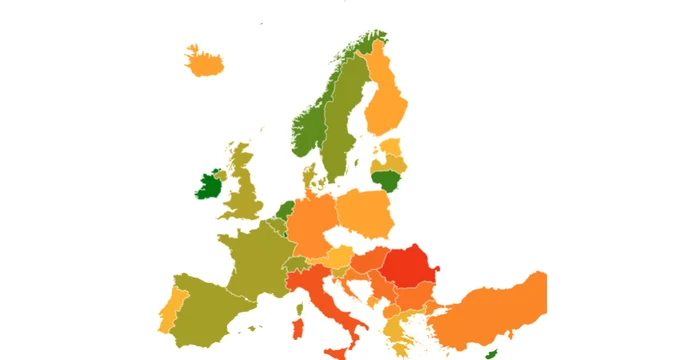
Romania and Italy are the worst in terms of “higher education” among young people
In the UK, 43.5% of the population aged 25 to 74 had tertiary education. France has a share of 38.2% and Spain – 38%.
After Romania, Italy had the lowest share of higher education graduates, with 18.5%. This figure was also below the EU average in Germany (31.5 percent).
The population with higher education was over 40% in four EU countries
The share of the population with higher education was significantly lower in the EU candidate countries.
Turkey had the highest share of the population with low education by far, where two-thirds (61.8 percent) had less than upper secondary education levels.
This figure was also below 40% in four EU countries, namely Portugal, Italy, Malta and Spain.
Vocational guidance plays an important role in many countries
Looking at the details of the secondary education level, consisting of general and professional orientation, the share of vocational education is considerably high in several countries.
The share of vocationally oriented people with an average level of education was over 45% in nine EU countries, including the Czech Republic (63.9), Poland (52.2) and Germany (47.4).
More than two fifths of the EU population have higher education
In 2022, 42% of the EU population aged 25-34 had a higher education degree. It varied between 24.7% in Romania and 62.3% in Ireland.
In contrast to the population aged 25-74, the Nordic countries Finland and Iceland had a lower share of tertiary education than the EU average.
This figure was over 50% in a third of EU countries. Ten EU countries were also behind the EU’s 45% target by 2030.
Women are more educated than men
In 35 European countries where data are available, women aged 25 to 34 had a higher proportion of tertiary education than men.
In 2022, on average, the proportion of women with higher education was 47.6 percent, while it was 36.5 percent for men.
With the exception of Finland, the gender gap was significantly larger in the Nordic and Baltic countries, in favor of women. Iceland (25.4 percentage points, or pp), Slovenia (23.8 pp) and Slovakia (22.8 pp) recorded the largest difference.
Turkey (1.3 pp), Switzerland (3.6 pp) and Germany (4.6 pp) reported the smallest gap, showing that the shares of highly educated women and men are close.
The proportion of the population with higher education is increasing
In the EU, the share of people aged between 25 and 74 with higher education is constantly growing. It increased from 19.1% in 2004 to 31.8% in 2022.
Lifelong learning is also significant as people may need to update their skills.
According to Eurostat, this includes all purposeful learning activities, whether formal, non-formal or informal.
The aim is to improve the knowledge, skills and competences of the participants. Adult learning is an important aspect when it comes to digitization and automation in the labor market.
In 2022, the share of 25-64-year-olds in the EU who participated in education or training in the last 4 weeks was 11.9%, ranging from 1.7% in Bulgaria and 36.2% in Sweden.
While the proportion of adult learning was high in the Nordic countries, the Balkan countries had significantly lower shares compared to the EU average.
