
Scientists are warning that the asteroid known as the “God of Chaos” could pass very close to Earth on April 13, 2029, raising concerns of a possible catastrophic impact, although the actual chances remain extremely low.
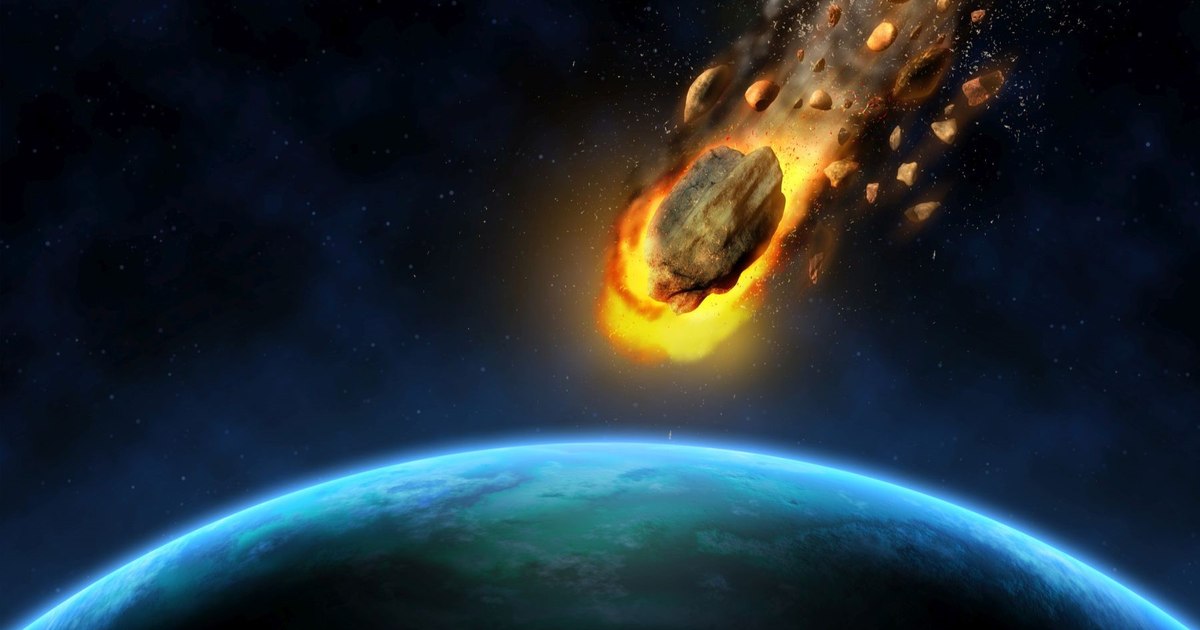
An asteroid has the potential to come dangerously close to Earth in 2029 PHOTO Archive
After previous reports dismissed the idea that the Earth could be destroyed by this asteroid, it seems that this could still be possible, according to the LAD Bible.
The giant rock, with a diameter of 340 meters, was first observed in 2004 and was given the astral title of 99942. After it was discovered that it has a 2.7% chance of sending our small planet out of the solar system in 2029, she was named the God of Chaos.
However, while experienced asteroid watchers have decided there is no way it will hit us in 2029 or 2036, an update has come from Canadian space expert Paul Wiegert who says otherwise.
Although it was originally thought to be 18,300 miles from Earth, Wiegert believes that the trajectory could be changed dramatically if Apophis comes into contact with a “small object” in its path.
The expert explained his theory as follows: “The odds of an unobserved small asteroid deflecting Apophis enough to send it on a collision course with Earth in 2029 (d 3.4 m, v > 5 102 m/s) are about 10-8.”
It turns out that the chance of the impact setting the rock on an Earth-destroying path isn’t very high, and there’s a one in two billion chance of it happening.
Wiegert explained: “Given that only five percent of these pulses are in the right direction to generate an impact with Earth, the overall probability of a small impact directing Apophis toward a collision with Earth is less than one in two billion.”
However, the expert revealed that the asteroid was basically left to its fate in space.
“An additional element to the story is that Apophis has been largely unnoticed by telescopes since May 2021 and will remain so until 2027. This is simply due to the relative geometry of Apophis, the Earth, and the Sun, which puts the asteroid in the daytime sky for the period in question”he said.
