
The Romanian education system receives yet another cold shower from the OECD. According to the annual report “Education at a Glance 2024”, launched on Tuesday in Bucharest, education in Romania is light years away from what European standards mean. According to the document, again this year we remain in the last place or in the tail of the ranking, placing ourselves below the OECD average in almost all the key indicators analyzed.
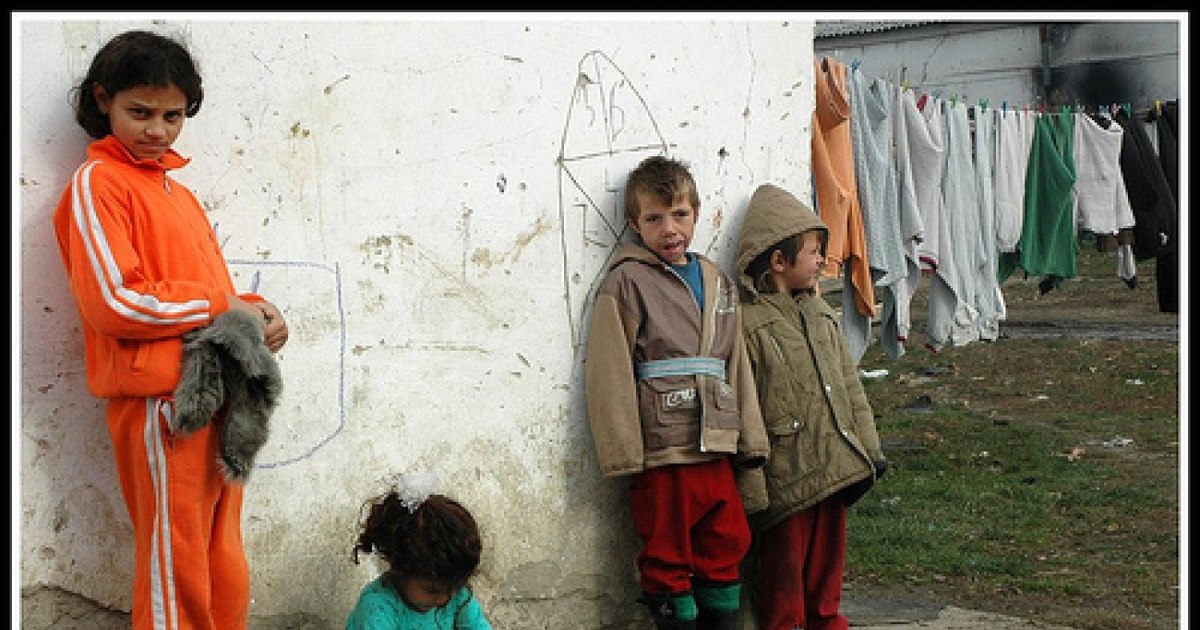
Romania, champion in school dropout. Photo source: archive
Why is Romania a country with eight classes
According to the OECD report, which is based on data collected in 2021 and 2023, Romania, unlike other European countries, has an almost double percentage of adults who have not completed high school. It is about 25% of them. To top it off, this comes in the context where without high school education it is impossible for Romanians to access well-paid jobs. And the numbers speak for themselves: in Romania, only half (48%) of young people between 25-34 years of age who did not finish high school manage to get a job, compared to 79% of those who completed high school or post-high school studies.
“We are in such a situation for two big reasons: we have a cause external to the educational system, namely the society in which we live. The world has changed and suddenly something else has become more relevant than an education of some kind or another. Simply. People feel that they can do other things without having to go through education,” Marian Staș, an expert in education policies, explained the situation. “Then we are dealing with a profoundly counterproductive educational system. The World Bank tells us that we have 12 years of schooling, but in reality it is only eight years. The yield of the educational process in Romania is only 60%. Basically, we do four years for nothing, alms just to pay some teachers. This is how the school is designed now. Therefore, we obviously have to bear the consequences,” completed the specialist.
Marian Staș pointed out another aspect: Romanians’ lack of appetite for study. “The Romanian does not like work or school. Here, in Romania, I run away from school and work like the devil. Instead, once they go outside, they adapt immediately, they integrate, they are the best, they know exactly what they have to do”.
As for the education of Romanians, according to the OECD report, they are clearly at a disadvantage compared to the women of the countries that have joined the OECD. In our country, they leave school much earlier. The consequences can be seen in the labor market: only 30% of young women with up to eighth grade education manage to find a job.
The country note accompanying the report also mentions aspects related to equity, equal opportunities between women and men. And in this chapter, Romania has recovered somewhat and exceeds the OECD average. Specifically, employed Romanian women, who have completed high school education, earn in Romania 90% of what men earn, while the OECD average is only 84%. In the case of people with university degrees, women in Romania earn 88% of what men earn, compared to an OECD average of 83%.
And one more thing: 56% of students admitted to college are women, which means women want access to education and take education seriously. “This reinforces a bias of mine in the good sense of the word: that women, especially for medium and advanced jobs in the medium and long term, perform better than men. Because they are more studious, more conscientious generally speaking, they respond better to social stimuli such as the need to have a job”, academician Mircea Dumitru, former Minister of Education, also specified.
Diplomas, worthless papers
And, because we have reached the chapter of university studies, one more thing must be mentioned: the percentage of Romanians between the ages of 25 and 34 who have completed a university is also far below the OECD average. According to the “Education at a Glance 2024” report, although in Romania there is an increase from one generation to another in the number of people who have completed a college, if we analyze the period of 2016-2023 we will see a decrease. Thus, if in 2016, 23% of men and 28% of women aged 25-34 had university education, in 2023 the percentages were a few points lower: 19% for men, 26% for women.
Prof. Mircea Dumitru explained for Adevărul that this problem we are facing is an old one, for years and years. Nothing new, nothing surprising. “Romania has the fewest university graduates in Europe. Also in Romania there are the fewest people who have had contact with the academic environment, people exposed to higher education even if they have not completed their university studies. This, the peak, in the context where in our country there are many private faculties and universities. And the situation from 10 years ago has not improved at all”.
Why do Romanians no longer want to go to college? The answer is very simple: in Romania the diploma matters too little. “Many believe that a college degree is not essential in a career, especially in certain trades. Especially in the private sector, it’s more important what you know how to do, not what degree you have or what grades you got at school. It’s sad but true”says Prof. Mircea Dumitru. “But this shows a dangerous and very destructive trend in the medium term for society, because we are moving towards a society that no longer wants school in the formal sense. Rather, short-term training is desired, which would have a negative impact on the flexibility of the workforce. Let me give you an example: a well-trained person could practice one job, and then move on to another, in a related field. Conversely, someone trained only on the job is stuck there, in what they know how to do. It has a very small horizon of movement on the labor market”.
The OECD report also points to a problem: compared to other OECD countries and candidate countries, Romania is in last place both in terms of the share of adults with higher education and of adults who have at least one parent with higher education.
Repeaters in education since the first grades
According to the document, we are not doing well in early education either: not all children in Romania have access to early education, and the number of those who attend nursery school and kindergarten is much lower than that recorded in the countries that have joined the OECD. Concretely, only 81% of young Romanian children are enrolled in early education compared to the OECD average, which is 96%. Although many voices claim that this is where all the problems in the system, all the hiccups and shortcomings come from, Marian Staș, an expert in education, contradicts this idea. “There is no such thing as zero cause. It’s about a whole poorly thought out, poorly designed system. We are dealing with something much deeper. We live in a banana Romania from an educational point of view. I mean a system marked by huge discrepancies between village and city, between rich people and poor people. We are talking about a system that generates huge disparities and inequities,” he also scored.
Because we are running into problems at every step, because the whole of Europe is pointing the finger at us, urgent measures are required. Which the ministry says it has taken and will continue to take. During a press conference organized on the occasion of the launch in Bucharest of the OECD report, Bogdan Cristescu, Secretary of State in the Ministry of Education, made an x-ray of the most important ones. He mentioned regulations regarding early education, financing education, setting quality standards and trying to reduce school dropouts. The official stated that support programs have been implemented for underage mothers to continue their studies, but also to increase the rate of graduates in higher education. “Texts, texts, texts..Until we talk about the reconstruction of the three big components, namely the curriculum model, human resources and decentralized institutions, the rest are texts struck by nullity, they are fumes to say so”, Marian Staș also said.
