
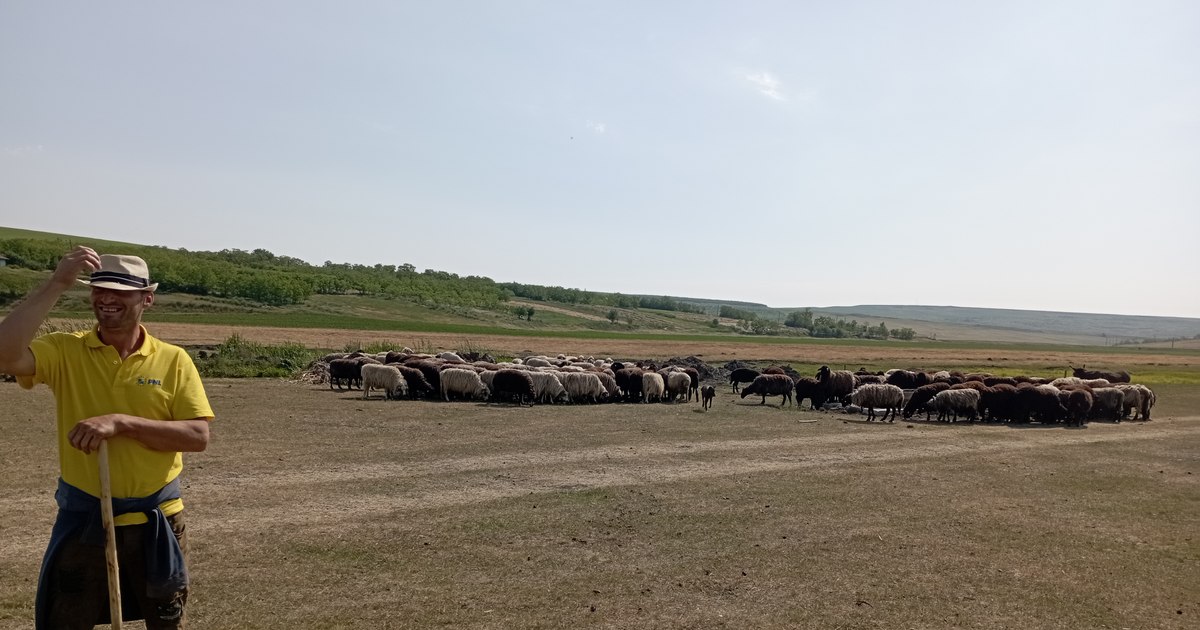
Farmers have drawn the line after this summer’s drought and say they have run out of patience. Especially small and medium farmers say that they can’t hold on any longer and will most likely sell everything. They complain that the state compensates them too little and offers too few subsidies.
The drought scorched Botoșani county PHOTO Cosmin Zamfirache
Drought has been affecting Romanian agriculture for many years. But last summer brought a scorcher that few farmers would have expected. Even the rains of the beginning of autumn have not managed to reduce the proportions of the summer disaster in agriculture. Especially small and medium-sized farmers say that they have already reached the end of their patience but also at the bottom of the bag. Most confess that they effectively do not have the resources to continue. The most optimistic say they are waiting until the summer of 2025. If it still comes with a drought, they will most likely sell everything and think about going abroad. For the villagers who live on two or three milk cows and a few ares, it is a real tragedy. In fact, they will have nothing to eat.
“On 100 hectares we barely got 100 kilograms”
The entire country has been hit by an unprecedented wave of drought in the past three decades. Botoșani county was, according to statistics, the most calamity in the country this summer with over 156 localities without water. In the absence of irrigation systems, to which was added the inability of the public network to supply water, the land was effectively scorched. So are the crops. Given that Botoșani county, one of the poorest in the country, relies almost exclusively on agriculture, it is a real tragedy for the inhabitants of the villages. Especially small and medium farmers but also subsistence farmers, with small areas of land and a few animals. In the autumn after the farmers drew the line, they realized the magnitude of the disaster. Official figures will most likely appear towards the end of the year, after the authorities’ full field analysis, but farmers are already feeling the brunt of this summer’s drought. Vali has an area of three hundred hectares. One hundred of them he cultivated with corn and the rest he divided between wheat, flower, soy. Vali confesses that he had a shock when he realized that he had lost almost the entire corn crop.
“Even if it rained a little now, the heat of last summer melted it all in a few days. It rained in autumn over the drought. From 100 hectares of corn, they do not even produce 100 kilograms. do you realize“, he confesses.
The situation is almost similar for wheat and wheat. “For wheat, we removed only 600 kilos! In the conditions where you have to produce at least 5 tons per hectare to be able to say that you survive. Me that they are made with 600 kilos?“, adds the man from Botošan. There are other farmers in his situation. “Even a German who had a lot of land around here went bankrupt. Nothing came of it. He took the machines and left, now in the fall. So what else to do?“, confesses a villager from Gorbănești.
Many live from animal husbandry, Botoșani being famous for its livestock, the second place in the country, after Suceava. To feed their animals, they cultivate the land with fodder plants. Nothing came of them. They have to buy food from elsewhere. “All were affected, all dried up. Little animal food. This year we have to buy food. We can’t resist anymore. Everything is over with the milk cow. It’s ready.”, says a cow breeder who came to APIA to inquire about possible compensation for the disaster areas.
“We can’t resist anymore”
The summer was difficult for all farmers, but the most affected were the small and medium ones. Most of them found themselves in wooden ditches. They didn’t produce, they don’t have anything to pay their bank installments, some don’t have money even for the autumn works. They are determined to leave agriculture and eventually, the younger ones to go abroad either as agricultural mechanizers or as agricultural workers. “I honestly only try next year and that’s it. We lost two and a half billion, old. If it doesn’t work even then, I’m done. I really can’t anymore. I am now trying to postpone the installments at the combine. I have nowhere to pay them“, Vali confesses.
Cow farmers complain that subsidies are too little, but the damage caused by the drought is huge, and so are fuel prices. Instead, the price per kilo of milk given to the peasants is a joke. “Subsidies are weak and for milk they give you only two lei per liter. Diesel is almost eight lei. Where are we going out?”says a small farmer.
In vegetable crops, the situation is similar. It is granted around 175 euros per ton of wheat, especially in the port, in Constanța. If the farmer deducts the expenses, it comes, in Romanian money, to 0.76 lei per kilogram of wheat. And the costs of establishing a crop are usually at the level of 3500-4000 lei per hectare. In disaster areas such as Botoșani, the agricultural authorities announce that the Romanian state will give 1,000 lei per hectare, compensation, after this summer’s drought.
“According to Ordinance number 120, we receive funds for granting compensations for the calamitous crops this year. We are waiting for the agricultural producers who have minutes, because in all the APIA centers we have the DAJ specialists who are waiting for them and receive these requests for compensation“, says Cristian Delibaș, director of the Botoșani Agricultural Directorate. The 1,000 lei per affected hectare, the farmers say, does not even cover half of the damage. “It’s good I don’t say. Better than nothing, we still pay off debts because we are up to our necks. But half is lost. And some don’t manage to recover”says another farmer.
