
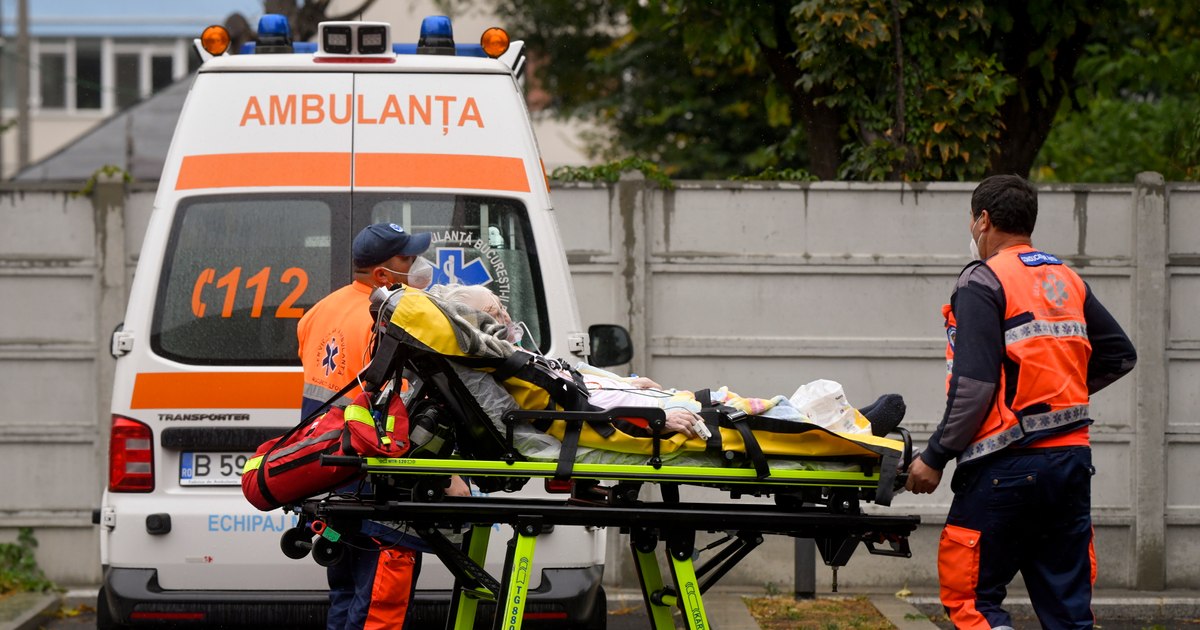
From the beginning of the cold season until now, there have been four deaths caused by the flu virus in Romania, and the number of illnesses increases from week to week, draw the attention of specialists. Everything happens in the context where in Romania we do not have an effective vaccination campaign, doctors believe.
The flu can lead to serious, life-threatening complications. Archive
Last week, according to INSP data, there were more than 4,000 new cases of flu, almost double the number of the previous week. Doctors warn that the lack of a well-thought-out vaccination campaign, the acute lack of information that the population suffers from, the unjustified fear of parents who do not immunize their children for fear of adverse effects, but also the massive lack of involvement of the central authorities are the reasons for which year after year hospitals, emergency rooms and medical offices are stormed by patients.
Doctor: “Opinion leaders have the greatest power of persuasion”
Dr. Sandra Alexiu, president of the Bucharest-Ilfov Association of Family Physicians, told “Adevărul” that the flu took hold earlier this year. Everything, in the context in which we still haven’t put together an effective pro-vaccination campaign that actually works, reaches the population and is convincing. “To have talked since October on all televisions and radios about what immunization is, how to vaccinate and why we do it, to have talked about the flu and the risks of this disease. Remember during the COVID pandemic when the president of Romania was vaccinated thus providing a role model for ordinary people? In the case of the flu, why didn’t he do the same? Why didn’t the country’s president, ministers, other political leaders, important voices from civil society campaign for vaccination during this period? Why didn’t they have this courage? Probably because we went through an election campaign and they were afraid of losing their voters”, consider the doctor. Sandra Alexiu confessed to us that she insisted a lot on this aspect. “I pushed for this to happen because I knew it was important to a people who see their leaders as an icon to put on the wall. The information and images would have spread mostly online, the message would have been transmitted. A lot of people would have followed the example of the leaders they support.”
But, says the doctor, in Romania, at the present time, we cannot even talk about a vaccination campaign thought out in any way. Because we, in fact, do not have a vaccination campaign at all. “There are no funds to really promote vaccination. You only see some anemic messages, broadcast at hours when no one is watching TV”.
Doctors, taken by surprise: “Compared to previous years, the flu started faster this season”
The doctor said that he is dealing with an increasing number of flu patients at his office, including children. “The number of patients has increased since two, even three weeks ago. It seems to me that this year the flu started faster than in previous years. And, watch out! Let’s not forget that only cases of influenza diagnosed by PCR are officially reported, not those diagnosed by rapid tests. Usually the first patients came from January onwards. We would usually experience a peak of influenza A, the biggest peak, followed by influenza B sometime around February. Now we have been able to diagnose since December”.
And the doctors were taken a little by surprise, because they didn’t expect the flu to start this season so quickly. “It didn’t seem to be a worse season than other years. And, for now, it doesn’t seem like it either. We don’t have many cases of respiratory failure and death. However, we have many cases of flu. And it’s also normal, because in winter we gather in closed spaces, we go out less often, when we do go out we stay relatively little.” Then, obviously, to that is added the lack of immunization but also the preventive treatments taken after the ear. “We are in the middle of flu season because we don’t vaccinate enough, we don’t protect ourselves enough, we don’t eat healthy so that we have a strong immune system. Instead, we believe the commercials on TV, which describe to us some amazing dietary supplements, but which, in reality, do not make a dime. And that’s because the immune system doesn’t feed on what the ads show us”, consider the specialist.
Why is the intranasal vaccine no longer available in pharmacies?
Doctor Sandra Alexiu draws attention to the fact that young children are at the greatest risk of illness. “At my office, I have many cases of sick children because their parents don’t vaccinate them. Some don’t believe in the vaccine, some fear the side effects, some don’t want to traumatize their needle-scared children. But what the parents don’t know is the fact that there was also one in the pharmacies intranasal vaccine. And there were a lot of doses this year, four times more than in previous years,” explains the specialist. It is the Fluenz Tetra flu vaccine which, however, unlike the injectable vaccine, expires faster. “Injectable vaccines expire sometime in May-June and intranasal vaccines expired on December 18th. That is why after this date they were no longer found in pharmacies. So, it should be bought and administered as soon as it appears in the market. That is, in the months of October-November. What do we do instead? We look for it when the flu season starts. Naturally, then we can’t find him anymore”, warns Dr. Alexius.
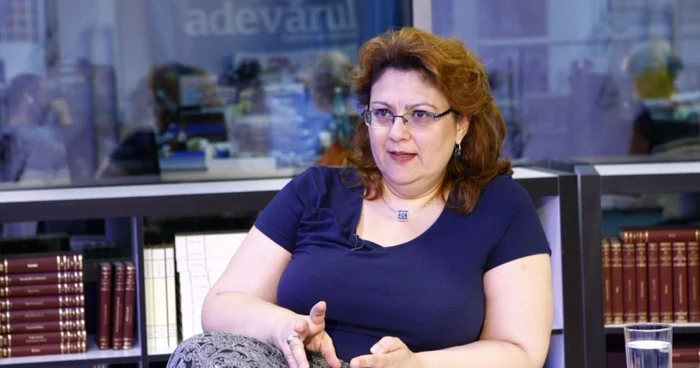
Sandra Alexiu urges Romanians to get vaccinated against the flu. Archive
Doctor: “What do you choose? A few seconds of pain or the risk of losing your child?”
Classic vaccines, on the other hand, are found throughout the cold season. And their administration almost doesn’t hurt at all. “Syringes are now modern, they have anti-traumatic needles. They are extremely thin, they have an oblique tip, it enters the muscle very quickly, and the child does not even feel the sting. Don’t forget that everything lasts extremely little, one or two seconds. And that’s because the serum is in a small amount. We are talking about half a milliliter. The fear of parents is greater than that of children. That’s down to the medical education these people don’t have. And here we have to work”, says Dr. Alexius.
Parents, the doctor believes, must be informed in order to be able to further inform the children. When they come to the office, the little ones must know exactly what they are coming for. “Not to be fooled, to be told that nothing will happen to them, and then to see her on the sidelines with the syringe. It is normal to be afraid. On the other hand, the child also cries at birth when he gets the hepatitis B vaccine in the maternity ward, he also cries at two months when he gets the other vaccines, he always cries because it’s a sting and it hurts. But we, as parents, have to balance the pain of the sting, which is spot-on and lasts a few seconds, against the disease, which can be fatal. What do we choose? A few seconds of pain or the risk of losing our child?”
Dr. Sandra Alexiu is of the opinion that the fear of the vaccine is present as long as we are and remain healthy. When we get sick, however, we forget all fear and go to the hospital for immunization. Disappears at that moment any trace of antivaccinism “When, for example, a case of meningococcal meningitis occurs in a school, all parents panic and accept prophylactic treatment. Or, if a child steps on a nail, the parent runs away with it antitetanus. Because, in fact, in our subconscious the fear of the disease is much greater than the fear of the vaccine”.
But, continues the specialist, when you are scheduled for vaccination, you start coding yourself, you start creating all kinds of theories. You only decide when you are faced with the fait accompli. “Csometimes it happens to be too late. In the case of meningococcal meningitis, for example, death occurs within 48 hours if no treatment is followed.”
Health education, a priority in schools
Dr. Sandra Alexiu considers health education a priority in schools in Romania and welcomes the appointment of Daniel David as Minister of Education. “I am very happy that this man was appointed Minister of Education because he is a person who talks about children’s education for health. In accordance with what the Minister of Health also said. We have, at the moment, two people talking about health education in schools and we also have a referendum in Bucharest that talks about health education in schools. I think it’s a moment that, if we don’t capitalize on it, we’re the laughing stock of the world.”
Now, let’s also see how this new policy will be implemented. Desirable, desired, but practice usually kills us. “It is very important how the information will be provided, because there must also be the people who will deliver it correctly. Someone knowledgeable, specialists in the field. And there must also be willingness on the part of the teachers. I, for example, was invited, at one point, to do health education for some secondary school students. But before I presented myself in front of the children, I was told to avoid the subject sex education“, doctor Sandra Alexiu confessed with regret.
