
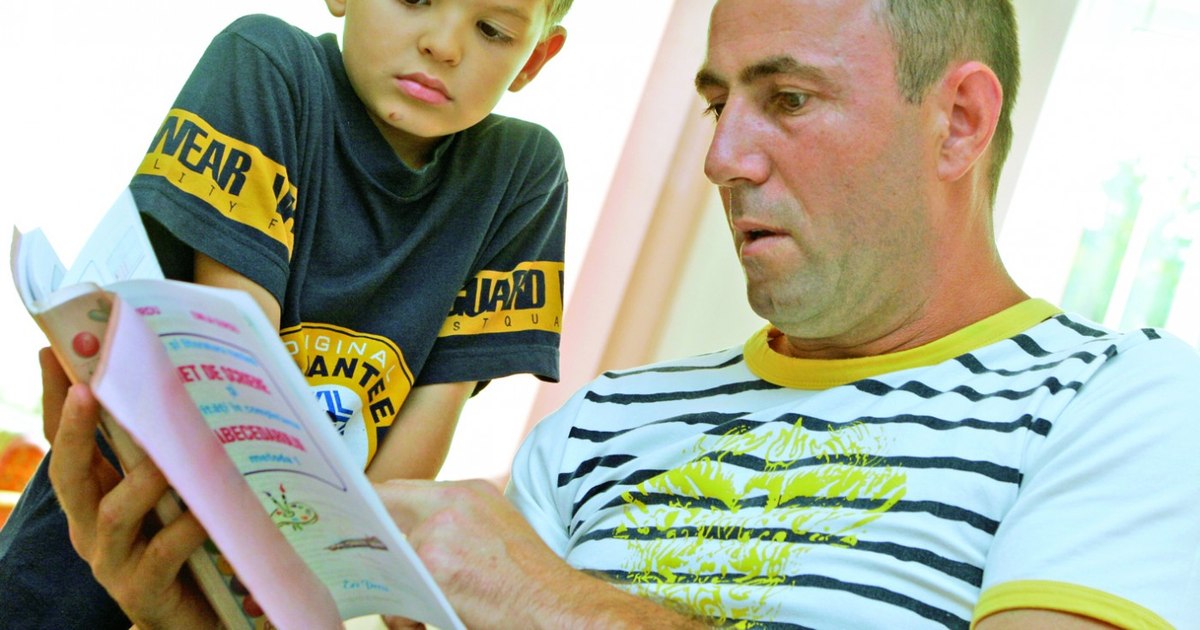
Education specialists say that resolving homework must be the exclusive task of the student. Parents at most can provide clues. Otherwise the effects on students can be very serious from a chronic addiction to the help of others to decrease self -esteem.
Parents do not have to do homework instead of photo pupils Truth
Themes for home are an important component of the educational process in Romania. Through them, the teachers say, the knowledge acquired in the class teaching hours are strengthened. Approaching homework is more important than many Romanians believe. Apparently a trivial, natural activity of school life can leave deep traces including in adult life if there is no right approach. On the one hand, parents do not have to do homework instead of children or help them too much. On the other hand, performing the themes implies, as psychologists say an affective and intellectual effort, including from parents. Experts say that according to the way the themes are addressed, the child will perform in society but also at work, in adult life.
“We should not do the homework in any way in any way.”
Cristina Bălăucă is a teacher and inspector of deputy general school at the Botoșani County School Inspectorate. In addition she is the mother of an international Olympic in science. From the experience of specialist in education, Cristina Bălăucă says that one of the biggest mistakes that a parent can make in the student’s life of his own child, is to do the homework or help him too consistently.
“We should not do the homework in any way in any way. The student must be responsible and pay himself for his work task. It must be allowed to feel that it is alone. The child was at that class time. He knows what he was taught. He was not the father in his place, nor will he ever go to his place. It is the biggest mistake that many parents make. I know it is easier for a parent to do his theme, he copy it in the notebook and ready, he finished. I escaped explanations, time spent at themes. But it is not okay for the child. ”says Cristina Bălăucă. This does not mean that we have to let the child struggle absurd if he does not know.
“Obviously, the child can ask if he has a confusion. We have to cultivate this to him. It must be present when the child needs, especially in the school life that can prove a challenge. But we help him with an suggestion, with an idea. We do not start to make it half the theme or actually to offer them to solve the tray. Make two more calculations and ready. We give her an idea, we let him work on her basis. We offer him another suggestion, a work direction, we orient it, but in the end he must feel that he has ended with that theme. He felt us next to us, I offered him the emotional and intellectual support, but we did not do the theme in his place and I did not give him all the solution on the tray ”says the Botosani teacher.
“We teach them with a support that at one point it will not have”
Irina Siminiceanu is a professor at the National College “At Laurian”, an elite high school in Botosani county and says that the effects of this habit of doing the homework instead of helping them to solve them can have serious long -term effects. “As a teacher I can say that it is not natural, it is not normal. It is a mistake, psychologically speaking because we teach them with a support that at one point it will not have ”says Irina Siminiceanu. The students of the 12th grade from the “At Laurian” National College, confess that such a practice can leave deep traces.
“You simply learn that you always have someone who helps you. And not so. At the tests, the exams, you are alone. In addition, those who are actually helpful for themes, even themes are done in their place, are easy to see. There are students who seem to do nothing alone. I ask anything, like this, “help me with this too”, “Don’t help me, please.” And you realize that I ask for your help for trivial things, for example to undo a bag of biscuits. And no, I do not exaggerate with anything ”says Adrian. Another classmate of Adrian, says that in fact this whole story with the excessive help at themes, only kidnaps a fundamental element to the student.
“You kidnap her curiosity. The pleasure of striving and discovering the solution. Without curiosity, the school has no charm. ”he says. Cristina Bălăucă says that the student will always wait for confirmation and help, without striving to do something alone, especially when he is forced to think. “The child will always wait for a feedback from the parent. He will always seek a confirmation from someone, if it is correct what he did, if he wrote well. But at exams, tests, competitions, the parent is not there. The child will always wait for her to tell her the father that she is good what she has done. Eventually waiting to help him where he doesn’t know. He does not go to the next stage because his mother or father does not come to tell him that he is fine. In his brain is outlined the impression that he cannot alone. And it’s not good at all ”says Cristina Bălăucă.
Experts say that this attitude can be reflected later in adult life. There are those people who always ask for the help of others when they are forced to make a supplementary effort. In addition, there are problems with self -confidence, especially when the child does not feel that he can carry out a requesting task alone.
