
A recent report shows an alarming problem: 36% of students in Romania are facing numerical illiteracy, and 16% of them have significant difficulties in understanding and using basic mathematical concepts. The report was presented in an event attended by the Minister of Education, Daniel David.
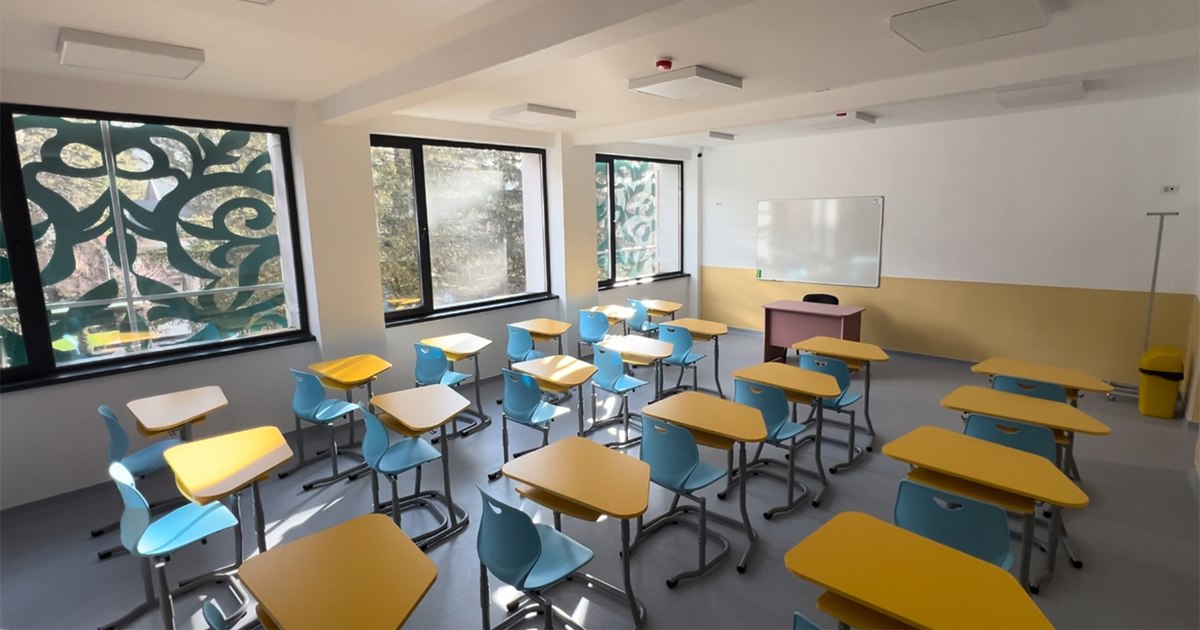
Classroom. Photo: Archive
The study, conducted by the Association for Values in Education (ATA Romania) and Brio, analyzed students from all educational cycles – primary, gymnasium and high school – and stressed a worrying tendency: the numerical illiteracy rate increases as students advance in school, From 25% in primary classes, to 36% in the gymnasium and reaching 46% in high school.
“It is clear that it does not look good, I said now when I debated the framework plans for high school, I said that it seems to me that we teach a lot, stupid and very centralized. And we should think about what we do, because it is unacceptable in class XII to have 50% people who have this form of functional illiteracy in the cash area. It is something unacceptable for a school. You ask yourself: What does school do? ”said Minister Daniel David, quoted by News.ro.
The differences between the rural and urban areas are significant: 58% of the students in the rural areas have numerical difficulties, compared to 22% in cities. Also, boys generally have a better level of numerical functionality towards girls. This difference is constant over the years of study.
“The mathematical literacy test is a test that measures an individual’s ability to think rationally, with support in mathematical reasonings acquired during the form of formal education and to use and interpret these reasoning to solve problems in a variety of contexts from life reality. everyday ”are mentioned in the report.
The research was carried out between October and December 2024 on a sample of 600 schools in Romania.
