

The national debate on the reform in high school, which took place in Bucharest, has taken deep echoes among civil society, public opinion, but also among the people in the system. Although, unfortunately, no one asked him anything, the students also had a say, which they spoke spoken and without fear.
The students’ voice becomes more and more heard. Archive
The students, the direct beneficiaries of the Revolution that promise to change the education in Romania, went to the ramp, putting on the table the real problems in the system. The children claimed that not the number of hours – smaller or higher – really matters, but how the school in our country is done. The students were the only ones who really put with a disarming courage, the finger on the wound.
Students ask for attractive manuals, but also a modern teaching of matter
Students challenge the reduction of disciplines to the status of optional subjects which, in reality, are a bit mandatory. “The main problem of optional subjects is that, in fact, they are not truly optional. Most of the time, these courses are placed in the middle of the schedule, these hours becoming a masked obligation, forcing the students to stay at school regardless of their interest in that subject. A clear example is religion time. Although, in theory, students may opt not to participate in this discipline, the organization of the schedule often obliges them to remain in the classroom, which creates unnecessary pressure on them ”, transmitted the Union of representative students.
Children refer, in fact, to religion matter as an optional, not optional discipline. Because between optional and optional there is a big difference: in terms of optional subject, students can choose it or not, as they can give up at any time during the school year. On the other hand, the optional subjects have a completely different status. There are more, and students must opt for one or even more of them.
“Many disciplines are excessively loaded, the subject is outdated and does not take into account the current needs and interests of the students. Manuals, which have not been updated for years, contribute to students’ disinterest in the most important subjects. If the matter continues to be taught rigidly, without modern and unreasonable resources, and the students will continue to learn mechanically, they will still consider it meaningless and irrelevant to their future ”, said Stefan Popa, the president of the representative students. This is the reason why not only the number of hours should be modified, but also their content. The reform, the children say, must ensure a balance between the number of hours, the relevance of the subject and the teaching methods, so that the education becomes really efficient and accessible to all students.
The children accuse: “The teacher’s quality is lost on the day.”
Constantin Radu Dimitrie, a student in the 11th grade at the National College “Spiru Haret” in Bucharest, held, at the first debate on the framework plans, a discourse on the quality of the educational people, practically completing the idea of the union of representative students: It takes attractive contents, but if there are no people to deliver these contents, all for nothing! The message of the young man was an extremely harsh one, an frozen shower that should open the eyes of those who want to see and the ears of those who really want to hear and understand. Should, in fact, open up to everyone’s minds. “A big problem is not necessarily the program, as the people who come to show us, because the education system does not always attract the most dedicated people. We need passionate people, people who wanted to learn this job, transmit it further, because these passionate people will attract attention, send to students and gain attention. We can change the number of hours in the same way and face, but it is about the people who come in front of the students to convey something, it is about the quality of the teacher who is lost. “said the student in the debate organized on the framework plans.
Daniel David: “High school teachers should have master studies”
As in a real Ping Pong game, the reaction from Minister David did not delay. He announced that a commission has already set up at the ministry level that would establish under what conditions the didactic master can be made. Specifically, the ministry proposes that teachers who want to follow a mate can do with budgeted places, for which they will no longer have to pay. “I would like a didactic masters, that is, on the line of professionalization of those who will work in the pre -university, but the professionalization on the teacher does not cancel them the opportunity to study more in the specialized field. At least in the high school area to become teachers who also have master studies, not just a bachelor’s degree in the specialized field. There will be budgeted places and, very important, if you have made a budgeted master’s degree, the other master’s degree, if you want to do one, you should make it with a tax. In the case of the combination of the didactic master and the specialized master’s degree, the law lets you do both for free ”, the Minister of Education said.
Minister of Education, at the same table with students
After the national debate in Bucharest, the Minister of Education, Daniel David, did what no other minister considered to be: he called the children to discuss, offered them the opportunity to speak freely and openly, the opportunity to come And they with proposals, to put the shoulder to what reform in education means. Daniel David called around the table on the representatives of the National Council of Students together with whom he discussed on the framework plans. The conclusions? It is desired from both camps to decentralize the system so that the school and students have a more important word to say in the curriculum. It is also desired and will be implemented to support disciplines with direct reference to national culture, under the conditions of rethinking models and programs, so that they are adequately assimilated by all students regardless of the chain. The need to reduce the curricular load was also established to allow a more efficient and personalized education, but also the inclusion of relevant subjects. It is about health education, media education, civic education and critical thinking. These disciplines will not only be learning units in the disciplines of the common trunk, but will also exist as subjects offered by curriculum at the student’s decision on the school offer.
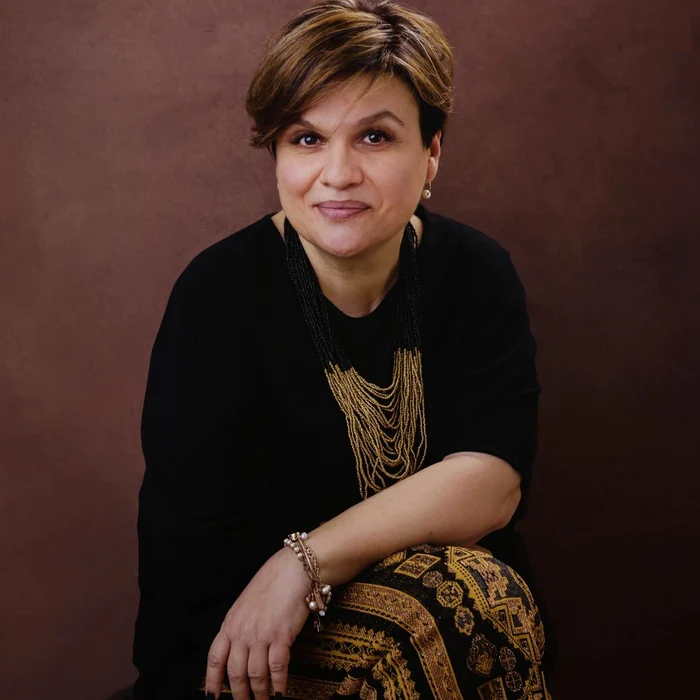
Fabiola Hossu, education expert. Personal archive
Expert in education: “Children are able to decide alone. Just to deny the opportunity ”
Children ask for their rights and make it more and more vocal, and this is greeted by education experts. Fabiola Hossu, the vice -president of the Coalition for Education, said that young people in Romania are ready to choose, even though many of us do not yet give them this chance for mistrust. “In many countries, adolescents already have a say in the decisions that influence their future. However, in Romania, the idea that young people are not prepared to vote, choose their educational direction or to participate in important decisions. But is this justified assumption? ”Fabiola Hossu asks. “In Austria, Germany (in the European and some regional elections), Brazil, Argentina and Ecuador, 16 -year -olds already have the right to vote. In Scotland and Malta, they can vote in local and regional elections. This allows them to participate actively in the decisions that influence their future ”, the specialist continues. Fabiola Hossu also comes with other examples that demonstrate the ability of children to make decisions regarding their educational future from increasing age. “In Switzerland and the Netherlands, students choose between academic and vocational routes around the age of 12, with the possibility of adjusting the course later. In Finland, the flexible system allows them to combine elements of vocational and theoretical education, providing them with autonomy in the development of the educational route. In Denmark, young people can enter the labor market with a professional qualification before 18 years, if a specific educational route follows ”.
So why do we think that young people in Romania are not ready to choose? The answer is simple: because we do not prepare them, he considers Fabiola Hossu. “If we want active and responsible citizens, we must offer them early the opportunity to practice decisions, instead of limiting their right to choose until they become” big enough “. When, by the way, it’s too late to practice this competence. ” The expert demonstrates black on white that from the age of 12, a child is able to judge free, to discern, to make choices. But the opportunity must be given.
