
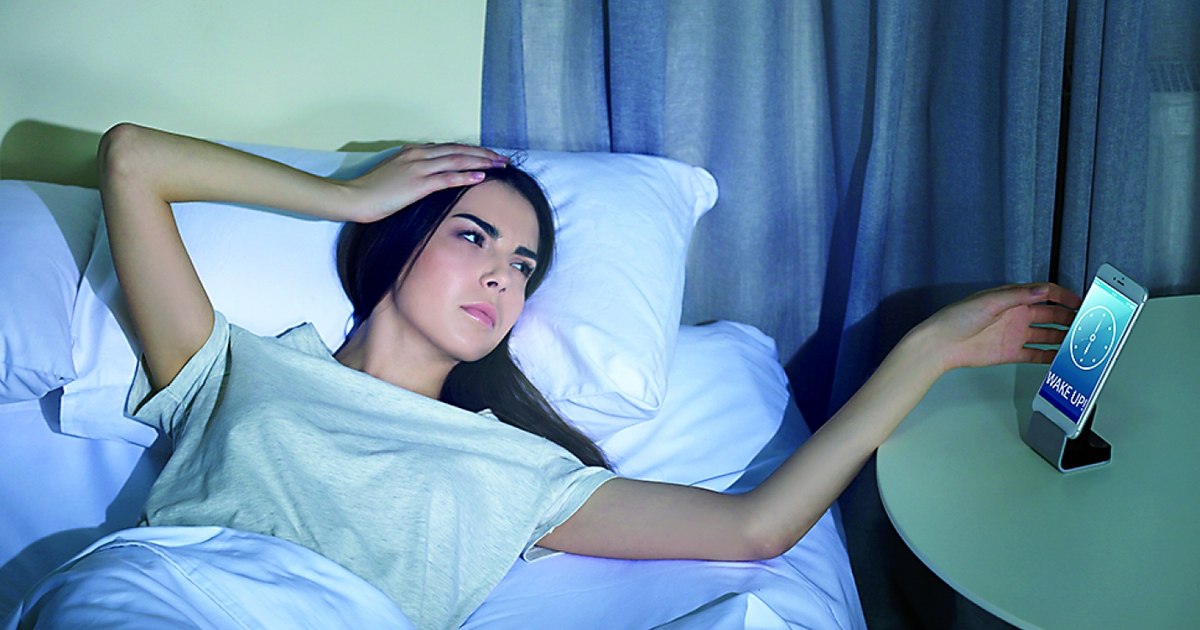
Several studies conducted by specialists in the United States indicate that exposure to any kind of artificial light on the night increases the risk of type II diabetes. It was found that even the trivial ambient light can seriously affect the metabolism.
Light sources at night are harmful to the shutterstock photo man
Often people are accustomed to leaving a waking light during the night. In other situations, until they fall asleep, people spend time in front of their mobile phone or TV. All these seemingly harmless phenomena can seriously affect our health, the specialists show. The new medical studies show that even the banal ambient light used for relaxation is proven to be harmful and increases the risk of quite serious diseases.
The greatest study dedicated to light exposure
A study published in the specialized magazine “The Lancet” shows that people who are exposed to light between 00.30 and 6.00, which is during the night, have a risk of almost twice as high to develop type II diabetes compared to those who prefer to stay in the dark, whether they sleep or not, during this interval. Unlike previous studies that were based more on bright pollution, related to light advertisements, street lighting or traffic headlights, in big cities, this study is also concentrated on exposure to small intensity light forms inside the house, measured directly on the individual. That is, the subject of the tests wore a sensor bracelet that observed the effect of light on the body.
“Previous studies have underestimated the effects”says Andrew Phillips, a professor at the Sleep Health Institute at Flinders University in Adelaide, Australia, for Medscape. More than 85,000 subjects were used, being the largest study dedicated to personal exposure to light during the night. All participants wore the respective bracelets-seizure for a week. The sensors have captured data on any kind of light source, from the natural one offered by the sun to the artificial one from the lamps, street lighting or the screen from the mobile phone. After the bracelets have been removed, the participants were monitored for eight years.
More light at night, less health
The results of the study were surprising. Only those who spent the night, preferably sleeping, in total darkness or light with a lower intensity than a candle were protected against diseases such as type II diabetes or other metabolic disorders. Those who were exposed even to an ambient light, a trivial waking lamp, increased the risk of type II diabetes 1.5 times. The more the intensity of light increased at night, the more the risk of type II diabetes increased.
Among the most harmful were the too intense lights from the street ads, near the windows, but also the light released by the screens of mobile phones or TVs (especially for those who are used to falling in front of the TV). “The higher the light, the more the risk of diabetes grows.”says Phillips for the same publication. Even with precise control of the other factors such as sedentantism, nutrition and stress, light exposure during the night, between 00.30 and 6.00 increases the risk of type II diabetes.
How the specialists explain
The results are not completely surprising for endocrinology specialists. It is well known that light during the night can interrupt the circadian cycles, that is, that inner clock of the body. The circadian cycle, say the specialists, is essential for a whole series of biological processes, including how the body manages blood sugar.
Specifically, the interior clock regulates food intake, sugar absorption, but also insulin release. Deregulation of circadian cycles is associated with insulin resistance, a phenomenon that precedes type II diabetes. Phillips, the author of the study, says that the sleep horma, melatonin, also has a say. “If you are chronically exposed to light during the night, the level of melatonin decreases and, in the long term, can lead to metabolic problems.”he says.
