
Do you dream of views that cut your breath? Urban trips are no longer only historical markets and museums, but also dizzying experiences hundreds of meters above the ground. From Asia to the Middle East, cities that raise their silhouette become more and more attractive for tourists fascinated by modern architecture, futuristic skylines and panoramas that change your perspective on the world.
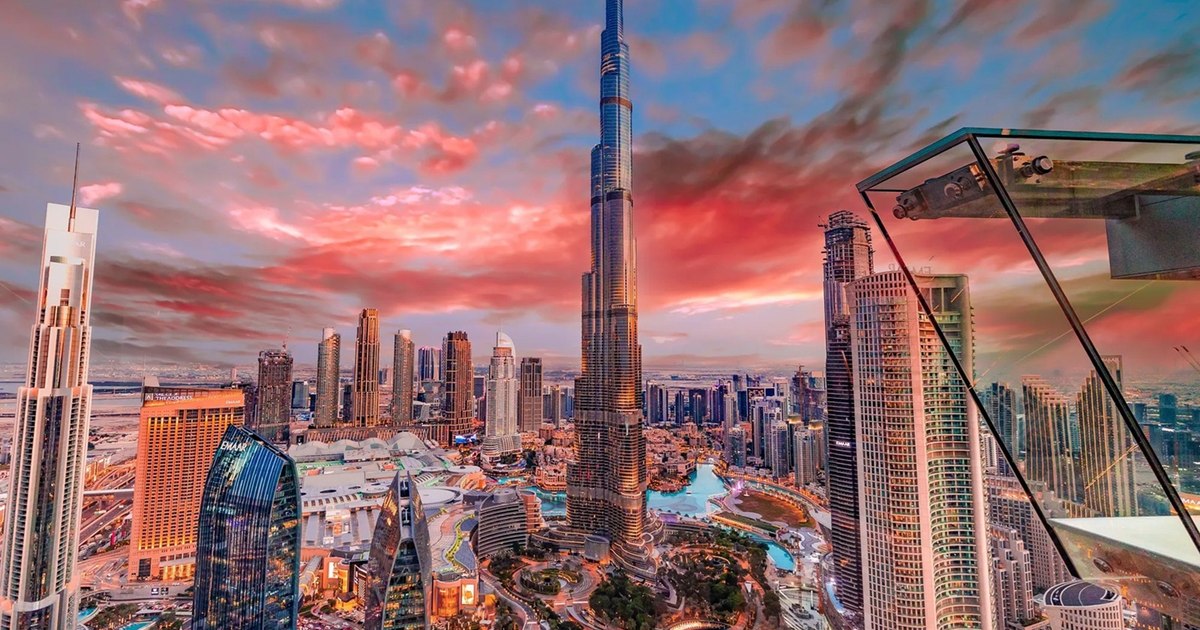
Burj Khalifa in Dubai, the world’s tallest building with the 828 m high photo Wander on
In a present in which urban horizons are no longer limited by the soil line, but it rises tirelessly in glass and steel, a new global competition captures the attention of the world: Who dominates the sky of the planet? Who builds the most, the above and most spectacular?
In 2025, the vertical landscape of cities is no longer only a matter of aesthetics, but of power, progress and prestige. And at the top of this height game there are three giants, each with their own “Specialty”: China, Hong Kong and Dubai. A “Triangle of height” which redefines how we look at the cities of the future.
Here’s what the Top 10 metropolises look like with the highest clouds, in 2025.
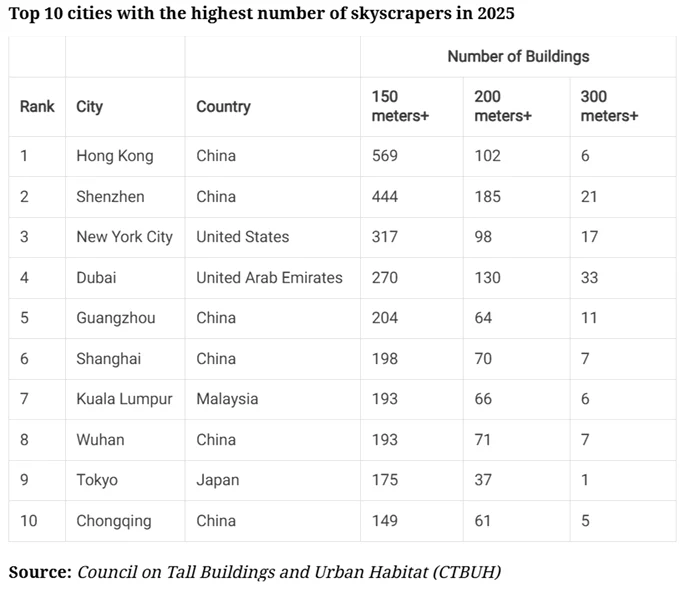
Top 10 cities with the most and tallest buildings in the world source CTBUH
China-the absolute champion at the number of skyscrapers
No country raised faster and more up than China. With thousands of buildings over 150 meters and cities that have reinvented themselves in less than one generation, China is, without the right of appeal, the world quantitative leader, authoritatively dominating the global heights scene.
Shenzhen, once a fishing village, is today an urban colossus with 444 skyscrapers, over 150 meters, in a transformation that seems broken from a SF scenario.
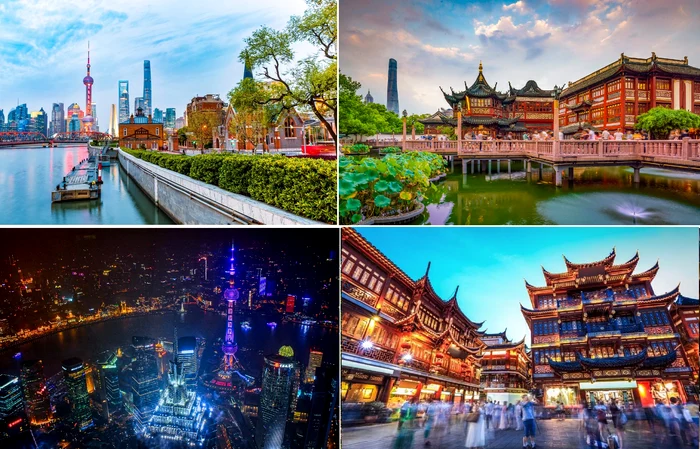
The contrast between modern and historical buildings in Shanghai Photo Smart Guide
Shanghai, a symbol of Chinese modernity, fascinates and imposes respect through his avant -garde and futuristic silhouette, modern China’s emblem.
Wuhan, Guangzhou, Chongqing – all climb vertiginously in international rankings.
China not only builds vertically, but does it at a speed and magnitude that amazes the whole world.
Hong Kong – the capital of vertical density
In an era in which the cities compete in carving their horizons with towers that defy gravity, Hong Kong retains their world leader in skyscrapers. The Asian metropolis impresses with over 550 tall buildings completed, according to the Council for High Buildings and Urban Habitat (CTBUH), defining an urban landscape that cuts the breath.
Under Chinese sovereignty, but benefiting from a special administrative status, Hong Kong is, from an urban and architectural point of view, treated separately in all international rankings. And this makes sense.
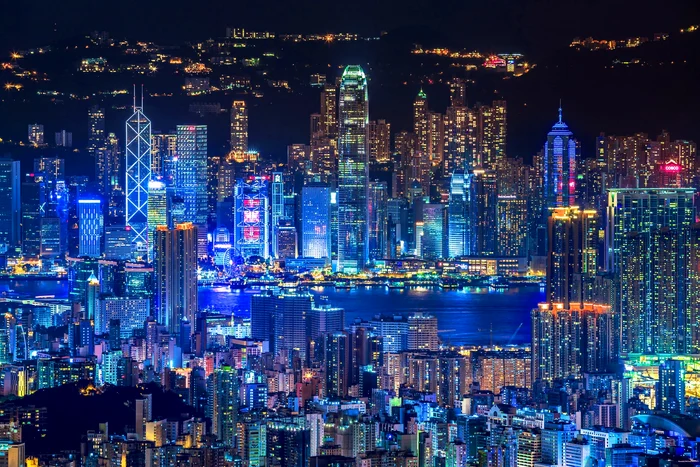
Hong Kong, world leader in skyscrapers Photo South China Morning Post
Hong Kong is not only in the top but it is the city with the highest density of tall buildings on the planet.
Constrained by geography and lack of land, the city was forced to climb, not to expand. This is how one of the most spectacular urban jungle of the 21st century was born – a place where the sky is closer than elsewhere.
Dubai – the holder of the world record
The surprise comes from Dubai, the only city in the Middle East in the Top 10 global. If Hong Kong excels in density and China by volume, then Dubai is undoubtedly the supreme symbol of verticality.
The emirates turned into a symbol of architectural ambition, shelter not only the more than 250 skyscrapers, but also the imposing Burj Khalifa, the colossus that pierces its 828 meters clouds, which rank it as the tallest building in the world. Record, for now, undobors.
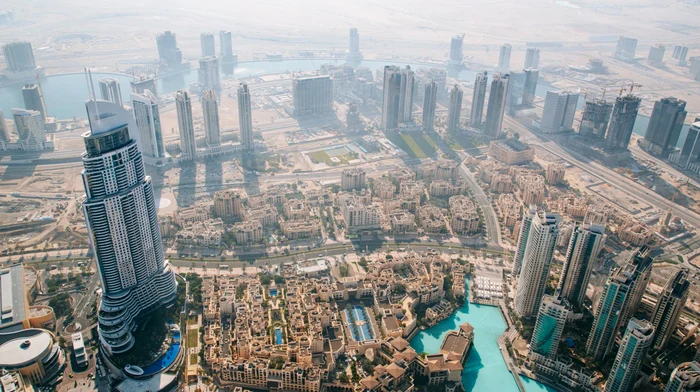
Image from the world’s tallest building Burj Khalifa in Dubai photo shipped
In addition, Dubai continues to invest in amazing architectural projects, defying the gravity and limits of the imagination. It is the only city in the Middle East, which not only includes in this global ranking, but it is also a clear symbol of Arab ambition to lead by innovation.
The rest of the world: Who else climbs the top
On the other side of the globe, New York retains its role as a pioneer and emblem of the modern skyscraper era, a classic bastion of vertical architecture with over 317 buildings over 150 m. From the emblematic Chrysler Building to the imposing One World Trade Center, the American city, often considered to the scratch, Worldwide, with over 317 buildings over 150 meters.
In Southeast Asia, Kuala Lumpur leaves his mark on about 180 skyscrapers, among which the legendary twin towers Petronas, which were the highest in the world until 2004. The Malaysian capital continues to impress with the balance between innovation and tradition in its vertical landscape.
The triangle of heaven: a new model of urban power
At the intersection between ambition, technology and extreme urbanism, a new model of global supremacy is outlined – not military, nor economic, but architectural sense:
- China conquers through volume.
- Hong Kong reigns by density.
- Dubai triumphs by absolute height.
These three urban centers define the supreme triangle of the vertical architecture of 2025. The three poles not only physically shape the horizon of the world, but convey a clear message: the future is built up.
The top of the cities that reach the sky in 2025 is not only a hierarchy of figures, but a mirror of urban ambition, technological progress and human desire to rise – on its own – above all.
If you want to feel the future built vertically, add these metropolis in your itinerary: you will have unique perspectives, visionary architecture and a memorable journey among the clouds.
