
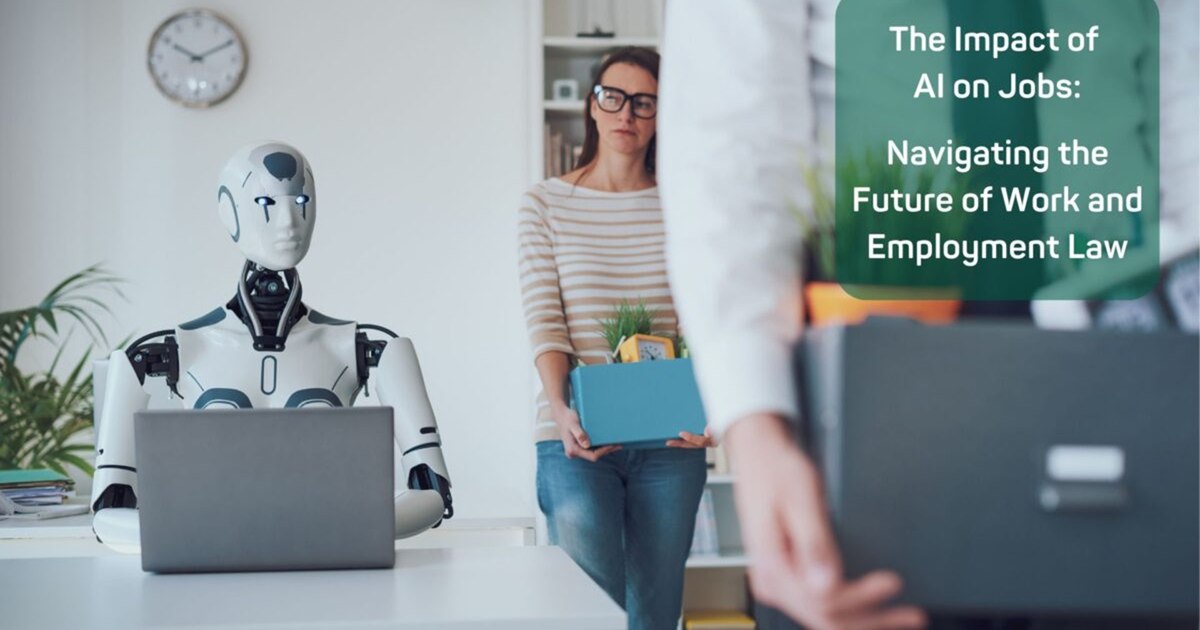
Artificial intelligence (Ia/AI) advances at an impressive speed, and this begins to reflect more visible on the labor market. Microsoft giant warns on the medium -term effects it will have on various occupations, drawing attention that many trades will be affected, and some even risk disappearing.
Dozens of trades will disappear as you take over more and more photo tasks seddons DMS com
In this article you will discover the results of a large study conducted by Microsoft, which analyzes the impact of generative artificial intelligence on the places on the labor market. You will also find the complete list of the 40 trades considered the most vulnerable to automation and replacement by AI, as well as the professional areas in which artificial intelligence is already beginning to take over essential tasks. We will also explain what these changes mean to employees.
Microsoft study reveals trades most exposed to the risk of replacing by AI
In order to better understand the impact of artificial intelligence, Microsoft has conducted and published a large study on the implications of this technology on jobs / jobs / jobs. The study, entitled “Working with Ia: Measurement of occupational implications of generative artificial intelligence“, Based on the analysis of over 200,000 anonymous conversations worn by users with Microsoft Crărtot, a system of generatingly developed by the company.
The research has highlighted the professional activities for which people most commonly request the assistance of you: collecting information and writing texts being the most common fields in which the technology is used to provide support, information, counseling, training and writing.
Thus the study identified a series of trades with a high degree of “Overlay” between specific tasks and what artificial intelligence can achieve, as well as others that will not be affected. Expert Carlos Fenollosa, an entrepreneur and teacher in the AI, published the list of 40 trades most exposed to the risk generated by this technology.
Top 40 trades in danger because of artificial intelligence
This list shows that jobs involving information, writing, communication and analysis processing are the most vulnerable to partial or total replacement.
- Interpreters and translators – oral and written translation between languages.
- Historians – historical research and analysis.
- Board accompanying – passenger assistance during flight.
- Service sales representatives – selling services to customers.
- Writers and authors – writing texts, books, articles.
- Customer Service Representatives – support and assistance for customer.
- CNC programmers – programming of numerical control machines.
- Telephone operators – Management of telephone power stations.
- Ticket and tourism agents – sale tickets and tour packages.
- Radio and DJ presenters – audio show filmmakers.
- Brokerage officials – intermediation in financial transactions.
- Educators in agricultural and household management – training in the administration of farms and households.
- Telemarketeri – promotion and sale by phone.
- Conciege – personal assistant for customers in luxury hotels/buildings.
- Politologists – analysis and study of political phenomena and systems.
- Media analysts, reporters and journalists – collection and presentation of information.
- Mathematicians – research and application of mathematics.
- Technical writers – writing technical documentation.
- Correctors – verification and correction of texts.
- Hosts and hostess – welcoming and assisting customers at events.
- Editors – Coordination and revision of the written content.
- Teachers of business administration (university) – teaching at the academic level in the field of business.
- Specialists in public relations – managing the public image of an organization.
- Product promoters – direct promotion of products.
- Advertising sales agents – selling advertising space.
- Officials officials – opening of accounts for customers.
- Statistical assistants – collecting and analyzing statistical data.
- Car and real estate agents – renting goods and properties
- Data Science specialists (Data Scientists) – advanced data analysis.
- Personal financial counselors – individual financial consulting.
- Archivists – organization and preservation of archives.
- Economics teachers (university) – academic teaching in the field of economy.
- Web developers-creation and maintenance of websites.
- Management analysts – evaluation and optimization of organizational processes.
- Geographers – research and monitoring of the natural environment and human populations.
- Models / dummies – presentation of clothing and accessories.
- Market research analysts – studying the trends and behavior of consumers.
- Public security dispatchers – coordination of emergency interventions.
- Central telephone operators-Management of calls in a power station.
- Library teachers (university) – academic teaching in the field of librarianship.
What does automation for employees mean
It is important to note that Microsoft study and Fenollosa’s analysis do not claim that these trades will necessarily disappear, but indicate an increased risk of automation of certain tasks within them. The final impact will also depend on social, political and economic factors, as well as the ability of employees and companies to adapt.
In a future edition, we will analyze less affected trades of artificial intelligence (AI / IA) and new job opportunities generated by this technology.
