
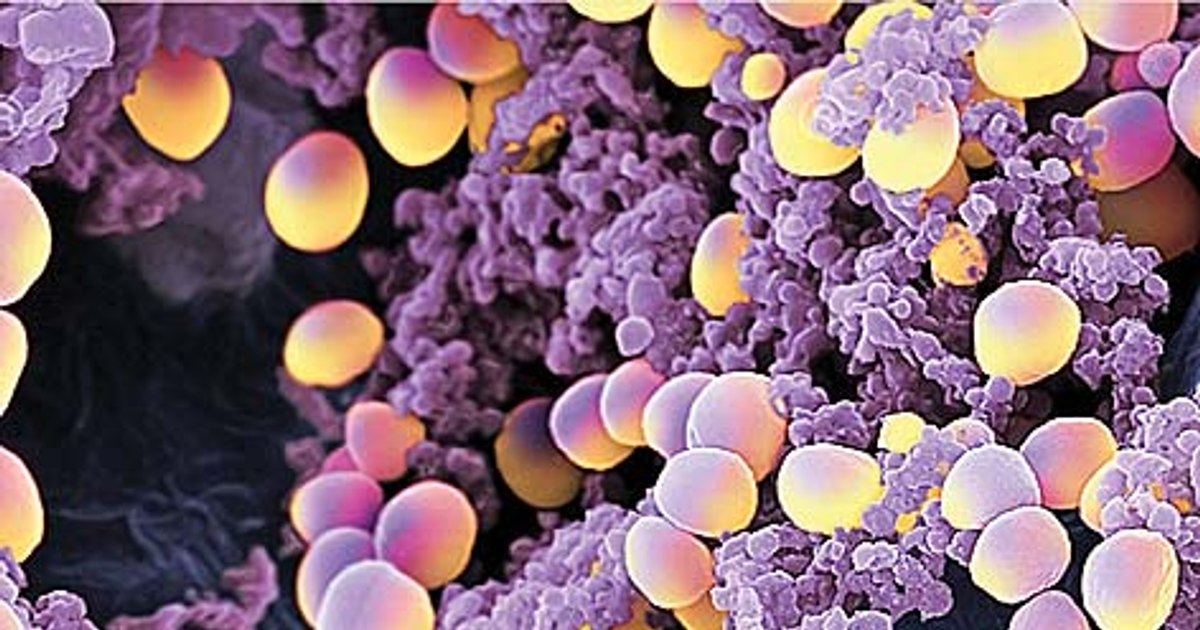
The virtual hospital for children reminds parents that the nasal port of gold staphylococcus is frequent in children and does not necessarily mean disease, even if the risks increase in communities like schools
Golden staphylococcus/photo: archive
In the post on September 2, the page refers to a post from 2023, “because it is extremely current and now. ”
“Probably an increased number of children will stay together, in closed and unventilated spaces in the coming weeks.
Because the fear in front of the air currents is very increased in our country – I am sure you hear the statements like “Close that window/door because my current pulls”. The solution is simple: all the children are good, as long as the time of the X material, in a well-closed class!
Thus, favorable conditions of “exchange in nature” appear … a whole series of unwanted nose or neck guests can be moved from one child to another. With or without the appearance of signs of illness … “, Transmit Facebook page.
According to the author of the post, parents and doctors often seek the “unwanted guest” in the nose of children, but the results do not always mean a disease.
“It is certain that the reaction of most parents and doctors is to look for the unwanted guest.
The problem is that sometimes we look for something and find … something else. That is, in some cases the nasal exudate identifies a “something” that existed in the nose before the current disease. A “something” that does not produce the disease that affects the child at the time of evaluation!
The most common “something” is the golden staphylococcus. Studies done in the community, on healthy volunteers show that a very large number (up to 30% of those tested) caneof intermittent porting or chronic golden staphylococcus“add this.
Also, according to the page, the nasal porting represents a delicate balance between the microb and the nasal mucosa; In the front of the nose, the keratinized mucosa, without cili, is easy to colonize by the golden staphylococcus.
“The state of porting is a complex balance between a microb and the nasal mucosa at the level of the nostrils (in the front of the nose we have a special mucosa, keratinized, without cili and that is why it is easier to colonize by the golden staphylococcus).
A healthy carrier has a perfect balance between the guest and the genetic and defense mechanisms of the host. Only when the balance is severely broken, the invasive disease can occur. That is, to leave alone “for a walk” “through our body, that unwanted guest.
Balance can be broken by exposure to environmental factors (pollutants, especially smoking, aeroallergens, etc.) or by decreased defense mechanisms (serious diseases that decrease immunity, cancers, immunosuppressive drugs, for example cortisons).
The message to take home is a simple one – not all microbes identified by nasal exudate are “guilty” of producing seasonal diseases! “, specifies the page.
“We must not cut all the trees in a forest if we learned that some trees grow a mistletoe”
Last but not least, the page states that in the next period, children will be exposed more to viruses, and the general administration of antibiotics (oral or injectable) in the case of a nasal goalkeeper is a mistake in healthy children, without comorbidities.
“Now we will have several diseases caused by viruses, and the treatment with general antibiotics (oral or injectable), in the case of a nasal porting scenario, is an error in children who do not have comorbiditates.
General antibiotic treatment could destroy the germs that produce the goalkeeper … but not always. It certainly affects the intestinal flora, the nasal microbiome or the one on the skin … and finally it can generate porting of microbes resistant to many antibiotics …
We must not cut all the trees in a forest if we learned that some trees grow mistletoe ”
