
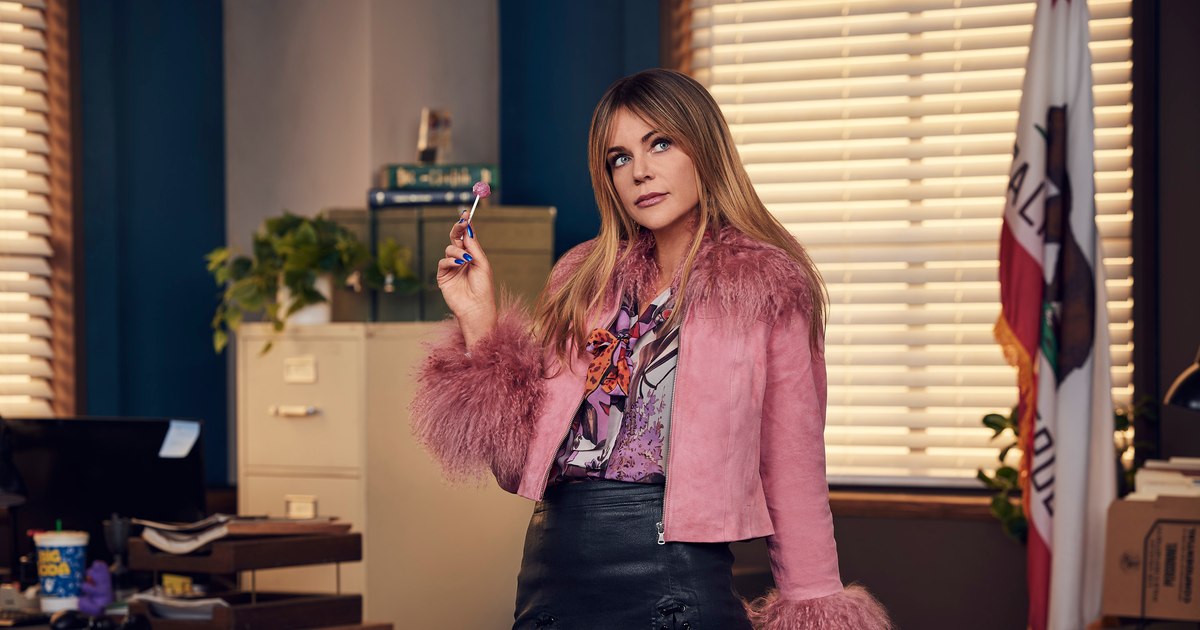
In an exclusive interview with Weekend Truth, actress Kaitlin Olson talks about the “healthy selfishness” of following your calling, the moral compass she inherited from her mother, and the courage to take up space in a world that too often asks women to be invisible.
In the glass and concrete maze called Los Angeles, where success is measured by the number of zeros in the account, Morgan Gillory, played by Kaitlin Olson (50 years old), is a statistical anomaly. A single mother of three children of varying ages, with a wardrobe that looks like a graffiti collage from the 90s, a vintage car and many unpaid bills, she should be invisible. But Morgan possesses an IQ of 160, a “High Intellectual Potential” (HPI) that turns his reality into a giant touchscreen where everything connects to everything else. The series “High Potential”, directed by Drew Goddard, available on the online streaming platform Disney+, is the American adaptation of the Franco-Belgian hit “HPI (Haut Potentiel Intellectuel)”, a production that proved that the modern audience is thirsty for a new form of hero: the neurodivergent, but deeply anchored in social reality.
Wire walking
The pilot episode defines the entire concept of both the series and the protagonist: Morgan Gillory mops an empty police station at midnight. She is not a Cinderella waiting for a ball, nor a modern princess waiting for rescue, but a brain that cannot stop processing data. When she “accidentally” corrects a panel of evidence, she is not looking for validation, but order in the chaos of the world, less noticeable to “normal” people. Unlike the male detectives in the history of cinema, Morgan is for many “too much” – too colorful, too vocal, too many children and too little money. In a culture that demands women be “professional” (often a euphemism for invisibility and conformity), Morgan Gillory is an act of aesthetic rebellion. She walks into the police station in mini skirts and leopard prints, and super-intelligence is a must-have accessory. To solve the crimes, Morgan teams up with detective Adam Karadec (played by Daniel Sunjata), a man who believes in procedures and that the truth is a straight line drawn between two pieces of evidence. The entire police team, from Captain Selena Soto (played by Judy Reyes), who bets on this unpredictable genius, to the rest of the investigators, becomes a social laboratory: how do you integrate a force of nature into an institution that loves rules?

A single mother, gifted with a genius IQ, with a very colorful appearance and character, actress Kaitlin Olson is the perfect model of feminism. “Drew Goddard wrote this pilot episode, and I fell in love with that first script because Morgan was so in control of her own life. I love that she’s a single mother. I love her choice to still be very friendly with her ex-husband and do a good job of raising the kids together. But I also love that she didn’t need anyone. This woman is very feisty. She’s had a million different jobs. She’s going to so that she can take care of her kids. So I see her as a very strong feminist character. I see her as an unapologetic woman who wears whatever she wants — she doesn’t care — and she knows she doesn’t need a man to take care of her,” Kaitlin Olson told Weekend Truth exclusively.
“I followed my heart and my dreams”
Almost a century ago, Virginia Woolf wrote about the need for “a room of her own” for a woman to create. In 2026, Morgan Gillory, the protagonist of “High Potential”, does not have a camera of her own. Instead, she has a house cluttered with toys, colorful clothes thrown on the sofa and three children gravitating around her like noisy satellites. So her genius doesn’t manifest quietly, but through the drops, while solving murder cases in a Los Angeles police station.
Steven Knight, the creator of the future “James Bond”: “Instead of going to school, I went with my father, a farrier, to a scrap yard run by Roma”
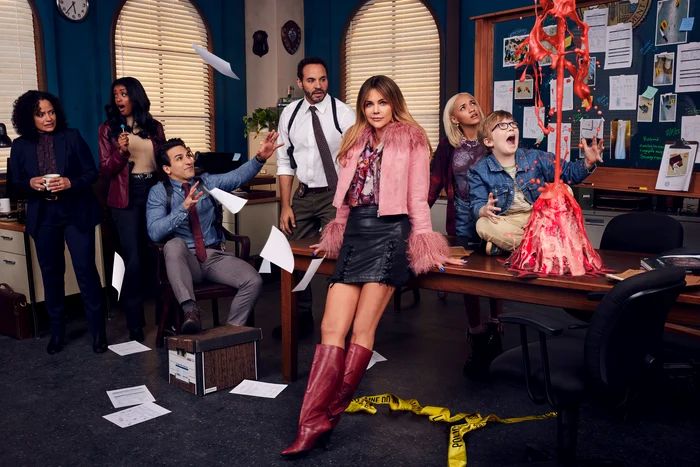
“High Potential” rejects the idealized projection of the “woman who has it all”. Morgan doesn’t “have” them all; she juggles everything, often dropping one ball at a time. In her domestic interactions, we see the character’s true stakes: the struggle to keep a glittering career from becoming parental abandonment, and conversely, the struggle to keep motherhood from stifling her intellect. “My career is very important to me, and it’s very important that my kids see that I have my own life and that I’ve followed my heart and my dreams and that I have a job that’s very important to me. But they also know that at the end of the day, they’re the most important things in my life and I’d do anything for them. My biggest hope is that they know that you don’t have to follow all the rules. If something doesn’t make sense to you, you don’t have to do it just because that’s the way time was made.” for thousands of years. I think people should follow their hearts and do what they want to do. If you want to have no kids, great. If you want to have both, it’s up to you.”
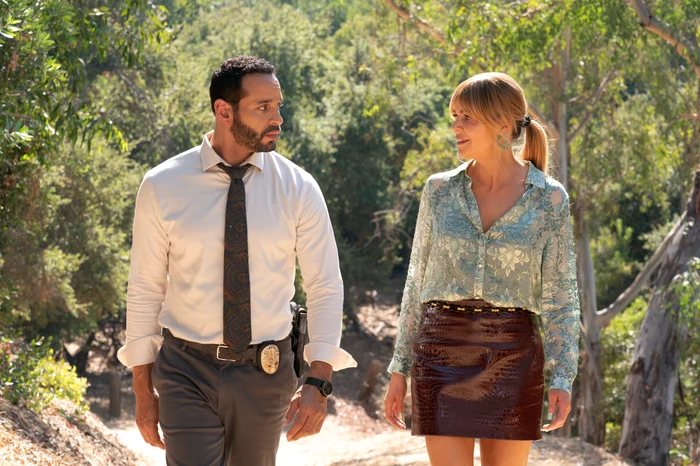
Thus, unlike a Sherlock Holmes, who allows himself the luxury of retreating to his “mind palace” and ignoring social conventions, Morgan must solve crimes between a dentist appointment and a teenage daughter’s nervous breakdown. She doesn’t have a Watson writing her memoirs, she has bills that don’t pay by logical deduction. But Morgan chooses to be a detective not because she wants to be a heroine, but because her brain needs it to survive. It’s a form of healthy selfishness, a theme rarely explored in mainstream television: the idea that a woman has the right to choose a profession that consumes her, even if it means dinner won’t always be hot at a set time.
Mother, a constant compass
If you watch Kaitlin Olson in “High Potential,” you’re sure to spot a certain way she clenches her fists or stares — gestures that don’t seem studied, but inherited. It’s no secret that Olson often drew her creative juices from the powerful but invisible female figures that marked her childhood. At the center of this constellation of influences is her own mother, a woman who, like many representatives of her generation, had to be the architect of an impossible balance in a world that offered mothers only duties, not rights.
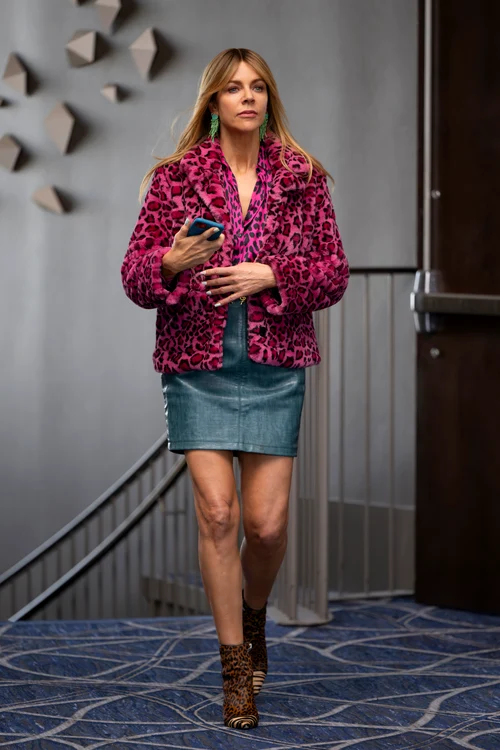
When thinking about the people who inspired her character, Olson unhesitatingly begins with her mother: “My mother is one of the nicest and kindest women in the whole world and she definitely puts my needs before her own. So in her I’ve always had a good role model. But I know a lot of people who are incredibly intelligent. I think one of the things that sometimes comes with such a high IQ and maybe a little neurodivergent is that there are a lot of challenges. People can be very get it wrong. It can be stressful not being able to turn off your brain. And I know people like that, too. So I can say that I have more people who have inspired me.” Thus, through her character, Kaitlin Olson brings to this role a sharp vulnerability, inspired by the strong female figures in her own life, especially her mother.
“High Potential” is an invitation to look beyond the surface. It’s not just a series about who committed the crime; it’s a story about what happens when you stop apologizing for the space you occupy and begin to finally tap into all the potential the world has been afraid to acknowledge.
