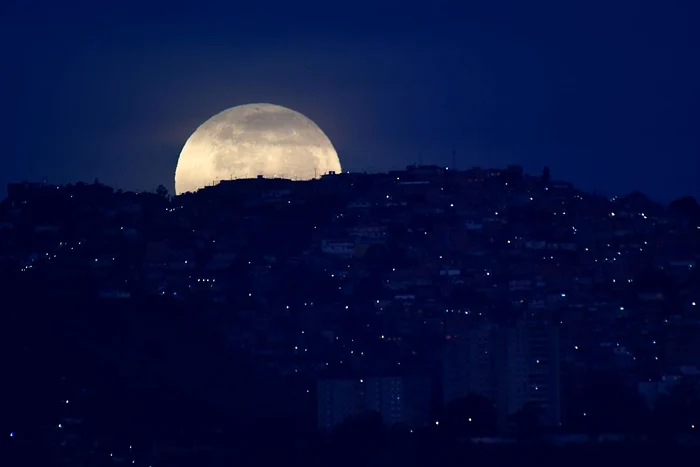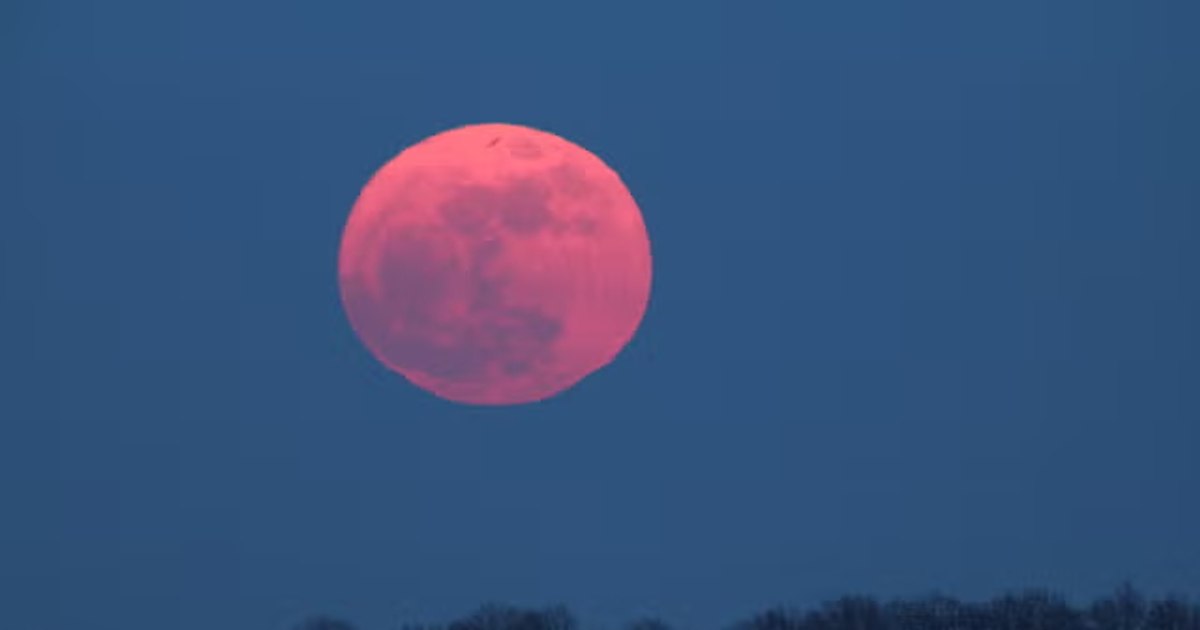
The “Pink Moon”, the first full moon of the season in the Northern Hemisphere, will be visible on April 1st and plays an important role in determining the date of Easter, while the “Blue Moon”, another rare phenomenon, will be visible on May 31st.
The “Pink Moon” is the first full moon of spring in the Northern Hemisphere. It will reach its peak on Wednesday, April 1, but will look almost as full on Tuesday and Thursday nights (March 31 and April 2).
Only on Wednesday, however, will it appear very close to the bright star Spica, offering a double show in the sky. The name is not related to the color of the Moon, which does not change, according to Lieve Science.
The name comes from the pink phlox wildflower, native to North America, which usually blooms in April.
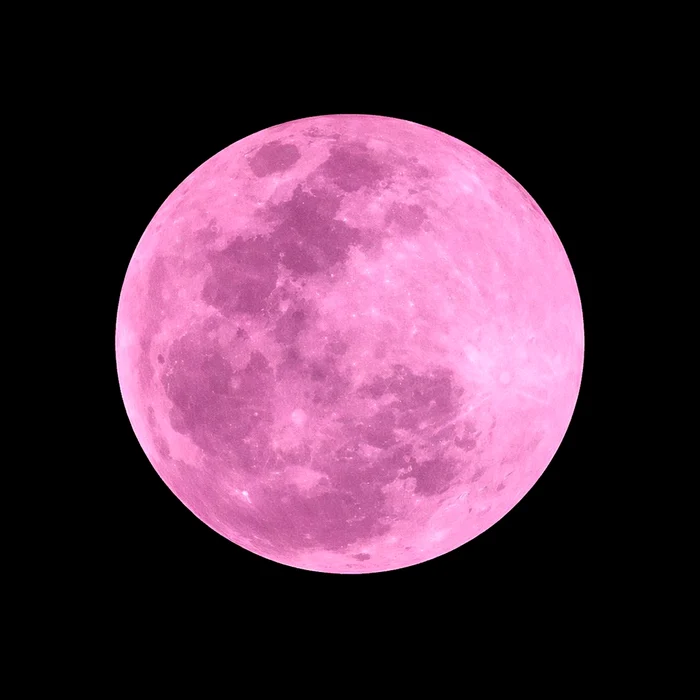
The April May full moon also has other names in the traditions of Native American populations, such as “Moon of breaking ice” (Algonquin), “Moon when rivers become navigable again” (Dakota), “Moon of budding plants and shrubs” (Tlingit), or “Moon of emerging red grass” (Oglala).
The Center for Native American Studies states that she is also known as “The Month of the Broken Snowshoe” among some Anishinaabeg (Ojibwe) communities in the Great Lakes region. The “Pink Moon” also has significance in Western Jewish and Christian religious traditions.
Her appearance marks the beginning of the Jewish holiday of Pesach (Passover), which this year begins at sundown on April 1, the 15th day of the Hebrew month of Nisan.
This is because the Hebrew calendar is lunisolar. In Christianity, the first full moon of spring is linked to the date of Easter. According to the US Naval Observatory, Easter falls on the first Sunday after the first ecclesiastical full moon that occurs on or after the vernal equinox.
This year, the equinox was on March 20, and the next full moon is on April 1, so Easter will be celebrated on April 5. In the Orthodox tradition, Easter will be celebrated a week later, on April 12. The best night to see the Full Moon will be April 1st, when it will rise in the east as the Sun sets.
It is recommended to check the exact moonrise and sunset times for your area and choose a place with good visibility towards the eastern horizon.
The star Spica, the brightest star in the constellation Virgo, will also be visible near the “Pink Moon”. The next night, on April 2, the waning Moon will be just 1.8 degrees away from Spica, according to AstroPixels.
after “Pink Moon”the next full moon will be “Flower Moon”also known as “Corn Planting Month” or “Milk Month”, on May 1. This will be the first of two full moons in May, the second being the so-called “Blue Moon” – the second full moon in a calendar month – which will occur on May 31.