
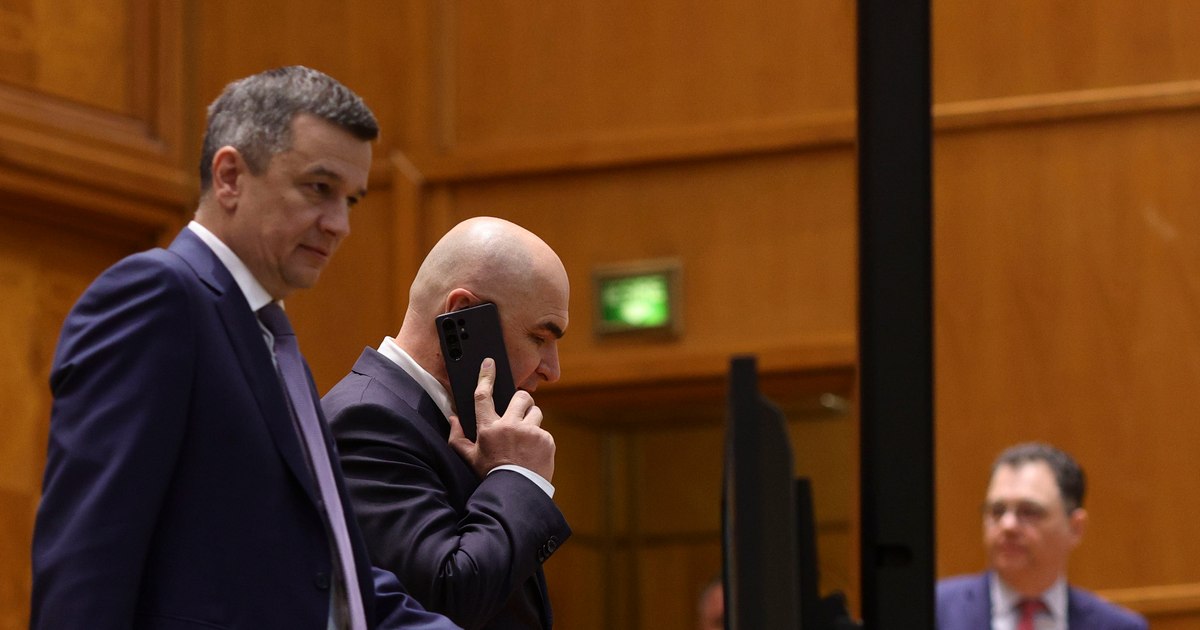
Sorin Grindeanu, PSD president, criticized on Tuesday, March 31, the delay in a decision in the governing coalition regarding the measures to reduce fuel prices. Bogdan Ivan, the Minister of Energy, said that he expects the draft law to be adopted this week by the Government.
Being in Brașov, Sorin Grindeanu stated that the lack of a decision is “cynicism”, given that the state collects more from the taxes applied at the pump.
“All this delay seems strange”
Grindeanu reminded that the Minister of Energy, Bogdan Ivan, presented in the coalition, four weeks ago, the possible scenarios for tempering fuel prices.
“Four weeks ago, Bogdan Ivan in the coalition went and presented the scenarios we can follow in order to mitigate the shock of these fuel price increases. 4 weeks have passed since then. I tell you that all this delay seems strange, to say the least“, said the social democrat.
The PSD leader emphasized that, during this period, the state collects more money due to the high prices at the pump:
“The fact that you pay and the price at the pump is higher, the state collects more. But this is cynicism. This is not good governance. And I would have liked the decision to be made sooner“
Grindeanu mentioned that the technical options are already known, from reducing the excise duty to introducing a variable formula depending on the price per liter. The problem, he says, is the absence of a political decision.
“There is a lack of decision. This lack of decision is one that I catalog, I have no other diagnosis to make, other than cynicism. When you govern, you govern for people, you don’t govern for Excel tables that will do you good, I don’t know, in the insolvency file ofrii”, said the PSD president.
Reply to the argument regarding the risk of infringement
Regarding the fact that Prime Minister Ilie Bolojan recently rejected the VAT reduction option, citing the risk of triggering an infringement procedure, Grindeanu disputed this argument, recalling that other European states have applied the measure.
“Really? Poland entered into infringement, Spain entered into infringement, that is exactly the solution they took, they reduced the VAT”, he said, reiterating that he sees the situation as “cynicism towards the Romanians”.
Bogdan Ivan: “I expect the project to be voted on this week”
The Minister of Energy said on Tuesday, March 31, that he expects the draft law on the reduction of fuel excises to be adopted this week by the Government.
Asked why the project reaches the Government only now, after several weeks of discussions, the minister specified that the responsibility for the calculations belongs to the Ministry of Finance:
“At the moment I cannot answer for my colleagues, because we are each responsible for our segments. I have great faith in my colleague, Mr. Alexandru Nazare, the Minister of Finance, that he will make these calculations as quickly as possible together with his lordship’s team and we will adopt this normative act in the Government this week. From my point of view, we have a European and a national practice“.
How much can the excise duty and VAT on fuel be reduced in Romania, so as not to affect the payment of pensions
Bogdan Ivan emphasized that Romania has already implemented a series of measures recommended at the European level, such as limiting exports, diversifying supply sources, increasing refining capacity and reducing the amount of biofuels in fuels.
“What we proposed four weeks ago and passed last week namely: to limit exports, to make alternative sources of fuel and oil supplyto increase the refining capacity, to reduce the quantities of biofuels in the final products, which the European Union recommends, we have already done” replied Ivan
The minister explained that the reduction of excise duties is the only solution that can lower the final price at the pump, a measure proposed together with the PSD president, Sorin Grindeanu, and which is to be included in the project prepared by the Ministry of Finance.
Romania’s position in the discussions with the European Commission
In the context of European discussions regarding possible state aid, similar to those in 2022, Bogdan Ivan specified that Romania has already sent the European Commission a firm position regarding the need to relax some regulations that influence energy costs.
“I have also discussed with the European Commissioner Dan Jørgensen and the Director General Ditte Juul Jørgensen since the beginning of this military conflict. I have presented Romania’s position, which is very clear, namely to relax the area of regulations, in a form in which we can systematically reduce the cost of energy and gas throughout the European Union“, said Bogdan Ivan.
The minister insisted on reducing the cost of CO2 certificates and ETS taxes, which affect both coal-fired power and natural gas.
“We are no longer talking about that Green Deal plan which has proven to be ineffective from my point of view. We are talking about an exceptional situation now, given the start of the war in the Middle East, which puts us in front of quick and practical decisionse”, added the minister.
Cheaper at the pump in stages: Government’s plan to reduce fuel excise duty
Romania demands new supply routes and quick measures
Bogdan Ivan recalled that, two weeks ago, in Brussels, he presented the need for new supply routes for the states of Central and Eastern Europe, and the European Commission understood this request.
The minister will participate in the informal meeting of energy ministers, where the measures proposed by the Commission to support the member states in the context of the current crisis will be discussed.
The coalition created a task force
In Monday’s meeting, the coalition decided to form a working group to analyze the energy crisis and the impact of rising fuel prices. The main measure taken into account remains the reduction of the excise duty.
We remind you that Prime Minister Ilie Bolojan spoke on Monday evening, on Digi24, about the measures the Government will take to counteract the increase in fuel prices, in the context of the war in Iraq and the blockade of the Strait of Hormuz, specifying that, in the first phase, the interventions will focus on diesel.
